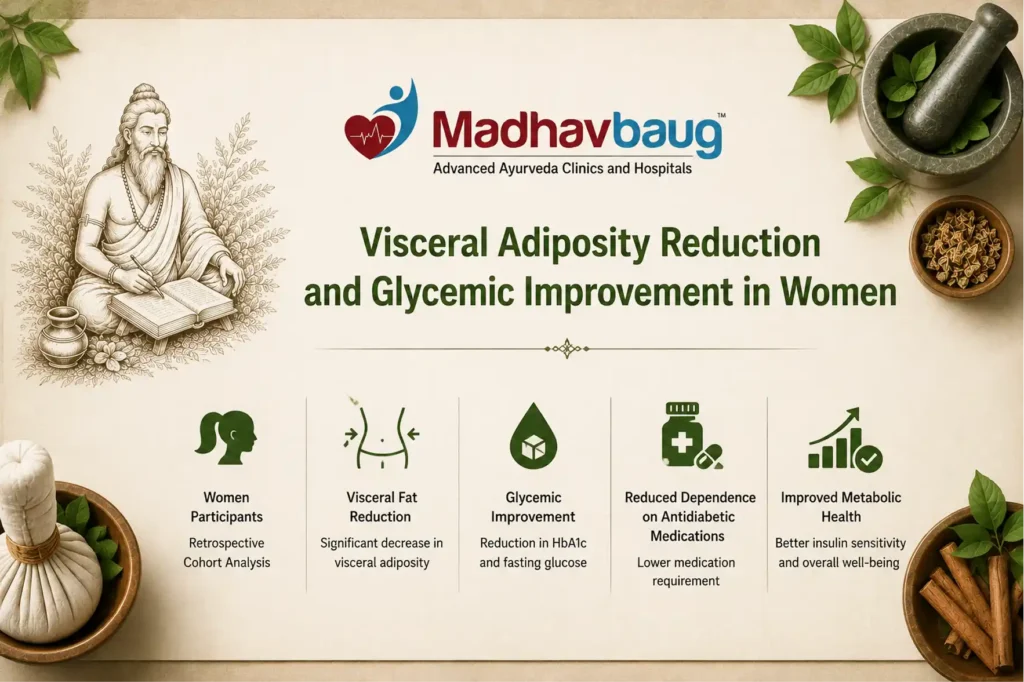
Women with type 2 diabetes mellitus (T2DM) carry a disproportionate burden of visceral adipositydriven insulin resistance, partly attributable to sex-specific differences in fat distribution, adipokine biology, and hormonal modulation of insulin signaling. Despite constituting over half of the global diabetic population, women remain underrepresented in diabetes intervention trials, and sex-disaggregated outcome data from multimodal lifestyle interventions are scarce. Abdominal girth — the clinical surrogate of visceral adiposity — is a more sensitive marker of insulin resistance than BMI in women, and its reduction is a direct indicator of metabolicnormalization. This study examines the efficacy of the Comprehensive Diabetic Care (CDC) program in a predominantly female, high-BMI T2DM cohort, with abdominal girth reduction as the primary insulin resistance endpoint. Download Research Book
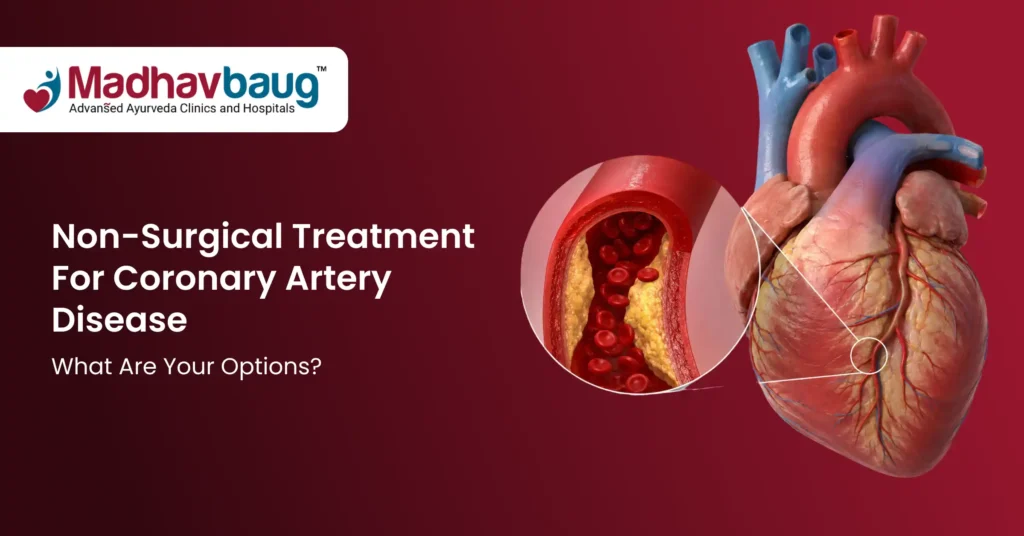
You have just been told you have coronary artery disease. Or maybe the doctor has mentioned a blockage in your heart arteries. The next question most people ask is, ‘Do I need surgery?’ The answer, in many cases, is no. Non-surgical treatment for coronary artery disease has advanced significantly, and for thousands of patients across India, surgery has not been the first step or even a necessary one. Depending on the severity of your condition, there are several effective alternatives to heart surgery that can manage symptoms, slow disease progression, and, often, support meaningful reversal of arterial damage. At Madhavbaug, we have been doing exactly this work for years, combining the precision of modern cardiac diagnostics with the healing depth of classical Ayurveda to treat heart blockage without surgery, safely and under full medical supervision. Concerned about heart blockage? Book a consultation with Madhavbaug today and find out if non-surgical reversal is right for you. What Is Coronary Artery Disease and Why Does It Happen? Coronary artery disease, or CAD, occurs when the arteries supplying blood to the heart muscle become narrowed or blocked due to a gradual buildup of plaque inside the artery walls. Plaque is made up of cholesterol, fat, calcium, and other substances that accumulate over time, restricting blood flow and oxygen supply to the heart. In Ayurveda, this condition is known as Hridroga. It occurs when Ama (toxins) and Medo Dhatu (unhealthy fats) accumulate in the arteries, leading to restricted circulation and weakened cardiac function. This closely corresponds to what modern medicine calls Coronary Artery Disease. As the arteries narrow, you may experience: Chest pain or tightness, especially during physical activity Shortness of breath and difficulty with everyday activities Unexplained fatigue or weakness Irregular heartbeat or palpitations Swelling in the legs, feet, or abdomen Cold or numb extremities due to poor circulation In severe cases, a heart attack The risk factors that drive CAD are largely lifestyle-related: High cholesterol and triglyceride levels High blood pressure and uncontrolled diabetes Obesity, particularly abdominal fat Smoking, alcohol, and sedentary habits Chronic stress and anxiety Accumulation of Ama due to poor digestion and lack of detoxification Because lifestyle and metabolic dysfunction drive this condition, they can also be systematically addressed to reverse it. This approach is the foundation of heart blockage treatment without surgery at Madhavbaug. Is Surgery Always Necessary for Heart Blockage? Not always. The need for surgery depends on the severity and location of the blockage, how many arteries are affected, your current symptoms, and your overall health. For many patients with stable coronary artery disease, coronary artery disease treatment without surgery is not just possible but clinically recommended as the first line of approach. Surgery is typically considered when: Blockages are severe or located in critical arteries Multiple arteries are significantly affected Symptoms are not improving with other treatments There is immediate and high risk of heart attack For everyone else, there is a real and credible window to treat, stabilise, and improve the condition through non-surgical means. Knowing your alternatives to heart surgery is, therefore, not just useful; it is essential. What Does Madhavbaug’s Non-Surgical Treatment for Coronary Artery Disease Include? How Does Madhavbaug Use Modern Diagnostics? Before any treatment begins, Madhavbaug conducts a thorough cardiac evaluation using advanced diagnostic tools. A core part of this evaluation is Stress Testing, and the reasoning behind it matters. Modern cardiology has established that blockage percentage alone does not determine disease severity. Major studies including COURAGE, ISCHEMIA, ORBITA, and MASS-II demonstrated that in stable coronary artery disease, functional significance is often more important than anatomical appearance. Stress testing identifies exercise-induced ischemia and evaluates how well the heart actually performs under load, not just what it looks like on a scan. At Madhavbaug, stress testing is performed before the Blockage Management Program begins and repeated after completion of therapy. This allows doctors to objectively track changes in exercise capacity, ischemic burden, symptom improvement, and overall cardiovascular performance across the course of treatment. The full diagnostic workup includes: Treadmill Test (TMT) to measure exercise tolerance and cardiac stress response 2D Echocardiography to assess heart structure and function, with particular attention to ejection fraction, stroke volume, end diastolic volume, pulmonary artery systolic pressure, fractional shortening, and septal wall motion. In low EF patients, Madhavbaug’s treatment targets reverse cardiac remodeling: as myocardial blood supply improves and ischemia reduces, serial 2D Echo assessments often demonstrate measurable recovery across all these parameters, providing objective evidence of functional improvement rather than just symptomatic relief ECG to evaluate heart rhythm and electrical activity Lipid profile, blood sugar, and inflammatory markers Madhavbaug also uses the MIB Pulse App for continuous monitoring throughout the programme, enabling real-time tracking of key health markers and progress over time. What Is Panchakarma and How Does It Help Reverse Heart Blockage? Panchakarma is a cornerstone of Madhavbaug’s non-surgical treatment for coronary artery disease and one of the most powerful tools available for addressing heart blockage without surgery. It is not simply a detox therapy. It is a deep rejuvenation process that works on multiple levels of cardiovascular health simultaneously. Its clinical relevance extends beyond traditional Ayurvedic principles. A peer-reviewed pilot study published in the Journal of Hilaris evaluated Ischemia Reversal Therapy as an add-on treatment for ischemic heart disease using SPECT myocardial perfusion imaging, a gold-standard nuclear imaging tool for measuring actual blood flow to the heart muscle. The findings demonstrated measurable improvement in myocardial perfusion following the therapy protocol, providing objective evidence that this approach does more than manage symptoms. Here is what Panchakarma therapy does for the heart: Removes Ama (toxins) that clog arteries and impair circulation Reduces inflammation in blood vessels, a primary driver of plaque build-up Breaks down visceral fat that contributes to arterial narrowing Improves blood viscosity for smoother, healthier circulation Reduces oxidative stress that damages arterial walls How Does Diet Support Heart Blockage Reversal? Diet is one of the most direct and powerful tools in coronary artery disease treatment without surgery. At Madhavbaug, dietary interventions are
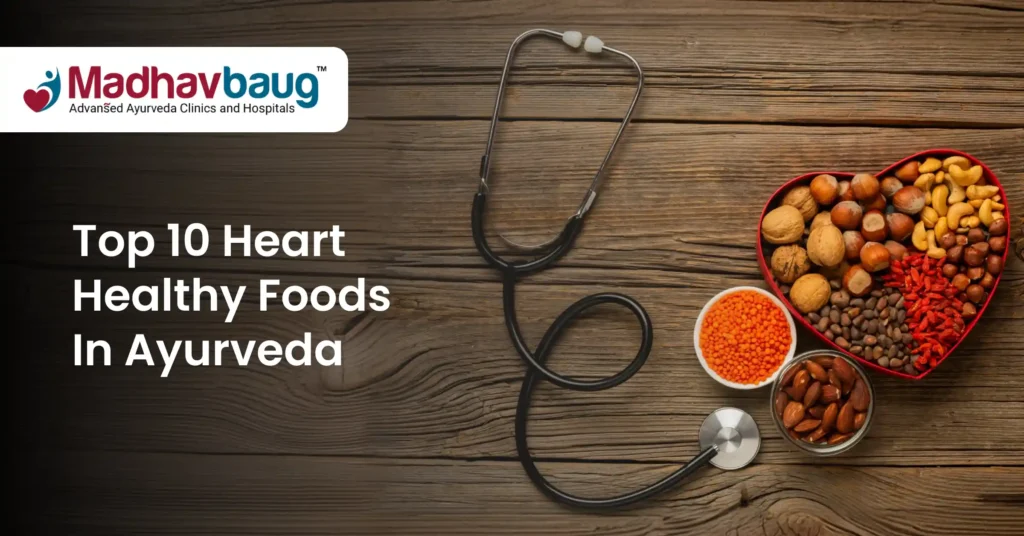
Modern nutrition and ancient Ayurvedic wisdom agree on more than most people realise. Long before cholesterol panels existed, Ayurveda had already mapped out which foods protect the heart, clear the arteries, and strengthen the heart muscle directly. The framework is different from conventional nutrition but the destination is the same. Heart disease in Ayurveda develops when Ama, toxic residue from poor digestion, accumulates in the body’s channels. Add aggravated Vata and Kapha, chronic stress disturbing Sadhaka Pitta, and you have the conditions for cardiovascular disease to take hold. A good diet for heart health therefore means foods that digest easily, clear Ama, and nourish the heart tissue at its root. Here are the ten foods Ayurveda has relied on for centuries, many of which modern research has since caught up with. Not sure how to build this into your daily eating? Madhavbaug’s specialists can help. Book your consultation today. 1. Arjuna Bark (Terminalia arjuna) If Ayurveda had a cardiology department, Arjuna would be running it. The bark of the Arjuna tree has been used specifically for heart conditions for over three thousand years and remains the single most important cardiac herb in the entire tradition. It is consumed daily as a warm decoction or simmered in milk, which makes it a genuine part of eating for a healthy heart rather than an occasional supplement. Research backs what traditional physicians observed centuries ago: it strengthens the heart muscle, improves pumping efficiency, reduces LDL and triglycerides, and protects arterial walls from oxidative damage. Classified as Hridya in Ayurveda, it has a direct therapeutic affinity for the heart itself. 2. Garlic (Lasuna) Raw garlic is one of the most effective foods for keeping the cardiovascular system clear. Pungent and warming, it stimulates digestive fire and prevents the Ama accumulation that clogs arterial channels over time. Its active compound allicin: Lowers LDL Reduces blood pressure Decreases abnormal clotting Fights arterial inflammation Two or three raw cloves daily, crushed and left a few minutes before eating, is the traditional preparation that maximises its effect. Ayurvedic texts used garlic specifically for Hridroga, the broad category of heart disorders, long before allicin had a name. 3. Turmeric (Haridra) Turmeric earns its place in the healthiest heart diet because the evidence for curcumin, its active compound, is genuinely strong. Chronic low-grade inflammation is one of the primary drivers of arterial plaque. Curcumin addresses that directly. It also lowers LDL oxidation, supports healthy endothelial function, and helps regulate blood sugar, itself a significant cardiac risk factor. A teaspoon in warm milk daily. Simple, consistent, effective. 4. Amla (Indian Gooseberry) Among all the fruits good for the heart, Amla sits at the top of the Ayurvedic list. One of the richest natural sources of Vitamin C on the planet. Powerful antioxidant protection for arterial walls. It reduces total and LDL cholesterol, raises HDL, lowers oxidative stress, and is classified in Ayurvedic texts as a true Hridya Rasayana, meaning it strengthens the heart muscle directly. A teaspoon of Amla powder in warm water first thing in the morning is one of the most underrated heart-protective habits available. 5. Ghee (Clarified Butter) Ghee on a heart-healthy list raises eyebrows. It should not. Conventional advice has treated all saturated fat as dangerous for decades, but Ayurveda has always distinguished between types and qualities. Pure cow’s ghee in moderate quantities is deeply nourishing, and emerging research reflects a more nuanced picture than the old blanket advice suggested. It contains butyrate, an anti-inflammatory short-chain fatty acid. It supports absorption of fat-soluble vitamins that protect the cardiovascular system. In Ayurveda it is the finest carrier for delivering herbal compounds deep into tissues, including the heart muscle. One teaspoon with warm food. Not a licence for excess. 6. Sesame Seeds (Tila) Sesame seeds are classified as Hridya in Ayurveda, meaning direct tonic effect on the heart. Small but genuinely powerful. Lower LDL cholesterol Support blood pressure Reduce arterial inflammation Improve arterial flexibility Used extensively in classical Ayurvedic formulations for cardiac weakness, particularly Vata-related heart conditions involving dryness and irregular rhythm. A tablespoon of sesame seeds or a small amount of cold-pressed sesame oil added to daily food is enough to make a difference over time. 7. Pomegranate (Dadima) Pomegranate is among the most celebrated fruits good for the heart in both Ayurvedic medicine and modern science. Three times the antioxidant activity of red wine and green tea. Research shows it reduces arterial plaque progression, lowers systolic blood pressure with regular use, and decreases LDL oxidation, the process that makes cholesterol stick to and damage artery walls. In Ayurveda it is Tridoshic, balancing all three doshas, which makes it one of the safest and most universally recommended cardiac foods regardless of individual constitution. 8. Flaxseeds (Alsi) Rich in alpha-linolenic acid, the plant-based omega-3, plus soluble fibre and lignans. That combination does a lot of cardiovascular work simultaneously. Reduce LDL and triglycerides Bind to cholesterol in digestion Fight systemic inflammation Improve arterial elasticity Warming and nourishing in Ayurvedic terms, particularly useful for Vata-type heart imbalances. A tablespoon of ground flaxseeds added to food daily is enough. Ground absorbs better than whole. 9. Walnuts (Akharot) One of the few plant foods that provide a meaningful amount of alpha-linolenic acid. Walnuts reduce LDL, preserve or raise HDL, decrease arterial wall inflammation through their polyphenol content, and improve endothelial function, meaning blood vessels dilate and contract the way they should. In Ayurveda they are classified as Medhya and Balya, nourishing the mind and strengthening the body including the heart. A small handful soaked overnight and eaten in the morning is the traditional preparation. Soaking reduces enzyme inhibitors and improves digestibility. 10. Moong Dal (Green Gram) Moong dal is Ayurveda’s most beloved food for the heart patient. The most Sattvic, easiest to digest, and most nourishing of all legumes. Low in fat, high in plant protein, rich in soluble fibre that actively reduces LDL, and packed with potassium and magnesium for blood pressure support. It produces minimal Ama even with daily consumption,

A heart blockage diagnosis does not give you much time to think. Suddenly there are conversations about surgery, stents, medications, second opinions, and it can feel like the decision is already being made before you have fully understood what is actually going on inside your body. Bypass surgery has its place. For certain blockages, in certain situations, it is genuinely the right call and delaying it would be dangerous. But it is not the only path. For many people, particularly those sitting in the mild to moderate range, natural and Ayurvedic approaches offer something surgery fundamentally cannot: they go after the disease process itself, not just the blockage it created. This is not a pitch for ancient wisdom over modern medicine. It is a straightforward look at what each approach actually does, where each one falls short, and how a combined plan can support your heart in ways that no single intervention will. Facing a blockage diagnosis and not sure where to start? Talk to Madhavbaug’s specialists before you decide anything. Book your consultation today. What Is Heart Blockage? Coronary artery disease happens when plaque, a mixture of cholesterol, fat, calcium, and other material, builds up inside the walls of the coronary arteries. The arteries narrow. Blood flow to the heart muscle drops. If a blockage becomes complete, a heart attack follows. Severity is measured in percentages, and where you land matters a lot for what treatment makes sense: Below 50 percent: mild, typically managed with medication and lifestyle changes 50 to 70 percent: moderate, intervention may or may not be needed depending on symptoms Above 70 percent: significant, this is where surgical options enter the conversation Above 90 percent: critical, usually needs urgent attention Any natural or Ayurvedic protocol needs to be built around full awareness of where you currently sit on this spectrum, ideally with your treating physician in the loop. What Is Bypass Surgery? Coronary artery bypass grafting, CABG, is a major open-heart operation. A healthy vessel from the leg, chest, or arm is used to reroute blood around the blocked artery so the heart muscle gets what it needs again. It tends to be recommended when multiple arteries are blocked at once, when the left main coronary artery is involved, when stenting is not technically an option, when heart pumping function has dropped significantly, or when diabetes is present alongside multi-vessel disease. What it does well: restores blood flow fast, meaningfully reduces heart attack risk in critical cases, and relieves chest pain and breathlessness in the short term. Decades of data back its use in the right situations. What it does not do is harder to say in a single sentence, because the evidence here is more extensive than most people realise. First, the fundamental mechanical limitation: CABG does not remove plaques. It routes blood around them. The original blockages stay exactly where they are. Beyond that, several major trials have raised serious questions about how much bypass surgery actually improves outcomes in stable coronary artery disease: The VA Cooperative Study found no significant overall survival difference at 11 years for patients without left main artery involvement. Any early survival edge diminished after roughly five years as grafts began to close. The CASS Trial found that patients with mild symptoms could safely defer surgery without a clear mortality disadvantage, suggesting many people are being sent to the operating table earlier than the evidence requires. The BARI 2D trial, published in 2009, found that prompt revascularisation in stable CAD patients with diabetes did not significantly improve survival or reduce major cardiovascular events compared to intensive medical therapy alone. The ISCHEMIA Trial in 2020, one of the most closely watched cardiovascular studies in recent years, found that an initial invasive strategy did not reduce ischemic events or death over the median follow-up compared to conservative management. And then there is the graft failure problem. Saphenous vein grafts, the most commonly used, carry significant failure rates over time, with closure associated with returning chest pain, repeat procedures, and worse downstream outcomes. It carries real risks on top of all of this: infection, stroke, kidney complications, cognitive effects, a recovery measured in weeks to months. That last part is the crux of it. Bypass is a mechanical fix for what is fundamentally a metabolic disease. Replacing the blocked pipe without asking why the pipe blocked is not a complete answer. And for stable, mild to moderate disease, the evidence suggests the pipe replacement may not even be necessary. Non-Surgical Treatment: What the Evidence Actually Shows The evidence for non-surgical treatment for heart blockage is more substantial than most people realise, particularly for mild to moderate cases. The most referenced work comes from Dr Dean Ornish, whose studies showed that intensive lifestyle intervention, a plant-based diet, stress management, moderate exercise, and a support structure around the patient, could not just slow but in some cases reverse coronary artery disease progression. Without surgery. The core elements that make this work: Dietary transformation is the foundation. Whole foods, plant-forward eating, cutting refined carbohydrates and saturated fat. Not a short-term plan but a lasting shift in how you eat. Regular movement builds cardiovascular fitness and reduces the chronic low-grade arterial inflammation that drives plaque formation in the first place. Stress reduction matters more than people give it credit for. Cortisol, when chronically elevated, directly damages arterial walls. Yoga, Pranayama, mindfulness, these are not soft additions to the plan. They are metabolic tools. Smoking cessation is one of the single highest-impact changes for arterial health, full stop. Active metabolic management means keeping blood sugar, blood pressure, cholesterol, and weight in check through ongoing monitoring and intervention, not just occasionally. Ayurvedic Treatment for Heart Blockage In Ayurveda, the heart is one of the three vital seats of consciousness in the body. Heart blockage is understood through the lens of dosha imbalance: excess Ama building from weak digestion and sluggish metabolism, Vata disrupting circulation, Kapha contributing to fatty deposits, and Pitta driving inflammation in the arterial
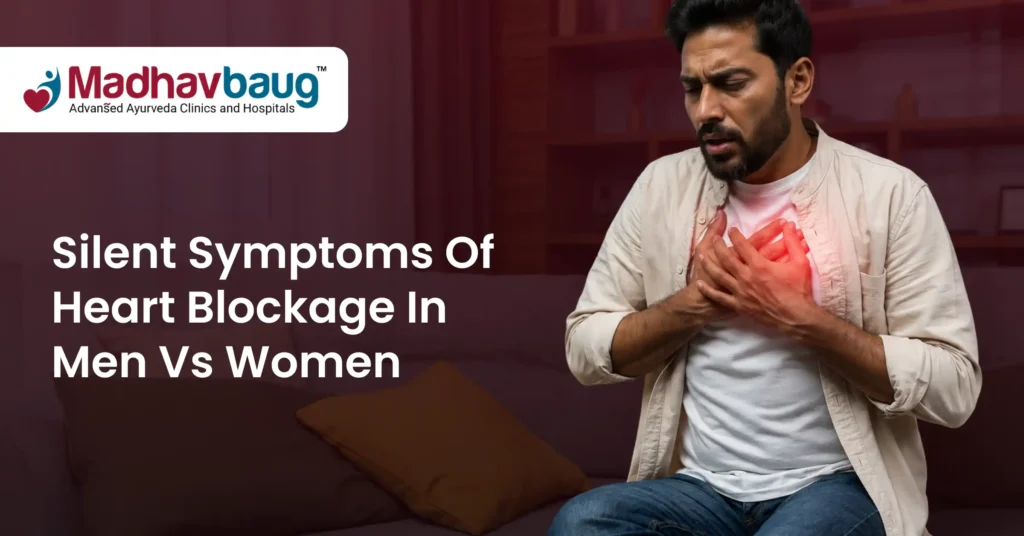
Heart blockage is one of the most dangerous conditions you can have without knowing it. Unlike a sudden dramatic event, blockages in the coronary arteries build up silently over years, gradually restricting blood flow before any obvious symptoms appear. What makes this even harder to navigate is that the symptoms of heart blockage in men and the symptoms of heart blockage in women look completely different from each other. This difference has led to decades of misdiagnosis, delayed treatment, and preventable deaths, particularly in women. Knowing what to look for in your own body, and understanding how the experience differs between men and women, could be one of the most important things you read. Worried about your heart? Do not wait for symptoms to become serious. Book a cardiac assessment at Madhavbaug today. What Is Heart Blockage? Heart blockage, medically known as coronary artery disease, occurs when fatty deposits called plaque build up inside the walls of the coronary arteries. Over time this narrows the arteries and reduces oxygen-rich blood flow to the heart muscle. This process can lead to: Stable angina: chest discomfort that occurs predictably during exertion Unstable angina: chest pain that appears unpredictably, even at rest Heart attack: when blood flow is completely cut off to part of the heart Heart failure: the heart becomes too weak to pump effectively over time Sudden cardiac arrest in severe cases The most alarming aspect is that blockage can progress for years with no obvious symptoms at all. This is why understanding the silent and atypical warning signs matters so much. Symptoms of Heart Blockage in Men Men tend to experience more textbook cardiac symptoms, which makes recognition somewhat easier but also creates a false sense of security. Many men dismiss what they feel as heartburn, muscle strain, or stress until the situation becomes serious. Classic symptoms in men: Chest pain or pressure: a heavy, squeezing, or tightening feeling in the centre or left side of the chest Pain radiating down the left arm, into the jaw, or up into the neck Shortness of breath during physical activity or at rest Cold sweats appearing suddenly without exertion Nausea or lightheadedness alongside chest discomfort Rapid or irregular heartbeat during episodes of reduced blood flow Silent symptoms men often ignore: Recurring indigestion or heartburn that does not respond to antacids Unexplained drop in stamina during activities previously managed easily Snoring or sleep apnoea, strongly linked to cardiovascular disease Erectile dysfunction, which can be an early sign that blood vessel health is compromised Mild jaw or shoulder pain that comes and goes without a clear muscular cause Men are more likely to have a heart attack at a younger age and more likely to show the classic presentation. They are also more likely to delay seeking help. Many who have had a heart attack report having felt vague warning signs for weeks beforehand that they chose to ignore. Symptoms of Heart Blockage in Women The symptoms of heart disease in women are far more varied and far less obvious. This is precisely why heart disease remains chronically underdiagnosed in female patients despite being the leading cause of death in women globally. Common symptoms in women: Extreme and unexplained fatigue that persists for days or weeks, often described as bone-deep exhaustion that sleep does not fix Shortness of breath even without physical exertion Chest pressure or tightness that feels mild and is frequently mistaken for anxiety Nausea, vomiting, or stomach pain without an obvious digestive cause Pain or discomfort in the upper back, between the shoulder blades, or in the jaw and neck Dizziness, lightheadedness, or a sudden feeling of being unwell Sleep disturbances and unusual anxiety in the weeks leading up to a cardiac event Silent Heart Attack Symptoms in Women A significant number of women have heart attacks without ever experiencing chest pain. Research has shown that women are more likely to have a heart attack that goes unrecognised because the symptoms resemble other conditions entirely. Signs a woman may be having a silent heart attack: Sudden overwhelming fatigue with no physical explanation Flu-like symptoms: sweating, nausea, general malaise Jaw pain or toothache-like discomfort with no dental cause Upper back pressure between the shoulder blades A feeling of doom or intense anxiety appearing suddenly Mild chest pressure that feels more like fullness than pain These symptoms are so nonspecific that women frequently attribute them to stress, menopause, or digestive problems. Healthcare providers have historically been slower to investigate cardiac causes when women present this way, though awareness is improving. Heart Failure Symptoms to Know Heart failure can develop as a result of a heart attack. Symptoms include persistent breathlessness, swelling in the legs and ankles, unexplained weight gain from fluid retention, reduced ability to exercise, and a persistent cough that worsens when lying down. Men vs Women: Symptoms at a Glance Symptom Men Women Chest pain Common, often intense Often mild or absent Fatigue Present Prominent, often the main symptom Shortness of breath Common Common, even without exertion Jaw or back pain Less common More common Nausea Occasional Frequent Cold sweats Common Common Silent heart attack Less likely More likely Seeking help promptly Less likely More likely to be dismissed by others Ayurvedic and Herbal Treatment for Heart Blockage Alongside conventional medical care, Ayurvedic treatment for heart blockage offers a complementary approach to supporting heart health and slowing the progression of arterial disease. Commonly used herbs and formulations: Arjuna (Terminalia arjuna): strengthens the heart muscle, supports healthy blood pressure, and improves circulation. One of the most respected cardiac herbs in Ayurveda with modern research validating its traditional use Guggul: extensively studied for cholesterol-lowering properties, reduces LDL and raises HDL, and addresses inflammation in arterial walls Triphala: supports digestion, reduces oxidative stress, and helps clear metabolic waste from the body’s channels Ashwagandha: manages chronic stress, lowers cortisol, and supports healthy blood pressure Garlic (Lasuna): associated with reduced cholesterol, decreased platelet aggregation, and improved circulation These herbs are typically prescribed in personalised formulations
Your heart beats around 100,000 times a day without you ever having to think about it. But when something starts going wrong, the body almost always sends signals before a serious event like a heart attack occurs. The problem is that the early signs of heart disease are subtle, easy to dismiss, and frequently mistaken for stress, ageing, or something unrelated. Learning to recognise the warning signs early can genuinely be the difference between timely treatment and a life-threatening emergency. Concerned about your heart health? Do not wait for a major event to find out where you stand. Book a cardiac assessment at Madhavbaug today. What Are the Types of Heart Disease? Heart disease is not one condition. It is a category that covers several different problems, each with its own pattern of symptoms and risk factors. Coronary artery disease is the most common type. It occurs when plaque builds up inside the coronary arteries, narrowing them and restricting blood flow to the heart muscle. Over time this can lead to angina, heart attack, or heart failure. Heart failure does not mean the heart has stopped. It means the heart muscle has weakened to the point where it cannot pump blood efficiently enough to meet the body’s needs. Fluid backs up into the lungs and lower limbs as a result. Arrhythmias are abnormal heart rhythms. The heart may beat too fast, too slow, or irregularly. Some arrhythmias are harmless, others are life-threatening. Valvular heart disease involves problems with the heart’s valves, which control blood flow between the heart’s chambers. Damaged or leaking valves force the heart to work harder and can lead to heart failure over time. Cardiomyopathy refers to disease of the heart muscle itself, where the muscle becomes enlarged, thickened, or rigid, reducing its ability to pump effectively. Understanding which type is involved changes the treatment approach significantly. What matters most across all of them is catching the warning signs early. Early Signs of Heart Disease Chest Discomfort or Pressure Most people picture a dramatic, clutch-your-chest moment. That is not usually how it starts. A dull ache. A sense of heaviness that appears during a walk and fades when you sit down. A squeezing feeling that shows up under stress and disappears again. These quieter versions are just as worth taking seriously, especially when they keep coming back without a clear reason. Get it assessed. Do not wait it out. Shortness of Breath There is a difference between being winded after a hard run and struggling to catch your breath climbing one flight of stairs. If physical effort that used to be easy now leaves you breathless, that shift is worth paying attention to. A heart that is not pumping efficiently causes fluid to back up into the lungs. Breathing becomes harder. People blame it on being out of shape, on gaining weight, on age. Sometimes that is accurate. Sometimes the lungs are congested because the heart is struggling. Watch for: Breathlessness during activity that used to feel effortless Difficulty breathing when lying flat Waking up in the middle of the night gasping for air. Persistent Fatigue Not the kind that arrives after a long day and disappears with a good night’s sleep. This is something heavier. Activities that never used to drain you suddenly do. You need to rest more often. There is a general sluggishness that follows you through the day and does not have an obvious explanation. When the heart is working poorly, it quietly redirects blood toward the organs that need it most. Everything else, your muscles, your limbs, gets less. The result is tiredness that sleep does not fix. In women especially, this kind of fatigue tends to get attributed to stress or hormones long before anyone considers the heart. Swelling in the Legs, Ankles, or Feet Fluid is not supposed to pool in your lower body. When it does, it usually means the heart is not moving blood efficiently enough, so it backs up in the veins and leaks into surrounding tissue. What this looks like in practice: ankles that are puffy by evening, socks that leave deep marks on the skin, legs that feel heavier or tighter than they should. On its own, leg swelling can have other explanations. Alongside fatigue and breathlessness, it becomes a much clearer signal that something cardiac deserves investigation. Heart Palpitations Occasional awareness of your heartbeat is normal. Frequent or unexplained palpitations are not. Symptoms include a racing, fluttering, or pounding sensation, a feeling that the heart has skipped a beat, or episodes that come on suddenly without a clear trigger. Arrhythmias are a recognised heart disease condition and should always be assessed if they happen regularly. Dizziness or Lightheadedness Frequent dizziness, particularly during physical activity, can signal that the heart is not pumping enough blood to the brain. It is commonly blamed on dehydration or low blood pressure, but it can point to underlying cardiac problems. Any episode where you actually faint or come close to fainting during exertion should be treated as an emergency. Pain That Radiates to the Arm, Jaw, Neck, or Back The nerves that supply the heart share pathways with nerves in other areas of the body. This is why cardiac pain is sometimes felt in the left arm, jaw, neck, upper back, or even the upper abdomen rather than the chest. This referred pain is one of the reasons cardiac events in women are frequently misdiagnosed, as women are more likely to experience these non-chest symptoms during a heart attack. Persistent Cough or Wheezing A cough that lingers without an obvious respiratory cause can sometimes indicate heart failure. When the heart struggles to pump, fluid accumulates in the lungs, producing a chronic cough or wheeze that is easy to confuse with asthma or a chest infection. If the cough worsens when lying down, produces pink or white mucus, and comes with breathlessness or fatigue, it deserves cardiac investigation. Cold Sweats Breaking out in a cold sweat without physical exertion
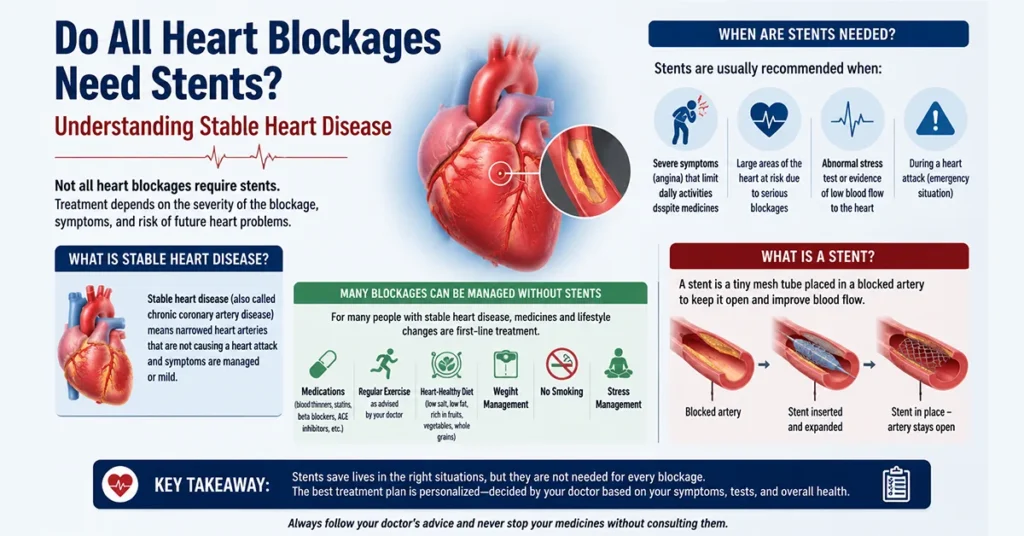
Heart disease continues to be one of the leading causes of death worldwide. Emergency procedures like angioplasty and stenting have undoubtedly saved millions of lives during heart attacks. But today, an important medical question is gaining attention globally: Are stents being overused in stable heart patients? According to multiple international studies and reports referenced by organizations like the Parsemus Foundation and the American Medical Association (AMA), stenting in stable coronary artery disease may often provide limited long-term benefit for many patients — especially when compared to lifestyle modification and medical management. In many non-emergency cases, patients may be undergoing invasive procedures even when non-invasive heart treatment approaches could be explored first. When Is a Stent Truly Necessary? A stent is a small mesh tube placed inside a blocked artery to restore blood flow to the heart. In emergency situations such as: Heart attack (Myocardial Infarction) Severe artery blockage causing unstable symptoms Stenting can be life-saving. However, in stable heart disease, where blockages are present but symptoms are manageable, research suggests that medicines, lifestyle correction, and risk-factor management may sometimes be equally effective. What Does Research Say About Stenting in Stable Patients? Several landmark clinical studies have changed the way the medical world views stenting for stable coronary artery disease. The COURAGE Trial Published in the New England Journal of Medicine, the COURAGE Trial found that stenting did not significantly reduce the risk of heart attack or death compared to optimal medical therapy alone in stable patients. The ORBITA Trial Published in The Lancet, the ORBITA Trial showed that in some stable patients, stents did not produce significantly better symptom relief compared to placebo procedures. Reports discussed by the Parsemus Foundation and the American Medical Association also highlighted concerns regarding unnecessary stenting in non-emergency situations. Simply put: For many stable heart patients, correcting lifestyle and improving overall metabolic health may be as important as procedures. Why Can Stenting Become Overused? Despite growing evidence, stenting continues to be widely performed in stable patients. Common reasons include: Desire for quick symptom relief Fear associated with “blockage” Belief that opening the artery means curing the disease Limited awareness about non-invasive heart care options But one important medical fact is often misunderstood: Most heart attacks occur because of sudden blood clot formation, not just because of fixed blockage percentages. Limitations of Stenting While stenting is generally safe and extremely valuable in emergencies, it may not address the root cause of heart disease. Stenting does NOT: Remove the underlying disease process Stop new blockages from developing Correct metabolic imbalance Eliminate inflammation inside arteries In many cases: Blockages are compressed, not removed Disease progression may continue in other arteries Restenosis (re-narrowing) may occur Long-term medications remain necessary The Madhavbaug Approach: Treating the Root Cause This is where Madhavbaug focuses on a different philosophy. For over two decades, Madhavbaug has worked on an integrative, non-invasive cardiac care model that combines Ayurveda with modern medical science. The goal is not just symptom management, but improving overall heart health and reducing disease progression. How Madhavbaug Aligns with Modern Research Global cardiac research increasingly emphasizes: Lifestyle correction Metabolic improvement Stress reduction Long-term prevention This aligns closely with the integrative care philosophy followed at Madhavbaug. Addressing Root Causes Focus on: Cholesterol and triglyceride management Weight reduction Improved vascular health Better metabolic function Structured Lifestyle Programs Programs include: Scientifically designed exercise routines Personalized dietary approaches Reverse Diet concepts Stress management protocols Ayurvedic Therapies Therapies may include: Panchakarma Snehan & Swedan Basti therapy Shirodhara These approaches aim to: Improve endothelial function Reduce internal inflammation Support circulation and vascular health Enhance natural healing mechanisms Real Impact Seen in Patients Many patients who had: Previous angioplasty Advice for stenting Stable heart blockage have reported improvements through structured lifestyle correction and integrative cardiac rehabilitation. Patients often experience: Better exercise capacity Improved sugar and cholesterol control Reduced breathlessness and fatigue Improved quality of life Most importantly, they move toward long-term heart health instead of depending only on procedures. A Smarter and More Informed Approach Modern science and traditional wisdom are increasingly pointing toward the same conclusion: Heart disease is not only a blockage problem — it is deeply connected to lifestyle, metabolism, stress, and inflammation. While stents remain essential during emergencies, stable heart patients should also explore: Lifestyle correction Medical management Preventive cardiology Non-invasive integrative therapies Final Takeaway Before opting for stenting in a non-emergency situation, patients should ask: Is the procedure absolutely necessary? Have I explored lifestyle-based treatment options? Can non-invasive approaches help improve my condition? Today, with growing global evidence and integrative approaches like those followed at Madhavbaug, patients have more informed choices than ever before. Your heart does not just need a procedure — it needs long-term care, healthier habits, and the right lifestyle.
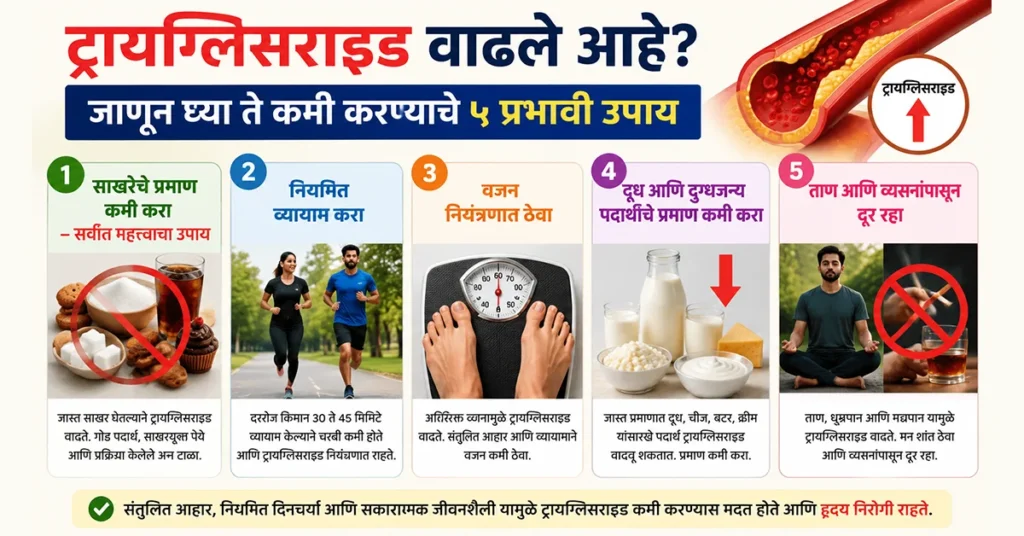
आजकाल अनेकांच्या हेल्थ रिपोर्टमध्ये “ट्रायग्लिसराइड वाढलेले” असे दिसते. पण ट्रायग्लिसराइड म्हणजे नेमके काय, ते का वाढते आणि त्याचा हृदयावर किती गंभीर परिणाम होऊ शकतो हे अनेकांना माहिती नसते. ट्रायग्लिसराइड हे शरीरात साठवले जाणारे एक प्रकारचे फॅट (चरबी) आहे. आपण जास्त गोड, तेलकट किंवा कॅलरीयुक्त पदार्थ खातो तेव्हा त्यातील अतिरिक्त ऊर्जा शरीर ट्रायग्लिसराइडच्या स्वरूपात साठवते. परंतु जेव्हा ट्रायग्लिसराइडचे प्रमाण खूप वाढते, तेव्हा: रक्त जाड (Thick) होऊ लागते रक्तप्रवाह मंदावू शकतो रक्तवाहिन्यांवर ताण वाढतो कोलेस्टेरॉल आणि BP वाढण्याचा धोका निर्माण होतो हृदयविकार आणि हार्ट अटॅकचा धोका वाढू शकतो म्हणूनच वाढलेले ट्रायग्लिसराइड हे “Silent Risk” मानले जाते. ट्रायग्लिसराइड वाढण्याची मुख्य कारणे आजच्या जीवनशैलीमुळे ट्रायग्लिसराइड वाढण्याचे प्रमाण झपाट्याने वाढत आहे. मुख्य कारणे: जास्त साखर आणि गोड पदार्थ तेलकट आणि प्रोसेस्ड फूड व्यायामाचा अभाव जास्त वजन ताणतणाव धूम्रपान आणि अल्कोहोल अनियमित झोप ट्रायग्लिसराइड कमी करण्यासाठी ५ प्रभावी उपाय १) साखरेचे प्रमाण कमी करा – सर्वात महत्त्वाचा उपाय जास्त साखर खाल्ल्यामुळे शरीरात ट्रायग्लिसराइड झपाट्याने वाढू शकतात. कारण: अतिरिक्त साखर थेट फॅटमध्ये रूपांतरित होते रक्ताची viscosity वाढते इन्सुलिन रेसिस्टन्स वाढू शकतो उपाय: साखर, मिठाई आणि बेकरी पदार्थ कमी करा कोल्ड ड्रिंक्स आणि गोड पेय टाळा प्रोसेस्ड फूड कमी खा २) नियमित व्यायाम करा दररोज ३० मिनिटे चालणे, सायकलिंग, योग किंवा हलका व्यायाम केल्यास ट्रायग्लिसराइड नियंत्रणात ठेवण्यास मदत होऊ शकते. व्यायामामुळे: ट्रायग्लिसराइड कमी होण्यास मदत HDL (चांगले कोलेस्टेरॉल) वाढते वजन नियंत्रणात राहते हृदय अधिक मजबूत बनते ३) वजन नियंत्रणात ठेवा जास्त वजन आणि पोटावरील चरबी यांचा ट्रायग्लिसराइडशी थेट संबंध असतो. फक्त ५–१०% वजन कमी केल्यानेही: ट्रायग्लिसराइडमध्ये सुधारणा दिसू शकते BP आणि शुगर नियंत्रणात येण्यास मदत होते मेटाबॉलिझम सुधारतो ४) दूध आणि दुग्धजन्य पदार्थांचे प्रमाण कमी करा चहा, कॉफी, बेकरी पदार्थ आणि जास्त डेअरी सेवन यामुळे काही लोकांमध्ये ट्रायग्लिसराइड वाढू शकतात. हे कमी केल्यास: इन्सुलिन रेसिस्टन्स कमी होण्यास मदत फॅट मेटाबॉलिझम सुधारतो ट्रायग्लिसराइड नियंत्रणात राहू शकतात ५) ताण आणि व्यसनांपासून दूर राहा ताणतणावामुळे शरीरातील हार्मोनल बदल फॅट मेटाबॉलिझमवर परिणाम करू शकतात. तसेच: अल्कोहोल सिगारेट तंबाखू हे ट्रायग्लिसराइड वाढवण्यास कारणीभूत ठरू शकतात. त्यामुळे: ताण नियंत्रणासाठी ध्यान आणि प्राणायाम करा धूम्रपान आणि अल्कोहोल टाळा डॉक्टर काय सांगतात? “वाढलेले ट्रायग्लिसराइड हे फक्त फॅटचे प्रमाण नाही, तर भविष्यातील हृदयविकाराचा महत्त्वाचा इशारा असू शकतो. योग्य आहार, नियमित व्यायाम आणि ताण नियंत्रण यामुळे ट्रायग्लिसराइड नियंत्रणात ठेवण्यास मदत होते.” — हृदयरोग तज्ज्ञ माधवबागचा समन्वित उपाय – ट्रायग्लिसराइड नियंत्रणासाठी Madhavbaug येथे ट्रायग्लिसराइड नियंत्रणासाठी फक्त औषधांवर अवलंबून न राहता संपूर्ण जीवनशैली सुधारण्यावर भर दिला जातो. रिव्हर्स डायट किट विशेष आहार पद्धती ज्यामध्ये: कमी साखर कमी फॅट नियंत्रित कॅलरी हलका आणि नैसर्गिक आहार यावर भर दिला जातो. यामुळे: शरीरातील अतिरिक्त चरबी कमी होण्यास मदत मेटाबॉलिझम सुधारतो कोलेस्टेरॉल आणि ट्रायग्लिसराइड नियंत्रणात राहण्यास सहाय्य पंचकर्म उपचार स्नेहन आणि स्वेदन शरीरातील चरबी मोकळी करण्यास मदत रक्ताभिसरण सुधारण्यास सहाय्य बस्ती उपचार लिव्हरचे कार्य सुधारण्यावर भर मेटाबॉलिझम संतुलित ठेवण्यास मदत व्यायाम आणि ताण नियंत्रण नियमित व्यायाम प्रोग्राम योग आणि प्राणायाम शिरोधारा सारखे उपचार ताण कमी करण्यासाठी या सर्वांचा एकत्रित परिणाम: ट्रायग्लिसराइड कमी होण्यास मदत कोलेस्टेरॉल नियंत्रणात राहणे हृदयविकाराचा धोका कमी होण्यास सहाय्य दैनंदिन जीवनात कोणते बदल कराल? सकाळी हलका आणि पौष्टिक नाश्ता फळे, भाज्या आणि धान्ययुक्त आहार रात्री कमी तेलकट आणि हलका आहार दररोज ३० मिनिटे व्यायाम पुरेशी झोप आणि ताण नियंत्रण शेवटचा संदेश ट्रायग्लिसराइड हा “Silent Risk” आहे — सुरुवातीला लक्षणे दिसत नाहीत, पण भविष्यात हृदयासाठी मोठा धोका निर्माण होऊ शकतो. योग्य आहार नियमित व्यायाम वजन नियंत्रण ताण कमी करणे आणि योग्य उपचार यांच्या मदतीने ट्रायग्लिसराइड नियंत्रणात ठेवता येऊ शकतात. आजच सुरुवात करा — कारण तुमच्या हृदयाचे आरोग्य तुमच्या रोजच्या सवयींवर अवलंबून असते.
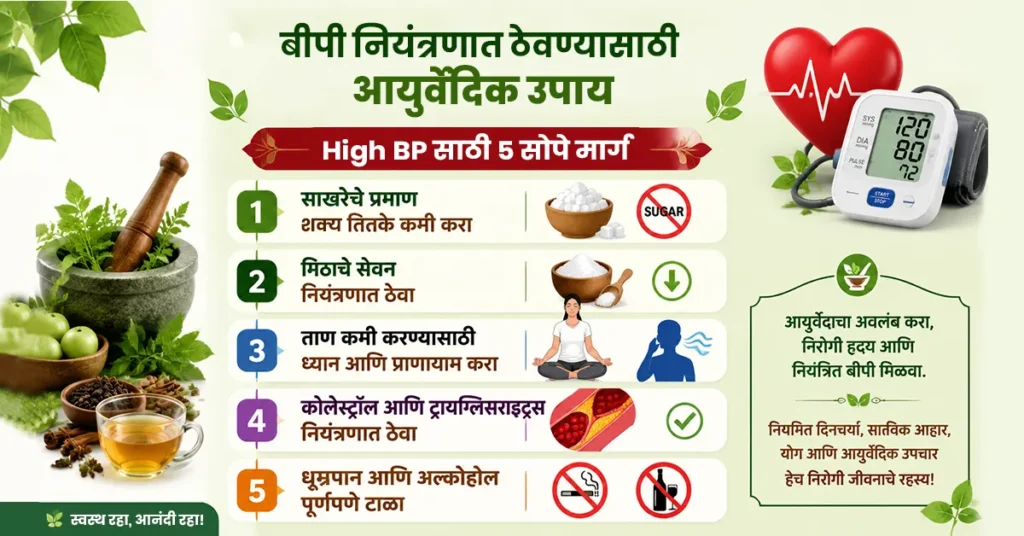
आजकाल उच्च रक्तदाब (High BP) ही समस्या अत्यंत सामान्य झाली आहे. ताणतणाव, चुकीचा आहार, झोपेचा अभाव, व्यायामाची कमतरता आणि बैठी जीवनशैली यामुळे कमी वयातही BP वाढलेला दिसून येतो. अनेक लोक नियमित औषधे घेत असूनही BP पूर्णपणे नियंत्रणात येत नाही अशी तक्रार करतात. पण चांगली गोष्ट म्हणजे — काही साध्या जीवनशैलीतील बदलांमुळे BP नैसर्गिक पद्धतीने नियंत्रणात आणण्यास मदत होऊ शकते. चला जाणून घेऊया BP नियंत्रणासाठी घरच्या घरी करता येणारे ५ सोपे आणि प्रभावी उपाय. १) साखरेचे प्रमाण शक्य तितके कमी करा जास्त साखर खाल्ल्यामुळे रक्ताची घनता वाढू शकते आणि रक्तवाहिन्यांवर ताण येतो. यामुळे BP वाढण्याची शक्यता वाढते. तसेच अतिरिक्त साखर रक्तवाहिन्यांच्या आतील थराला (एंडोथेलियम) हानी पोहोचवू शकते. त्यामुळे: साखर, मिठाई आणि कोल्ड ड्रिंक्स कमी करा प्रोसेस्ड आणि जास्त गोड पदार्थ टाळा शक्य असल्यास साखरेचे सेवन मोठ्या प्रमाणात कमी करा २) मिठाचे सेवन नियंत्रणात ठेवा जास्त मीठ खाल्ल्यामुळे शरीरात अतिरिक्त पाणी साचते. त्यामुळे रक्ताचे प्रमाण वाढते आणि BP वाढू शकतो. विशेषतः पॅकेज्ड आणि प्रोसेस्ड पदार्थांमध्ये लपलेले मीठ अधिक प्रमाणात असते. उपाय: अति खारट पदार्थ टाळा पापड, लोणची आणि पॅकेज्ड फूड कमी करा बाहेरचे आणि प्रोसेस्ड पदार्थ कमी खा ३) ताण कमी करण्यासाठी ध्यान आणि प्राणायाम करा ताणतणावामुळे शरीरात cortisol आणि adrenaline सारखे हार्मोन्स वाढतात. यामुळे रक्तवाहिन्या आकुंचित होतात आणि BP वाढतो. दीर्घकाळ ताण कायम राहिल्यास उच्च रक्तदाबाची समस्या गंभीर होऊ शकते. रोजच्या सवयींमध्ये समाविष्ट करा: 10–15 मिनिटे ध्यान प्राणायाम आणि श्वसन व्यायाम सकाळी चालणे किंवा योग ४) कोलेस्ट्रॉल आणि ट्रायग्लिसराइड्स नियंत्रणात ठेवा शरीरातील कोलेस्ट्रॉल आणि ट्रायग्लिसराइड्स वाढल्यास रक्तवाहिन्यांमध्ये चरबी साचू लागते. त्यामुळे BP वाढण्याचा धोका वाढू शकतो. हे कमी करण्यासाठी: तेलकट आणि तळलेले पदार्थ कमी करा चहा, कॉफी, बेकरी पदार्थांचे प्रमाण कमी करा जंक फूड आणि प्रोसेस्ड पदार्थ टाळा यामुळे: इन्सुलिन रेसिस्टन्स कमी होण्यास मदत होते कोलेस्ट्रॉल नियंत्रणात राहते BP नियंत्रणात ठेवण्यास मदत मिळते ५) धूम्रपान आणि अल्कोहोल पूर्णपणे टाळा सिगारेट, तंबाखू आणि अल्कोहोल यामुळे रक्तवाहिन्यांच्या आतील थराला नुकसान होते. यामुळे रक्तवाहिन्या कठीण होऊ शकतात आणि BP वाढू शकतो. त्यामुळे: धूम्रपान पूर्णपणे बंद करा तंबाखूजन्य पदार्थ टाळा अल्कोहोलचे सेवन कमी किंवा बंद करा डॉक्टर काय सांगतात? “उच्च रक्तदाब हा फक्त औषधांनी नियंत्रित होणारा आजार नाही. योग्य आहार, नियमित व्यायाम, ताण नियंत्रण आणि जीवनशैलीतील बदल यांचा BP नियंत्रणात अत्यंत महत्त्वाचा वाटा असतो.” — हृदयरोग तज्ज्ञ माधवबागचा समन्वित उपाय – BP नियंत्रणासाठी संपूर्ण दृष्टिकोन माधवबागमध्ये BP नियंत्रणासाठी फक्त औषधांवर अवलंबून न राहता संपूर्ण शरीराच्या संतुलनावर काम केले जाते. ताण नियंत्रणासाठी शिरोधारा — मन शांत ठेवण्यास आणि हार्मोन्स संतुलित ठेवण्यास मदत रक्तवाहिन्यांचे आरोग्य सुधारण्यासाठी स्नेहन आणि स्वेदन — रक्तवाहिन्यांच्या आतील थराला सहाय्य कोलेस्ट्रॉल आणि लिव्हर सपोर्टसाठी बस्ती उपचार — ट्रायग्लिसराइड्स आणि मेटाबॉलिझम नियंत्रणासाठी सहाय्यकारी किडनी संरक्षणासाठी विशेष उपचारांद्वारे: शरीरातील अतिरिक्त मीठ बाहेर टाकण्यास मदत युरिनमधील प्रोटीन कमी करण्यासाठी सहाय्य हृदय मजबूत करण्यासाठी विशेष थेरपीजमुळे: हृदयाच्या स्नायूंना बळकटी peripheral resistance कमी करण्यास मदत गो-BP डायट किट का महत्त्वाचे आहे? माधवबागचे विशेष Go-BP Diet Kit हे BP नियंत्रणासाठी तयार करण्यात आलेले आहार नियोजन आहे. यामध्ये: नियंत्रित मीठ कमी साखर संतुलित फॅट नैसर्गिक आणि हलका आहार यावर भर दिला जातो. BP खरोखर नियंत्रणात आहे का? – ABPM म्हणजे काय? बर्याच वेळा क्लिनिकमध्ये BP नॉर्मल दिसतो, पण दिवसभरात तो वाढलेला असू शकतो. हे ओळखण्यासाठी Ambulatory BP Monitoring (ABPM) वापरले जाते. यामध्ये: 24 तास BP मोजला जातो दिवस–रात्र BP मधील बदल समजतात उपचार योग्य आहेत का हे कळण्यास मदत होते हृदय निरोगी ठेवण्यासाठी Daily Checklist रोज 30 मिनिटे चालणे किंवा हलका व्यायाम साखर आणि मीठ कमी करणे प्राणायाम आणि ध्यान करणे BP नियमित तपासणे ताणतणाव कमी ठेवणे शेवटचा संदेश BP हा फक्त औषधांनी नियंत्रणात येणारा आजार नाही — तो जीवनशैलीशी थेट संबंधित आहे. योग्य आहार नियमित व्यायाम ताण नियंत्रण आयुर्वेदिक उपचार यांच्या मदतीने BP नैसर्गिक पद्धतीने नियंत्रणात ठेवण्यास मदत होऊ शकते. आजच या ५ सवयी सुरू करा आणि तुमच्या हृदयाची काळजी घ्या.

