
Coronary Artery Disease in Women: Symptoms, Risk Factors and Prevention
Quick answer Chest discomfort remains the most common heart-attack symptom in women, but women are more likely to experience additional


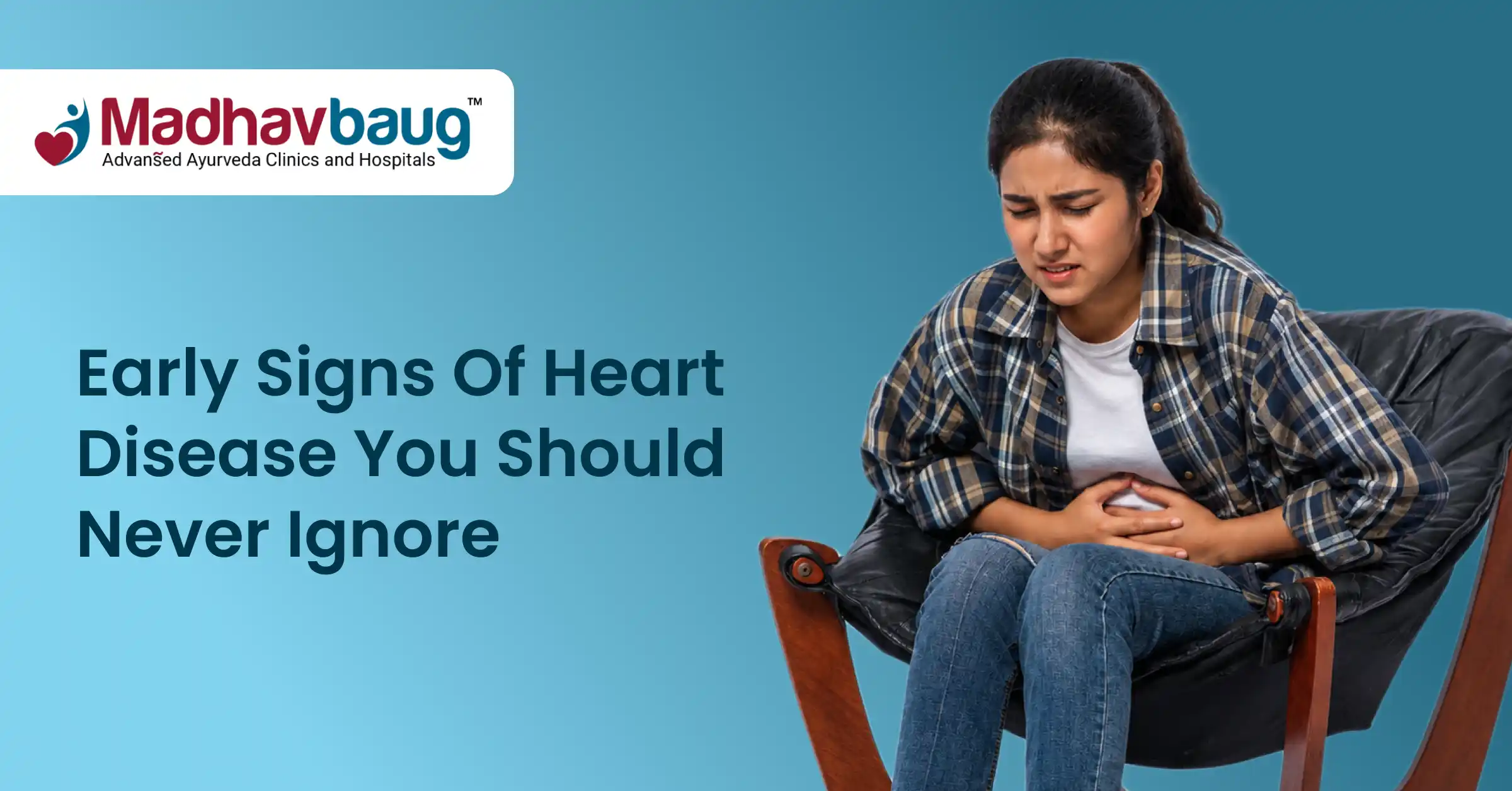
Your heart beats around 100,000 times a day without you ever having to think about it. But when something starts going wrong, the body almost always sends signals before a serious event like a heart attack occurs. The problem is that the early signs of heart disease are subtle, easy to dismiss, and frequently mistaken for stress, ageing, or something unrelated.
Learning to recognise the warning signs early can genuinely be the difference between timely treatment and a life-threatening emergency.
Concerned about your heart health? Do not wait for a major event to find out where you stand. Book a cardiac assessment at Madhavbaug today.
Heart disease is not one condition. It is a category that covers several different problems, each with its own pattern of symptoms and risk factors.
Coronary artery disease is the most common type. It occurs when plaque builds up inside the coronary arteries, narrowing them and restricting blood flow to the heart muscle. Over time this can lead to angina, heart attack, or heart failure.
Heart failure does not mean the heart has stopped. It means the heart muscle has weakened to the point where it cannot pump blood efficiently enough to meet the body’s needs. Fluid backs up into the lungs and lower limbs as a result.
Arrhythmias are abnormal heart rhythms. The heart may beat too fast, too slow, or irregularly. Some arrhythmias are harmless, others are life-threatening.
Valvular heart disease involves problems with the heart’s valves, which control blood flow between the heart’s chambers. Damaged or leaking valves force the heart to work harder and can lead to heart failure over time.
Cardiomyopathy refers to disease of the heart muscle itself, where the muscle becomes enlarged, thickened, or rigid, reducing its ability to pump effectively.
Understanding which type is involved changes the treatment approach significantly. What matters most across all of them is catching the warning signs early.
Most people picture a dramatic, clutch-your-chest moment. That is not usually how it starts. A dull ache. A sense of heaviness that appears during a walk and fades when you sit down. A squeezing feeling that shows up under stress and disappears again. These quieter versions are just as worth taking seriously, especially when they keep coming back without a clear reason. Get it assessed. Do not wait it out.
There is a difference between being winded after a hard run and struggling to catch your breath climbing one flight of stairs. If physical effort that used to be easy now leaves you breathless, that shift is worth paying attention to.
A heart that is not pumping efficiently causes fluid to back up into the lungs. Breathing becomes harder. People blame it on being out of shape, on gaining weight, on age. Sometimes that is accurate. Sometimes the lungs are congested because the heart is struggling.
Watch for:
Breathlessness during activity that used to feel effortless
Difficulty breathing when lying flat
Waking up in the middle of the night gasping for air.
Not the kind that arrives after a long day and disappears with a good night’s sleep. This is something heavier. Activities that never used to drain you suddenly do. You need to rest more often. There is a general sluggishness that follows you through the day and does not have an obvious explanation.
When the heart is working poorly, it quietly redirects blood toward the organs that need it most. Everything else, your muscles, your limbs, gets less. The result is tiredness that sleep does not fix. In women especially, this kind of fatigue tends to get attributed to stress or hormones long before anyone considers the heart.
Fluid is not supposed to pool in your lower body. When it does, it usually means the heart is not moving blood efficiently enough, so it backs up in the veins and leaks into surrounding tissue.
What this looks like in practice: ankles that are puffy by evening, socks that leave deep marks on the skin, legs that feel heavier or tighter than they should. On its own, leg swelling can have other explanations. Alongside fatigue and breathlessness, it becomes a much clearer signal that something cardiac deserves investigation.
Occasional awareness of your heartbeat is normal. Frequent or unexplained palpitations are not. Symptoms include a racing, fluttering, or pounding sensation, a feeling that the heart has skipped a beat, or episodes that come on suddenly without a clear trigger. Arrhythmias are a recognised heart disease condition and should always be assessed if they happen regularly.
Frequent dizziness, particularly during physical activity, can signal that the heart is not pumping enough blood to the brain. It is commonly blamed on dehydration or low blood pressure, but it can point to underlying cardiac problems.
Any episode where you actually faint or come close to fainting during exertion should be treated as an emergency.
The nerves that supply the heart share pathways with nerves in other areas of the body. This is why cardiac pain is sometimes felt in the left arm, jaw, neck, upper back, or even the upper abdomen rather than the chest. This referred pain is one of the reasons cardiac events in women are frequently misdiagnosed, as women are more likely to experience these non-chest symptoms during a heart attack.
A cough that lingers without an obvious respiratory cause can sometimes indicate heart failure. When the heart struggles to pump, fluid accumulates in the lungs, producing a chronic cough or wheeze that is easy to confuse with asthma or a chest infection. If the cough worsens when lying down, produces pink or white mucus, and comes with breathlessness or fatigue, it deserves cardiac investigation.
Breaking out in a cold sweat without physical exertion or heat is a warning sign that should never be dismissed. It occurs when the body activates its stress response due to inadequate blood flow. If it appears alongside chest discomfort, nausea, or dizziness, seek emergency medical help without delay.
Many people are surprised that digestive symptoms can be linked to heart disease. Nausea, stomach pain, or what feels like persistent indigestion, particularly in women, can sometimes be an early indicator of a cardiac event. If frequent indigestion does not respond to antacids and appears alongside chest tightness or fatigue, it deserves more than a gastrointestinal explanation.
Regular screening is the most reliable way. Key markers to track:
Blood pressure: ideally below 120/80 mmHg
Fasting blood sugar and HbA1c: diabetes significantly elevates cardiac risk
Lipid profile: LDL, HDL, and triglycerides
Resting heart rate and ECG
BMI and waist circumference: abdominal fat is an independent cardiac risk factor
For Indians above 40, or younger with any risk factor, annual cardiac screening is not overcaution. It is common sense.
At Madhavbaug, cardiac health is not evaluated in isolation. It is assessed alongside metabolic markers, lifestyle factors, and hormonal health to give a complete picture of what is actually going on.
The team works with you to:
Run comprehensive cardiac and metabolic diagnostics
Identify risk factors before symptoms become serious
Build a personalised plan combining Ayurvedic therapies, dietary correction, and guided physiotherapy
Target visceral fat and insulin resistance, both major cardiac risk drivers
Monitor and adjust the plan regularly
Your heart works hard for you every single day. Early attention is the most powerful thing you can give it in return.
Book your cardiac assessment at madhavbaug.org today.

Quick answer Chest discomfort remains the most common heart-attack symptom in women, but women are more likely to experience additional
Have you ever been through this situation wherein you had chest pain, you visited your doctor and they suggested an