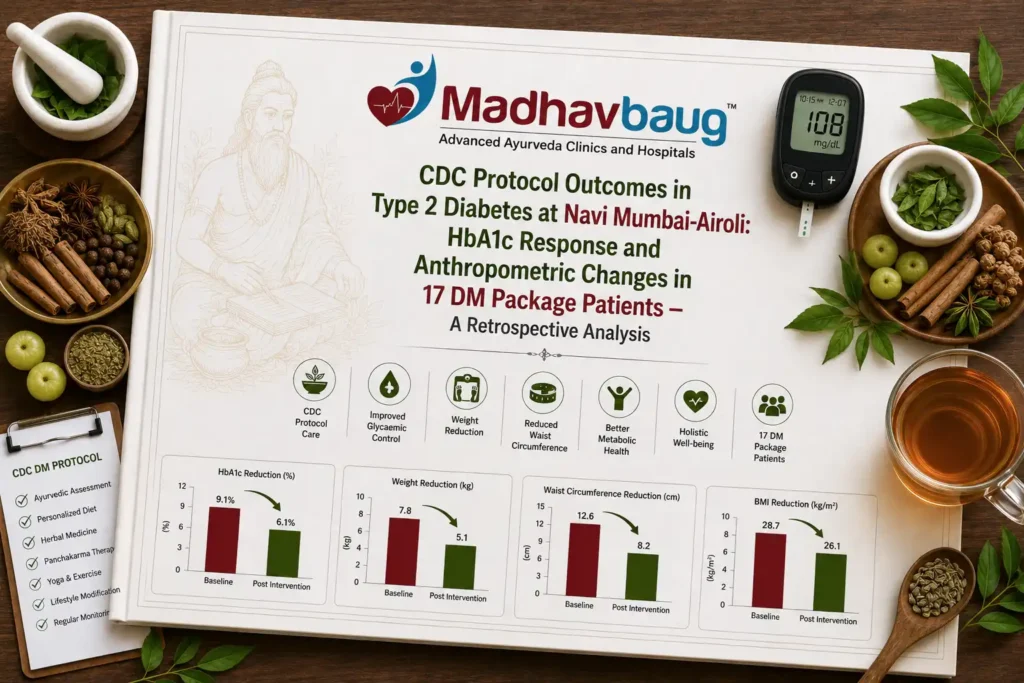
Navi Mumbai-Airoli’s DM Package cohort is predominantly female (52.9%) with moderate baseline glycaemic control (HbA1c 8.85%). As a smaller satellite clinic, it provides focused evidence for CDC protocol efficacy in the Airoli residential community. Download Research Book
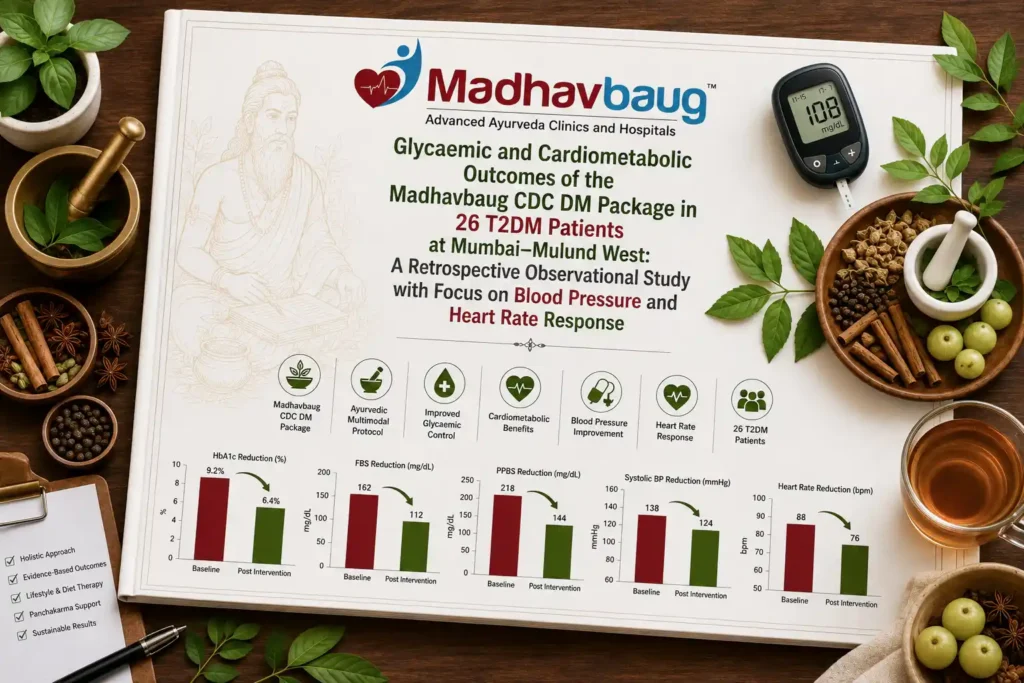
Mumbai-Mulund West’s DM Package cohort is characterised by older age (mean 56.1 years), higher baseline blood pressure (SBP 146 mmHg), and complex comorbidities including CHF, dyslipidaemia, and multi-organ involvement. This cohort tests the protocol’s efficacy at the challenging end of the cardiometabolic spectrum. Download Research Book
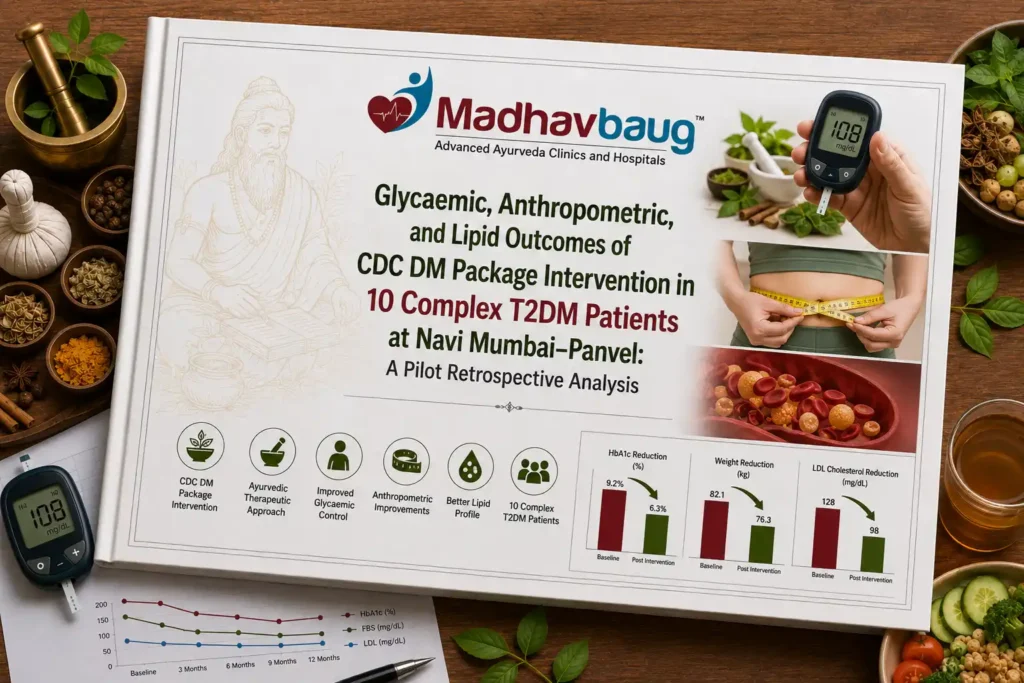
Navi Mumbai-Panvel’s DM Package cohort (n=10), while small, includes patients with complex comorbidities (DM+CAD, DM+IHD, multi-system disease) and 100% medication reduction documentation. This pilot analysis evaluates protocol efficacy in a complex, high cardiovascularrisk diabetic population. Download Research Book
Heart blockage is one of those terms that stops people mid-conversation. And rightly so. It is one of the leading causes of heart attacks, heart failure, and cardiovascular death worldwide. Yet despite how common it is, most people have very little understanding of what actually causes it, what the warning signs look like, or how early it can be caught. Whether you have been told you are at risk, have recently had a cardiac evaluation, or simply want to understand your heart better, this guide covers what causes heart blockage, the symptoms to watch for, and what both modern medicine and Ayurveda tell us about prevention. Concerned about your cardiac risk? Do not wait for symptoms to make the decision for you. Book an assessment at Madhavbaug today. What Is Heart Blockage? The term gets used in two different ways and the distinction matters. Coronary artery blockage is what most people mean. Plaque, a mixture of cholesterol, fat, calcium, and cellular debris, builds up inside the walls of the coronary arteries over years. The arteries narrow. Blood flow to the heart muscle drops. If a blockage becomes complete, a heart attack follows. Electrical heart block is something different entirely. It involves a disruption in the electrical signals that coordinate the heartbeat, causing the heart to beat too slowly, irregularly, or with pauses. Classified as first, second, or third degree depending on severity. This blog focuses on coronary artery blockage, which is what drives the majority of cardiac events. What Causes Heart Blockage? Heart blockage does not happen overnight. It builds quietly over years, sometimes decades, driven by a combination of lifestyle, metabolic conditions, and in some cases genetics. Here is what is actually behind it. 1. Atherosclerosis and Plaque Buildup Everything starts here. The inner lining of the arteries, called the endothelium, gets damaged. High blood pressure, smoking, elevated blood sugar, all of these create microscopic injury to that lining. Once damaged, LDL cholesterol particles begin to embed themselves in the artery wall. The immune system responds with inflammation. White blood cells accumulate. Foam cells form. Fatty streaks develop. Over time those deposits harden into plaque. The artery narrows. Blood flow drops. And if a plaque deposit ruptures suddenly, a clot forms rapidly and can block the artery completely. That is a heart attack. This slow, cumulative process underlies the majority of what causes heart blockage globally. 2. High LDL Cholesterol The higher LDL sits in the bloodstream and the longer it stays elevated, the greater the arterial damage. It is not complicated. LDL is the raw material of plaque. What drives LDL up: Saturated fats, trans fats, processed foods Sedentary lifestyle Abdominal obesity Familial hypercholesterolaemia Hypothyroidism, certain kidney conditions Some medications including corticosteroids Low HDL compounds the problem. HDL is the cholesterol that helps remove LDL from circulation. When it is too low, LDL lingers longer and does more damage. 3. High Blood Pressure Chronically elevated blood pressure is one of the most damaging forces acting on the cardiovascular system. Pressure that consistently exceeds healthy levels causes microscopic injury to the endothelium, exactly the kind of damage that lets LDL embed itself and start the plaque process. Over time artery walls thicken and stiffen. The channel for blood flow narrows further. Uncontrolled hypertension is one of the most significant and most modifiable causes of heart blockage, which is why blood pressure management sits at the foundation of cardiac prevention. 4. Type 2 Diabetes and Insulin Resistance People with Type 2 diabetes are two to four times more likely to develop coronary artery disease. The reasons stack up fast. Persistently high blood sugar damages blood vessel walls throughout the body. Diabetes drives inflammation, which accelerates plaque formation. It typically comes with a cholesterol profile that favours arterial damage, high triglycerides and low HDL. Insulin resistance promotes abdominal fat accumulation, itself an independent cardiac risk. And high glucose increases LDL oxidation, making it significantly more damaging when it does embed in artery walls. Even prediabetes, blood sugar elevated but not yet diabetic, measurably increases cardiovascular risk. 5. Smoking Every cigarette contributes to arterial damage through several pathways simultaneously. Nicotine raises blood pressure and heart rate. Carbon monoxide reduces oxygen-carrying capacity. Tobacco chemicals directly inflame and damage the endothelial lining. LDL goes up, HDL goes down. Blood clots more readily. Existing atherosclerosis accelerates. Even passive smoke exposure increases cardiovascular risk. The encouraging part: quitting reduces heart disease risk significantly within months of stopping. 6. Chronic Inflammation Inflammation is not just a response to infection. Chronic low-grade inflammation, sustained over months and years, damages arterial walls and drives plaque formation. Sources include: Diets high in refined sugar and ultra-processed food Visceral fat, which is metabolically active and pro-inflammatory Chronic stress elevating cortisol Poor sleep Gum disease, strongly linked to cardiovascular inflammation Autoimmune conditions like rheumatoid arthritis In Ayurveda this chronic inflammatory state is understood as excess Pitta combined with accumulated Ama in the channels, creating exactly the internal environment where arterial damage takes hold. 7. Abdominal Obesity Visceral fat, the fat that wraps around internal organs rather than sitting under the skin, is not passive tissue. It releases inflammatory compounds, promotes insulin resistance, raises blood pressure, lowers HDL, and raises triglycerides. All of it feeds directly into atherosclerosis. A waist above 90 cm in men and 80 cm in women is considered a significant cardiovascular risk marker in the Indian population, independent of overall body weight. 8. Sedentary Lifestyle Physical inactivity is a direct and independent risk factor for coronary artery disease. Regular movement keeps the heart strong, improves cholesterol profiles, lowers blood pressure, reduces inflammation, and maintains insulin sensitivity. A sedentary lifestyle does the opposite on every one of those fronts simultaneously. 9. Chronic Stress Sustained psychological stress keeps the body in a state of heightened sympathetic activation. Blood pressure rises consistently. Cortisol promotes fat deposition and raises blood sugar. Adrenaline increases clotting tendency. Inflammation markers climb. And people under chronic stress are more likely to smoke, eat poorly, exercise less,
Classical Ayurveda stratifies the management of Prameha (diabetes mellitus) by body constitution:Sthula Pramehi (obese diabetics) require Shodhana (bio-purificatory) Panchakarma, while Krisha Pramehi (lean diabetics) require Brimhana (nourishing-restorative) Panchakarma delivered via oil-based Anuvasana Basti. The CDCKP protocol operationalizes this Brimhana approach. Despite being a distinct therapeutic arm with a different pathophysiological rationale, CDC-KP has consistently been underpowered (n=2–11) in previous clinical analyses — making its outcomes statistically indeterminate. This study presents the first adequately powered analysis of CDC-KP in a real-world clinical cohort. Download Research Book
Diastolic hypertension is a prevalent and clinically underappreciated complication of type 2 diabetes mellitus (T2DM), directly mediating nephropathy progression, left ventricular diastolic dysfunction, and cardiovascular mortality. Conventional antidiabetic protocols rarely address diastolic blood pressure (DBP) as a primary outcome. Ayurvedic Panchakarmabased multimodal protocols have shown promise in glycemic management, but their effect on diastolic hypertension in T2DM has not been systematically examined. Download Research Book
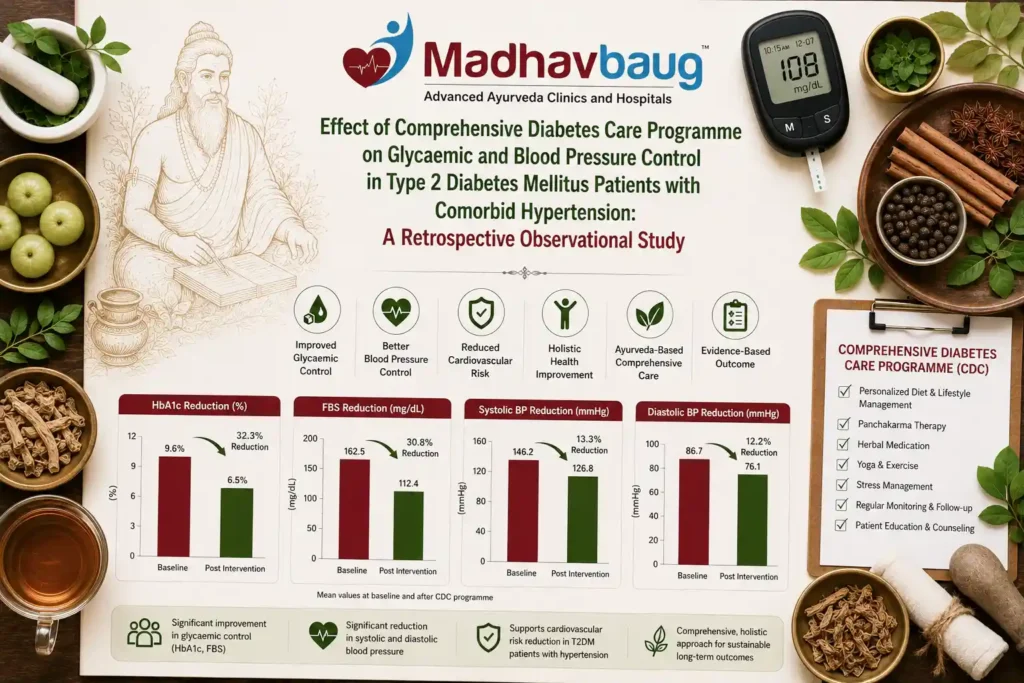
Type 2 diabetes mellitus (T2DM) and hypertension are the most prevalent chronic disease comorbidity in India, sharing pathophysiological mechanisms and compounding each other’s end-organ risks. Comprehensive Diabetes Care (CDC) is a structured Ayurvedic programme integrating Panchakarma-based procedures with dietary modification. While prior studies have documented CDC’s glycaemic effects in general T2DM populations, its simultaneous impact on blood pressure control in patients with comorbid hypertension has not been evaluated. Download Research Book
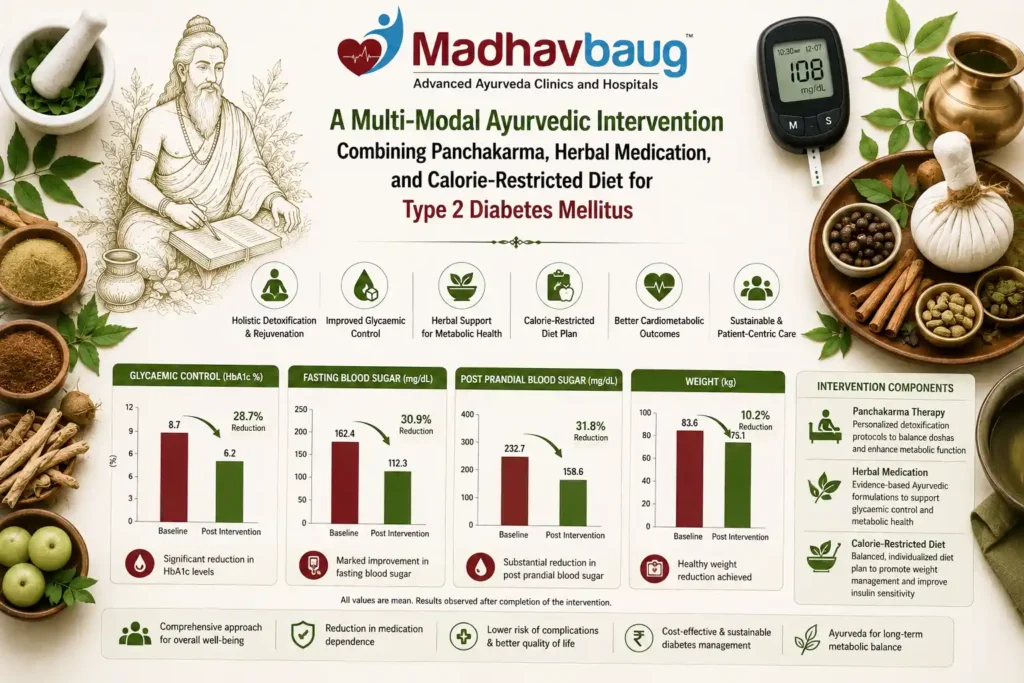
Type 2 Diabetes Mellitus (T2DM) is a growing metabolic disorder with rising prevalence globally. Conventional pharmacological management, while effective, is often associated with long-term side effects and medication dependence. Ayurveda offers a holistic approach to Prameha (diabetes) through multi-modal interventions addressing metabolic dysfunction at its root. This study evaluates the clinical outcomes of an integrated Ayurvedic protocol combining individualized Panchakarma therapies, oral herbal medications, and a structured low-calorie diet in patients with T2DM. Download Research Book
Type 2 Diabetes Mellitus (T2DM) is a growing metabolic disorder with rising global prevalence. Conventional pharmacological management, while effective, is often associated with long-term side effects and medication dependence. Ayurveda offers a holistic approach to Prameha (diabetes)through multi-modal interventions. This study evaluates clinical outcomes of an integrated Ayurvedic protocol combining individualized Panchakarma therapies, oral herbal medications, and a structured low-calorie diet in patients with T2DM. This retrospective observational study analyzed datafrom 29 patients (21 males, 8 females; mean age 45.4 ± 11.3 years) diagnosed with T2DM, treated at the Kharadi branch of a specialised Ayurvedic diabetes management clinic. Patients received one of two Panchakarma-based care plans — CDC-SP therapy (BMI ≥ 23) or CDC-KP therapy (BMI < 23) — comprising Snehan, Swedan, and Basti. All patients were concurrently prescribed oral herbal medications and an 800 kcal Prameha Diet Box. Statistically significant improvements were observedacross all measured parameters (p < 0.001). Mean HbA1c decreased from 10.02% to 7.27% (Δ = −2.75%). Mean RBS declined from 226.4 to 141.5 mg/dL (Δ = −85.0). Body weight reduced by 6.2 kg, BMI by 4.32 kg/m², and abdominal girth by 7.1 cm. Systolic blood pressure improved by 12.9 mmHg and diastolic by 4.8 mmHg. The integrated multi-modal Ayurvedic intervention demonstrated clinically meaningful and statistically significant improvements in glycaemic control, anthropometric indices, and blood pressure in T2DM patients. Prospective controlled studies with larger sample sizes are warranted to confirm these findings. Download Research Book
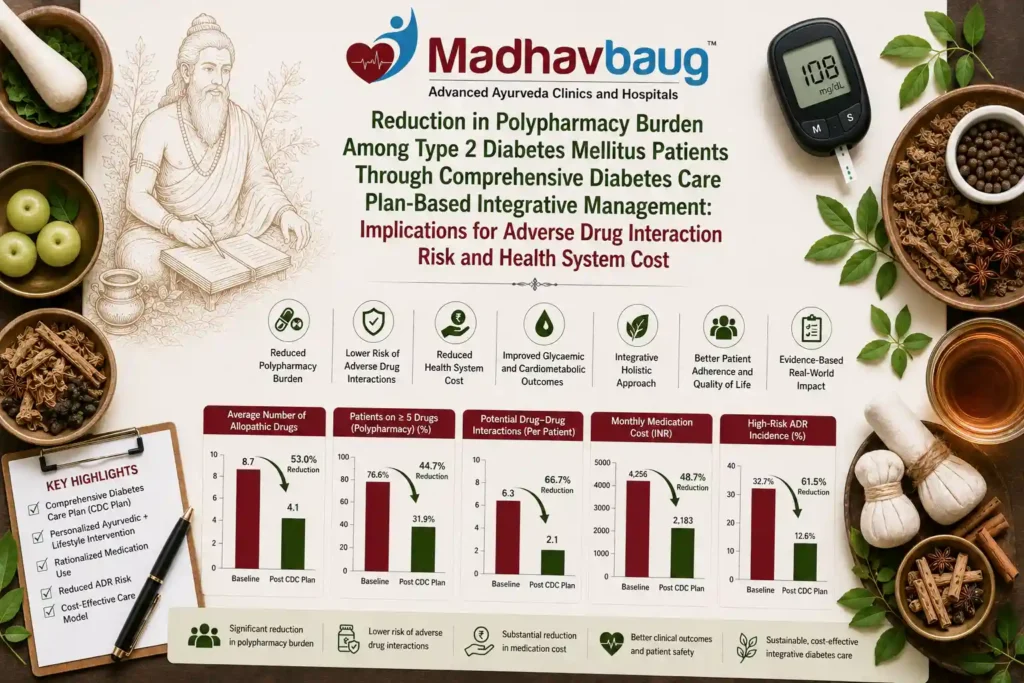
Polypharmacy — conventionally defined as the concurrent use of five or more medications — is prevalent among patients with Type 2 Diabetes Mellitus (T2DM) and is associated with adverse drug interactions, treatment non-adherence, and escalating healthcare costs. Integrative management programmes combining Panchakarma-based therapies, structured dietary intervention, and allopathic co-management have shown promise in glycaemic control, yet their impact on medication burden has not been systematically characterised. Download Research Book

