
Quick answer Chest discomfort remains the most common heart-attack symptom in women, but women are more likely to experience additional symptoms such as breathlessness, nausea, unusual fatigue, dizziness, and back or jaw discomfort. Women are also more likely to have non-obstructive or small-vessel disease, while PCOS, early menopause and pregnancy complications can add important lifetime risk information. Emergency warning Seek emergency medical care immediately for new or persistent chest pressure, squeezing or discomfort, especially when accompanied by breathlessness, sweating, nausea, fainting, marked weakness, or pain spreading to the arm, jaw, neck or back. Do not wait for symptoms to become “classic.” Introduction Cardiovascular disease is the leading cause of death globally, and ischaemic heart disease remains the world’s single largest cause of death.[1] Yet heart disease in women is still frequently recognised late because symptoms, risk histories and patterns of coronary disease do not always fit the stereotype of a middle-aged man with crushing chest pain. The encouraging message is that many major risk factors like high blood pressure, diabetes, abnormal cholesterol, tobacco exposure, inactivity and central obesity, can be identified and treated. The key is a personalised assessment that includes both traditional risk factors and a woman’s reproductive and hormonal history. 1. What is coronary artery disease? Coronary artery disease (CAD), also called coronary heart disease or ischaemic heart disease, develops when the heart muscle does not receive enough oxygen-rich blood. Atherosclerotic plaque in the coronary arteries is a common cause, but CAD is not limited to a single large blockage. Clinicians may describe several patterns: Obstructive CAD: one or more larger coronary arteries are significantly narrowed by plaque. Non-obstructive CAD: plaque or impaired blood flow is present without a major artery being severely narrowed. Coronary microvascular dysfunction: the small vessels within the heart do not dilate or function normally. This pattern is more common in women and may not be visible on a conventional angiogram. Because women are more likely to experience non-obstructive disease and coronary microvascular disease, a report showing “no major blockage” does not always explain persistent, exertional or stress-related symptoms.[2] 2. Why coronary artery disease may be missed in women Chest pain is still important A common misconception is that women usually have a heart attack without chest pain. In reality, chest pain or discomfort remains the most common symptom in both women and men. Women are, however, more likely to report additional symptoms, sometimes before or alongside chest discomfort, including breathlessness, nausea, fatigue and back or jaw pain.[3] Small-vessel and non-obstructive disease Some women experience ischaemia with no obstructive coronary arteries (often called INOCA) or coronary microvascular dysfunction. Symptoms may occur during exercise, routine activity or emotional stress. Diagnosis can require a cardiologist to look beyond a standard angiogram and choose tests based on the clinical picture. Risk history can be incomplete Traditional risk calculators are useful, but they may not fully capture pregnancy complications, premature menopause, PCOS, autoimmune disease, social stress and other factors that influence risk in women. A complete history can change how aggressively risk factors are monitored and treated.[4] 3. CAD symptoms in women: what to notice Symptoms vary from person to person, and no list can confirm or rule out heart disease. Possible warning signs include: Chest pressure, squeezing, tightness, heaviness, burning or discomfort. Shortness of breath during activity or at rest. Unusual or disproportionate fatigue, weakness or reduced exercise tolerance. Pain or discomfort in one or both arms, the upper back, shoulders, neck or jaw. Nausea, vomiting, indigestion-like discomfort or upper-abdominal pain. Cold sweating, light-headedness, fainting or a sudden feeling that something is seriously wrong. Sleep disturbance or unexplained anxiety occurring with other physical symptoms. What is a “silent” heart attack? A silent or unrecognised heart attack produces mild, unusual or overlooked symptoms rather than no biological event. It can occur in women and men and is more likely in people with diabetes. New fatigue, breathlessness, indigestion-like discomfort or a sudden decline in stamina should not be dismissed when risk factors are present. 4. Heart-disease risk factors that matter for women Traditional risk factors The strongest prevention plan starts with the fundamentals: High blood pressure or untreated hypertension. Diabetes, prediabetes or insulin resistance. High LDL cholesterol, elevated triglycerides, low HDL cholesterol, or other lipid abnormalities. Smoking, smokeless tobacco and second-hand smoke exposure. Central obesity, physical inactivity and low cardiorespiratory fitness. Chronic kidney disease, sleep apnoea and inflammatory or autoimmune conditions. Family history of premature cardiovascular disease. Chronic stress, depression, poor sleep and barriers to timely healthcare. Risk factors often cluster. For example, metabolic syndrome combines abdominal adiposity, abnormal blood pressure, blood glucose and lipids. Waist measures can add useful context because BMI alone may not reflect central fat distribution; read more about waist-to-height ratio and cardiometabolic risk. PCOS and heart disease risk Polycystic ovary syndrome (PCOS) is not simply a menstrual or fertility condition. Many women with PCOS have insulin resistance, central weight gain, high triglycerides, low HDL cholesterol, sleep apnoea or elevated blood pressure. These factors can raise lifetime cardiovascular risk. PCOS does not mean that CAD is inevitable, but it is a reason to monitor metabolic health early and consistently. Women with PCOS should discuss blood pressure, glucose or HbA1c, lipids, weight trajectory, waist measures, sleep and family history with a clinician. For related information, see Madhavbaug’s overview of hormonal imbalance, obesity, diabetes and hypertension. Menopause and early menopause Cardiovascular risk rises with age, and the menopause transition is often accompanied by changes in body-fat distribution, blood pressure, lipids and glucose regulation. Menopause should therefore prompt a review of overall risk. Premature menopause, usually defined as menopause before age 40, is associated with higher lifetime coronary risk and should be included in the medical history.[2] Menopausal hormone therapy should not be started solely to prevent heart disease; decisions about it require an individual discussion of symptoms, timing and personal risks. Pregnancy-related risk signals A history of pre-eclampsia, gestational hypertension, gestational diabetes, preterm birth or delivering a small-for-gestational-age baby can signal higher long-term cardiovascular risk.[6] These
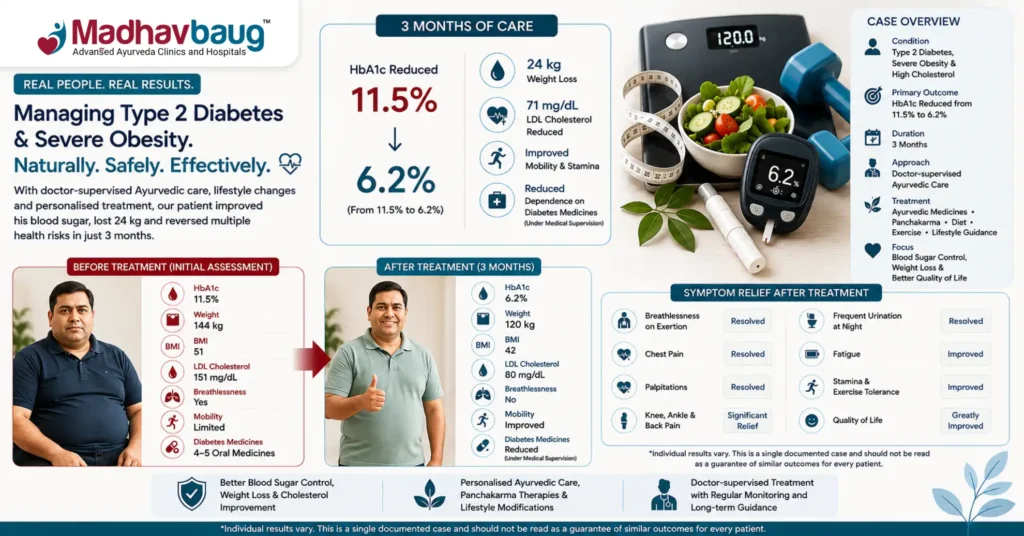
Patient Profile Mr Anup Mehta, a 38-year-old corporate professional from Mira Road, Mumbai, had been living with Type 2 diabetes for eight years. Along with diabetes, he was struggling with obesity and high cholesterol, which made it harder for him to stay active. He would often feel breathless after walking even short distances, had to take several breaks while climbing stairs, and found it difficult to stand for long periods during office meetings. He also experienced pain in his knees, ankles and lower back, frequent urination at night, and constant tiredness that affected both his work and personal life. Working in the corporate sector meant long working hours, frequent travel, and constant work-related pressure. Over time, this lifestyle made it harder for him to stay active, and his health continued to decline. He found himself avoiding social gatherings and outdoor activities because of his limited mobility and growing lack of confidence. Despite taking four to five oral diabetes medicines, his blood sugar remained uncontrolled. His doctors advised him to start insulin injections and even suggested weight-loss surgery. Mr Mehta wanted to explore an option that addressed the root causes of his health problems rather than simply adding more medication. Looking for a holistic, doctor-supervised approach, he chose Madhavbaug’s Mira Road Clinic to begin his treatment programme. Initial Assessment During his first consultation at Madhavbaug, Mr Mehta underwent a detailed assessment of his medical history, lifestyle, dietary habits and existing health conditions. This helped the medical team understand the factors contributing to his diabetes, obesity and high cholesterol. At the time of his initial assessment, he weighed 144 kg, with a BMI of 51, indicating severe obesity. His HbA1c was 11.5%, showing that his blood sugar had remained significantly above the recommended range over the previous three months. His low-density lipoprotein (LDL), commonly known as bad cholesterol, was 151 mg/dL, which further increased his risk of diabetes-related complications. A detailed discussion with the treating doctors revealed that his sedentary work routine, increasing weight and limited physical activity were all contributing to poor blood sugar control. Breathlessness and reduced mobility made even simple daily activities difficult, further affecting his quality of life. Personalised Treatment Plan After reviewing Mr Mehta’s condition, the medical team at Madhavbaug developed a treatment plan that focused on more than just lowering his blood sugar. on more than just lowering his blood sugar. The primary goals were to help him lose weight safely, improve his cholesterol levels, increase his physical stamina and make everyday movement easier. Since his obesity had significantly affected his mobility and exercise tolerance, the programme was introduced gradually, which allowed him to build strength and confidence without putting excessive strain on his body. The treatment plan included: Personalised Ayurvedic medicines prescribed under medical supervision. Doctor-recommended Panchakarma therapies as part of his integrated treatment programme. A structured low-calorie diet designed to support healthy weight loss while improving blood sugar and cholesterol levels. An exercise routine, including walking and resistance training, based on his physical ability and comfort. Regular consultations to monitor his clinical progress and make changes to the treatment plan whenever required. Careful review of his diabetes medicines, with doses gradually reduced under the supervision of his treating doctors as his condition improved. Throughout the programme, his progress was closely monitored through regular follow-up visits, allowing the medical team to adjust his treatment according to his response. This personalised approach helped him make steady improvements while building healthier habits that he could continue beyond the treatment period. Journey Towards Better Health Mr Mehta remained committed to his treatment plan, attended his regular follow-up appointments, followed the prescribed diet and gradually increased his physical activity under the guidance of his treating doctors. Within the first month, he had already begun noticing positive changes. His breathlessness had reduced, his energy levels improved, and he lost 12 kg, bringing his weight down from 144 kg to 132 kg. His HbA1c also improved from 11.5% to 8%, showing that his blood sugar levels were responding well to the treatment. By the second month, everyday activities had become much easier. He no longer experienced breathlessness during routine tasks and was able to move around more comfortably. As his mobility and exercise tolerance improved, the treatment plan was continued with regular monitoring and reassessment. At the end of three months, Mr Mehta had made remarkable progress. His weight reduced from 144 kg to 120 kg, while his BMI improved from 51 to 42. His HbA1c dropped to 6.2%, and his LDL cholesterol improved from 151 mg/dL to 80 mg/dL. By this stage, he was also able to walk and stand continuously for around 30 minutes without discomfort. Under the supervision of his treating doctors, his diabetes medicines were gradually tapered down during this period. At his latest follow-up, Mr Mehta reported that he could exercise regularly, walk and stand for longer periods, and enjoy a much better quality of life. He continues to undergo periodic medical monitoring to help maintain these improvements. Improvements Beyond the Numbers While the improvements in his weight, blood sugar and cholesterol were significant, Mr Mehta noticed the biggest change in how much easier everyday life had become. Before treatment, climbing stairs, walking to the parking lot, or standing through office meetings left him exhausted and breathless. Chronic knee and back pain made him gradually withdraw from social gatherings and professional interactions. As his treatment progressed, these issues began to resolve one by one. He could walk and stand for longer without discomfort, had more energy through the day, and found travel and meetings less draining. The reduction in joint pain and breathlessness allowed him to become active again in ways he had not been for years, and these changes mattered to him personally and professionally. Patient Experience While talking about his experience, Mr Mehta shared that choosing Madhavbaug was a turning point in his life. He appreciated that his doctors did not focus on his weight alone, but explained the root causes behind his condition, corrected his lifestyle, and guided him through a structured diet along with Panchakarma
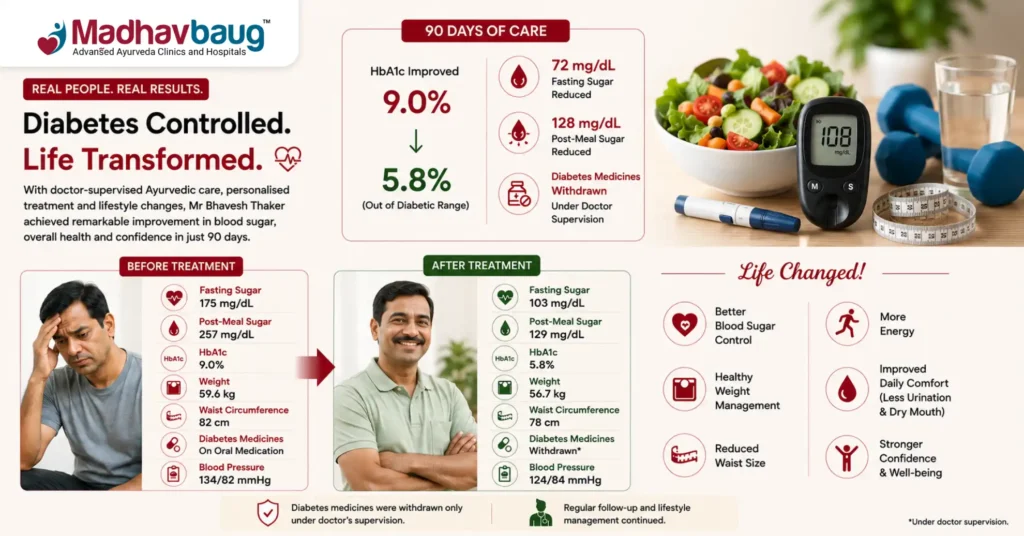
Patient Profile Mr Bhavesh Thaker, a corporate professional, had been living with Type 2 diabetes for around six months before visiting Madhavbaug. Soon after his diagnosis, he began experiencing rapid weight loss and loss of muscle mass, leaving him feeling physically weak and affecting his confidence. Persistent dry mouth and frequent urination further disrupted his daily routine. He was working in the corporate sector, which meant long working hours and a demanding schedule, making it difficult for him to follow a healthy routine. Despite taking oral diabetes medicines, his blood sugar remained poorly controlled. He was concerned about his health and wanted a better way to manage the diabetes. Looking for a holistic, doctor-supervised approach that focused not only on controlling his blood sugar but also on improving his overall health, Mr Bhavesh Thaker chose Madhavbaug’s Mira Road East, Mumbai Clinic to begin his personalised treatment programme. Initial Assessment Before starting treatment, Mr Thaker underwent a comprehensive medical evaluation at Madhavbaug. His medical history, lifestyle, dietary habits and current health status were reviewed to plan the most appropriate course of treatment. At the time of assessment, he weighed 59.6 kg and had a BMI of 21.9. His blood pressure was 134/82 mmHg, with a pulse rate of 92 beats per minute, and his waist circumference measured 82 cm. His fasting blood sugar was 175 mg/dL, his post-meal blood sugar was 257 mg/dL, and his HbA1c was 9.0%, showing that his blood sugar had remained consistently above the recommended range despite taking regular diabetes medicines. The treating doctors noted that his uncontrolled blood sugar and ongoing muscle loss required a treatment plan that would improve his blood sugar control while helping him maintain his muscle strength and overall health. Personalised Treatment Plan After reviewing Mr Thaker’s condition, the medical team at Madhavbaug designed a personalised treatment programme to improve his blood sugar control while addressing the weight and muscle loss he had experienced since his diabetes diagnosis. The aim was to improve his blood sugar control, prevent further muscle loss and preserve his muscle mass. His treatment plan included: Personalised Ayurvedic medicines prescribed under medical supervision. Panchakarma therapies recommended as part of his integrated treatment programme. A structured diet plan designed to support healthy blood sugar control while providing balanced nutrition. A personalised exercise routine based on his physical condition and progress. Regular follow-up consultations to monitor his response to treatment and review his HbA1c levels. Careful supervision of his diabetes medicines, with doses adjusted according to his clinical progress. Throughout the programme, his progress was monitored closely through regular follow-up visits. This allowed the treating doctors to review his recovery and make changes to the treatment plan whenever required, helping him achieve steady improvements over the 90-day programme. Journey Towards Better Health Over the 90-day programme, Mr Thaker remained committed to his treatment plan, attended his scheduled consultations, followed the prescribed diet and completed the recommended activity programme. His progress was reviewed regularly throughout the treatment. By the end of the 90 days, his fasting blood sugar had reduced from 175 mg/dL to 103 mg/dL, and his post-meal blood sugar had come down from 257 mg/dL to 129 mg/dL. His HbA1c improved from 9.0% to 5.8%, moving well out of the diabetic range. His blood pressure improved to 124/84 mmHg and his pulse settled to 84 per minute. His weight changed from 59.6 kg to 56.7 kg, with his BMI moving from 21.9 to 20.8, and his waist circumference reducing from 82 cm to 78 cm. His anti-diabetic medicines were withdrawn under his doctors’ supervision after his sustained improvement. Improvements Beyond the Numbers Alongside his clinical progress, Mr Thaker noticed changes in his everyday life. His persistent dry mouth reduced significantly, and his frequent urination improved. He felt healthier and more energetic through the day, and the anxiety he had been carrying about managing his diabetes eased as his blood sugar came under control. The confidence he had lost after his diagnosis began to return as his overall health improved. Patient Experience Mr Thaker shared that his diagnosis had cost him more than his physical health, it had also taken a toll on his confidence, as he had lost weight, muscle and a sense of control over his own body. He credits the guidance of his doctors at Madhavbaug for helping his blood sugar improve remarkably over the course of his treatment. For him, feeling much healthier today was the outcome that mattered most. Doctor’s Perspective For the treating doctors, Mr Thaker’s case demonstrates the importance of identifying poor blood sugar control early, even in people who have been diagnosed recently. Despite taking oral medication, his HbA1c remained high and he had already started experiencing weight and muscle loss, indicating that closer intervention was needed. His progress over the following 90 days highlights how personalised medical care, regular monitoring and sustained lifestyle changes can work together to improve diabetes management. As with every patient, ongoing follow-up remains an important part of maintaining these improvements. Conclusion Mr Bhavesh Thaker’s case shows how early intervention and consistent diabetes management can lead to meaningful improvements. Over 90 days, his HbA1c reduced from 9.0% to 5.8%, his fasting blood sugar came down from 175 mg/dL to 103 mg/dL, and his post-meal blood sugar reduced from 257 mg/dL to 129 mg/dL. His anti-diabetic medicines were discontinued under medical supervision as his condition improved. Alongside these clinical gains, his energy, confidence and day-to-day comfort also improved. His progress highlights the value of personalised treatment, regular monitoring and long-term lifestyle changes in managing Type 2 diabetes.

Case Overview Mr. Shankar Bhikaji , a 72-year-old resident of Mumbai, visited Madhavbaug Miraroad Clinic, with severe breathlessness, weakness, He had Ischemic Heart Disease (IHD) and Coronary artery Disease (CAD), with a severely reduced Left Ventricular Ejection Fraction (LVEF) of 35% and history of Myocardial infarct a month back. His symptoms significantly limited mobility ,his work and everyday activity. A personalised, physician-supervised care plan combining regular medical review, lifestyle guidance, dietary support, structured wellness therapies and gradual activity progression was initiated. Over approximately nine months, documented improvements were observed in cardiac function, metabolic parameters, exercise capacity and functional independence. 35% → 60% LVEF 6.8% → 5.5% HbA1c 12.98→ 24.05ml/kg/min VO₂ Max 2325 → 620pg/mL Nt-pro Patient at a Glance Patient Mr. Shankar Bhikaji Age and location 72 years, MUMBAI Primary diagnosis Ischemic Heart Disease (IHD) and Coronary Artery disease ( TVD) Main concerns Severe breathlessness, weakness, reduced exercise tolerance, nocturia Care setting Madhavbaug Miraroad Clinic Duration Approximately 9 months Key documented result LVEF increased from 35% at presentation to 60% at the latest follow-up Current status The Patient Story Before beginning treatment at Madhavbaug, Mr. Shankar experienced progressive physical limitations related to his cardiac condition. Breathlessness while walking, severe weakness, nocturia and poor exercise tolerance disrupted his daily routine. Routine activities became difficult, reducing his independence and confidence. Concerned about his worsening symptoms and quality of life, he visited Madhavbaug Miraroad Clinic for a structured and supervised cardiovascular care programme. Symptoms and Impact on Daily Life Symptom or limitation Severity or frequency Effect on daily life Breathlessness on exertion Severe and present for several months Difficulty walking even short distances Severe weakness Frequent and limiting Reduced participation in routine activities nocturia Persistent at presentation Caused sleep disturbances Medical History Before Madhavbaug The patient had a confirmed diagnosis of Ischemic Heart Disease and Coronary artery disease and had undergone cardiac evaluation and conventional medical management. Despite prior treatment, severe breathlessness, weakness and functional limitations continued. Investigations showed apical 2/3rd anterolateral and basal wall of heart hypokinetic ,moderate left ventricular dysfunction in his 2decho.Elevated HbA1c ,NTpro levelsand an unfavourable lipid profile added to his overall cardiovascular risk. Ongoing medication was reviewed and coordinated according to the treating physician’s advice. Why He Chose Madhavbaug Mr. Shankar sought a physician-supervised programme focused on improving cardiovascular health, exercise tolerance, mobility and quality of life. At Madhavbaug Miraroad Clinic, he received a personalised assessment, regular follow-up and an integrated care plan based on his age, clinical condition and functional capacity. Clinical Assessment and Treatment Goals The major clinical concerns were severe breathlessness, reduced exercise tolerance, mobility limitations, elevated HbA1c and dyslipidaemia. The treatment goals in this patient were secondary prevention following MI ,strict glycaemic control ,lipid management and prevention of future cardiovascular event. Personalised Care Plan Care component What the plan included Frequency or duration Purpose Clinical assessment and follow-up Regular physician evaluations and review of symptoms and investigations Throughout the programme Monitor progress and modify the plan when required Structured wellness therapies Individualised Panchakarma and supportive therapies prescribed by the treating doctor As advised Support overall wellness as part of the supervised programme Dietary guidance Heart-friendly dietary plan Daily Support cardiovascular and metabolic health Activity and rehabilitation Gradual walking and mobility progression based on tolerance Daily, as advised Improve strength, mobility and exercise tolerance Medicine coordination Review and coordination of ongoing medicines according to the treating physician’s advice Throughout the programme Support continuity of care and adherence The care plan was tailored to the patient’s age, cardiovascular status, symptom burden and limited exercise capacity. Physician supervision, lifestyle guidance, dietary recommendations, structured wellness therapies and gradual activity progression were integrated into one programme. Follow-up investigations, symptom monitoring and functional assessments were used to track progress. The approach emphasised safe, gradual improvement, consistent adherence and continued evaluation rather than a one-size-fits-all treatment pathway. Progress Over Time Time point Symptoms and function Objective findings Clinical approach Start of care severe breathlessness on exertion, weakness, nocturia LVEF 35%, HbA1c 6.8%, VO₂ Max 12.98 Comprehensive assessment and personalised care plan initiated Month 1 Breathlessness reduced ,slightly better energy Clinical improvement noted Treatment sessions, dietary guidance and monitoring continued Month 2 Reduced breathlessness during routine activity and improved comfort Functional improvement observed Current protocol continued with symptom reassessment Month 3 Improved walking tolerance and resumed his work improvedfunctional capacity Gradual increase in physical activity encouraged Latest follow-up reduced breathlessness and better quality of life LVEF 60%, HbA1c 5.5%, VO₂ Max 24.05, BP 130/78mmHg Maintenance plan and periodic cardiac monitoring continued Before-and-After Results Parameter At presentation Latest follow-up Clinical interpretation Left Ventricular Ejection Fraction (LVEF) 35% 60% Documented improvement in cardiac pumping function HbA1c 6.8% 5.5% Improved long-term blood glucose control VO₂ Max 12.98 24.05 Improved exercise capacity and cardiovascular fitness Ntpro bnp 2325pg/ml 620 pg/ml Reduced cardiac workload Blood Pressure 160/81 mmHg 130/78 mmHg Within an acceptable range at the latest follow-up What the Results Meant for the Patient and Patient testimonial “ I am 72 years old and I have been working in a garage for most of my life. Because of the nature of my work, I hardly had fixed meal timings. Almost every day I used to eat outside food, and being a non-vegetarian, I would eat non-veg regularly without paying much attention to my health. I never thought these habits would one day affect my heart. About a week before coming here, I suddenly suffered a heart attack. It was one of the most frightening experiences of my life. During my hospitalization, the doctors told me that I also had diabetes. I was shocked because I had never been diagnosed with diabetes before. Even after I returned home, I was not feeling like myself. Walking even a short distance would make me breathless. Climbing stairs became difficult. I had to wake up several times at night to pass urine, and throughout the day I felt weak and tired. I had lost confidence in my body and was constantly worried that another heart attack could happen at

