
Coronary Artery Disease in Women: Symptoms, Risk Factors and Prevention
Quick answer Chest discomfort remains the most common heart-attack symptom in women, but women are more likely to experience additional


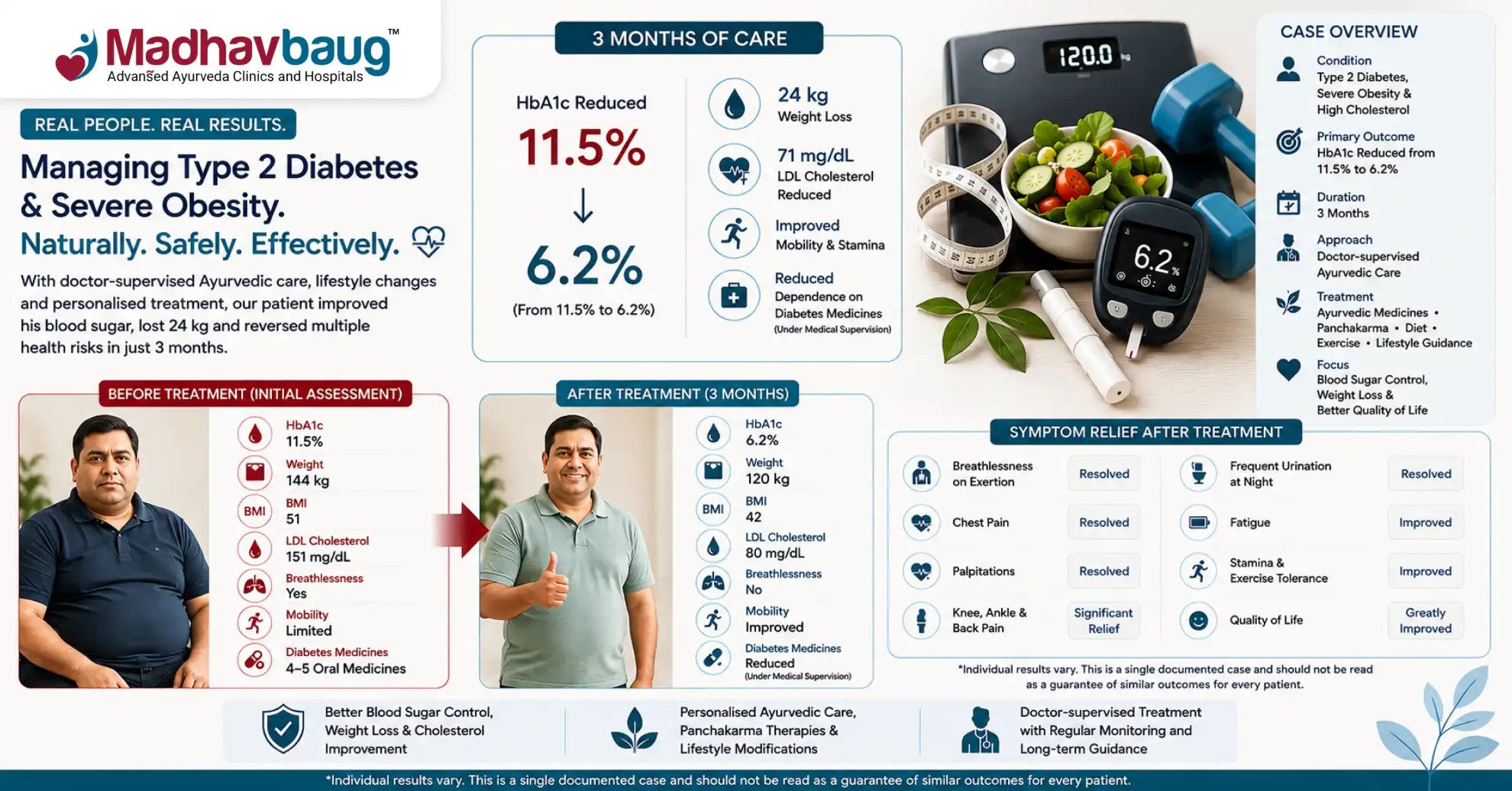
Mr Anup Mehta, a 38-year-old corporate professional from Mira Road, Mumbai, had been living with Type 2 diabetes for eight years. Along with diabetes, he was struggling with obesity and high cholesterol, which made it harder for him to stay active.
He would often feel breathless after walking even short distances, had to take several breaks while climbing stairs, and found it difficult to stand for long periods during office meetings.
He also experienced pain in his knees, ankles and lower back, frequent urination at night, and constant tiredness that affected both his work and personal life.
Working in the corporate sector meant long working hours, frequent travel, and constant work-related pressure. Over time, this lifestyle made it harder for him to stay active, and his health continued to decline. He found himself avoiding social gatherings and outdoor activities because of his limited mobility and growing lack of confidence.
Despite taking four to five oral diabetes medicines, his blood sugar remained uncontrolled. His doctors advised him to start insulin injections and even suggested weight-loss surgery.
Mr Mehta wanted to explore an option that addressed the root causes of his health problems rather than simply adding more medication. Looking for a holistic, doctor-supervised approach, he chose Madhavbaug’s Mira Road Clinic to begin his treatment programme.
During his first consultation at Madhavbaug, Mr Mehta underwent a detailed assessment of his medical history, lifestyle, dietary habits and existing health conditions. This helped the medical team understand the factors contributing to his diabetes, obesity and high cholesterol.
At the time of his initial assessment, he weighed 144 kg, with a BMI of 51, indicating severe obesity. His HbA1c was 11.5%, showing that his blood sugar had remained significantly above the recommended range over the previous three months. His low-density lipoprotein (LDL), commonly known as bad cholesterol, was 151 mg/dL, which further increased his risk of diabetes-related complications.
A detailed discussion with the treating doctors revealed that his sedentary work routine, increasing weight and limited physical activity were all contributing to poor blood sugar control.
Breathlessness and reduced mobility made even simple daily activities difficult, further affecting his quality of life.
After reviewing Mr Mehta’s condition, the medical team at Madhavbaug developed a treatment plan that focused on more than just lowering his blood sugar. on more than just lowering his blood sugar. The primary goals were to help him lose weight safely, improve his cholesterol levels, increase his physical stamina and make everyday movement easier.
Since his obesity had significantly affected his mobility and exercise tolerance, the programme was introduced gradually, which allowed him to build strength and confidence without putting excessive strain on his body.
The treatment plan included:
Throughout the programme, his progress was closely monitored through regular follow-up visits, allowing the medical team to adjust his treatment according to his response.
This personalised approach helped him make steady improvements while building healthier habits that he could continue beyond the treatment period.
Mr Mehta remained committed to his treatment plan, attended his regular follow-up appointments, followed the prescribed diet and gradually increased his physical activity under the guidance of his treating doctors.
Within the first month, he had already begun noticing positive changes. His breathlessness had reduced, his energy levels improved, and he lost 12 kg, bringing his weight down from 144 kg to 132 kg. His HbA1c also improved from 11.5% to 8%, showing that his blood sugar levels were responding well to the treatment.
By the second month, everyday activities had become much easier. He no longer experienced breathlessness during routine tasks and was able to move around more comfortably. As his mobility and exercise tolerance improved, the treatment plan was continued with regular monitoring and reassessment.
At the end of three months, Mr Mehta had made remarkable progress. His weight reduced from 144 kg to 120 kg, while his BMI improved from 51 to 42. His HbA1c dropped to 6.2%, and his LDL cholesterol improved from 151 mg/dL to 80 mg/dL. By this stage, he was also able to walk and stand continuously for around 30 minutes without discomfort. Under the supervision of his treating doctors, his diabetes medicines were gradually tapered down during this period.
At his latest follow-up, Mr Mehta reported that he could exercise regularly, walk and stand for longer periods, and enjoy a much better quality of life. He continues to undergo periodic medical monitoring to help maintain these improvements.
While the improvements in his weight, blood sugar and cholesterol were significant, Mr Mehta noticed the biggest change in how much easier everyday life had become.
Before treatment, climbing stairs, walking to the parking lot, or standing through office meetings left him exhausted and breathless. Chronic knee and back pain made him gradually withdraw from social gatherings and professional interactions.
As his treatment progressed, these issues began to resolve one by one. He could walk and stand for longer without discomfort, had more energy through the day, and found travel and meetings less draining. The reduction in joint pain and breathlessness allowed him to become active again in ways he had not been for years, and these changes mattered to him personally and professionally.
Patient Experience
While talking about his experience, Mr Mehta shared that choosing Madhavbaug was a turning point in his life.
He appreciated that his doctors did not focus on his weight alone, but explained the root causes behind his condition, corrected his lifestyle, and guided him through a structured diet along with Panchakarma and personalised Ayurvedic therapies.
Over time, he felt lighter, more energetic, and increasingly free of the joint pain that had slowed him down for years.
He credits the structured programme and the continued support of his treating doctors for helping him stay consistent through the three months. For Mr Mehta, the greatest achievement was regaining control of his health and feeling confident about his future again.
According to the treating medical team, Mr Mehta’s case demonstrates how long-standing Type 2 diabetes and severe obesity can gradually affect a person’s mobility, stamina and quality of life when they continue to progress together.
By the time he visited Madhavbaug, he had been living with diabetes for eight years, was taking multiple oral medications, and had already been advised to start insulin injections and consider weight-loss surgery. His significantly elevated HbA1c, excess body weight and reduced physical capacity highlighted the need for a comprehensive treatment approach that addressed both his metabolic health and the lifestyle factors contributing to his condition.
Mr Mehta showed consistent improvement in multiple health parameters with a personalised programme that combined structured lifestyle modification, dietary management, Ayurvedic therapies and regular medical supervision.
His progress also reflects the importance of patient commitment and regular follow-up in achieving sustainable, long-term improvements. His doctors continue to recommend periodic monitoring to help maintain these results.
Mr Anup Mehta’s journey shows how managing Type 2 diabetes often requires more than controlling blood sugar alone. After years of living with diabetes, struggling with severe obesity and reduced mobility, he was able to make meaningful improvements through a personalised treatment programme that combined Ayurvedic care, lifestyle changes and regular medical supervision.
Over approximately three months, he lost 24 kg, reduced his HbA1c from 11.5% to 6.2%, improved his cholesterol levels and regained the stamina to carry out everyday activities with greater ease. Under the supervision of his treating doctors, his diabetes medicines were also gradually tapered down as his condition improved.
Today, he continues with regular follow-up to help maintain these results. His experience highlights how consistent lifestyle changes, personalised treatment and long-term medical guidance can help people with Type 2 diabetes improve not only their clinical parameters but also their mobility, confidence and overall quality of life.

Quick answer Chest discomfort remains the most common heart-attack symptom in women, but women are more likely to experience additional

Have you ever been through this situation wherein you had chest pain, you visited your doctor and they suggested an