
Coronary Artery Disease in Women: Symptoms, Risk Factors and Prevention
Quick answer Chest discomfort remains the most common heart-attack symptom in women, but women are more likely to experience additional


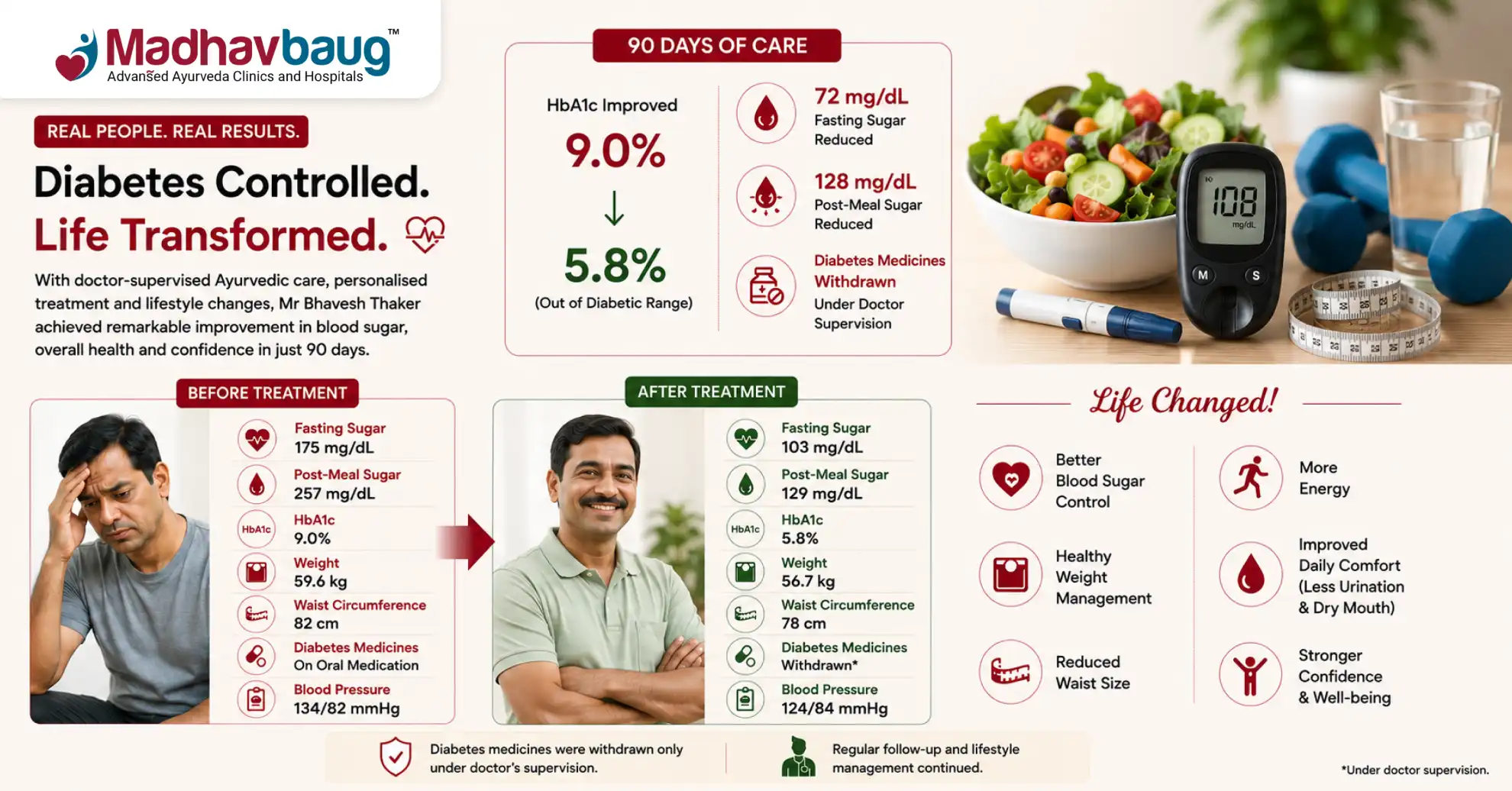
Mr Bhavesh Thaker, a corporate professional, had been living with Type 2 diabetes for around six months before visiting Madhavbaug.
Soon after his diagnosis, he began experiencing rapid weight loss and loss of muscle mass, leaving him feeling physically weak and affecting his confidence. Persistent dry mouth and frequent urination further disrupted his daily routine.
He was working in the corporate sector, which meant long working hours and a demanding schedule, making it difficult for him to follow a healthy routine.
Despite taking oral diabetes medicines, his blood sugar remained poorly controlled. He was concerned about his health and wanted a better way to manage the diabetes.
Looking for a holistic, doctor-supervised approach that focused not only on controlling his blood sugar but also on improving his overall health, Mr Bhavesh Thaker chose Madhavbaug’s Mira Road East, Mumbai Clinic to begin his personalised treatment programme.
Before starting treatment, Mr Thaker underwent a comprehensive medical evaluation at Madhavbaug. His medical history, lifestyle, dietary habits and current health status were reviewed to plan the most appropriate course of treatment.
At the time of assessment, he weighed 59.6 kg and had a BMI of 21.9. His blood pressure was 134/82 mmHg, with a pulse rate of 92 beats per minute, and his waist circumference measured 82 cm.
His fasting blood sugar was 175 mg/dL, his post-meal blood sugar was 257 mg/dL, and his HbA1c was 9.0%, showing that his blood sugar had remained consistently above the recommended range despite taking regular diabetes medicines.
The treating doctors noted that his uncontrolled blood sugar and ongoing muscle loss required a treatment plan that would improve his blood sugar control while helping him maintain his muscle strength and overall health.
After reviewing Mr Thaker’s condition, the medical team at Madhavbaug designed a personalised treatment programme to improve his blood sugar control while addressing the weight and muscle loss he had experienced since his diabetes diagnosis.
The aim was to improve his blood sugar control, prevent further muscle loss and preserve his muscle mass.
His treatment plan included:
Throughout the programme, his progress was monitored closely through regular follow-up visits. This allowed the treating doctors to review his recovery and make changes to the treatment plan whenever required, helping him achieve steady improvements over the 90-day programme.
Over the 90-day programme, Mr Thaker remained committed to his treatment plan, attended his scheduled consultations, followed the prescribed diet and completed the recommended activity programme. His progress was reviewed regularly throughout the treatment.
By the end of the 90 days, his fasting blood sugar had reduced from 175 mg/dL to 103 mg/dL, and his post-meal blood sugar had come down from 257 mg/dL to 129 mg/dL. His HbA1c improved from 9.0% to 5.8%, moving well out of the diabetic range.
His blood pressure improved to 124/84 mmHg and his pulse settled to 84 per minute. His weight changed from 59.6 kg to 56.7 kg, with his BMI moving from 21.9 to 20.8, and his waist circumference reducing from 82 cm to 78 cm. His anti-diabetic medicines were withdrawn under his doctors’ supervision after his sustained improvement.
Alongside his clinical progress, Mr Thaker noticed changes in his everyday life. His persistent dry mouth reduced significantly, and his frequent urination improved.
He felt healthier and more energetic through the day, and the anxiety he had been carrying about managing his diabetes eased as his blood sugar came under control. The confidence he had lost after his diagnosis began to return as his overall health improved.
Mr Thaker shared that his diagnosis had cost him more than his physical health, it had also taken a toll on his confidence, as he had lost weight, muscle and a sense of control over his own body.
He credits the guidance of his doctors at Madhavbaug for helping his blood sugar improve remarkably over the course of his treatment. For him, feeling much healthier today was the outcome that mattered most.
For the treating doctors, Mr Thaker’s case demonstrates the importance of identifying poor blood sugar control early, even in people who have been diagnosed recently.
Despite taking oral medication, his HbA1c remained high and he had already started experiencing weight and muscle loss, indicating that closer intervention was needed.
His progress over the following 90 days highlights how personalised medical care, regular monitoring and sustained lifestyle changes can work together to improve diabetes management. As with every patient, ongoing follow-up remains an important part of maintaining these improvements.
Mr Bhavesh Thaker’s case shows how early intervention and consistent diabetes management can lead to meaningful improvements.
Over 90 days, his HbA1c reduced from 9.0% to 5.8%, his fasting blood sugar came down from 175 mg/dL to 103 mg/dL, and his post-meal blood sugar reduced from 257 mg/dL to 129 mg/dL. His anti-diabetic medicines were discontinued under medical supervision as his condition improved.
Alongside these clinical gains, his energy, confidence and day-to-day comfort also improved. His progress highlights the value of personalised treatment, regular monitoring and long-term lifestyle changes in managing Type 2 diabetes.

Quick answer Chest discomfort remains the most common heart-attack symptom in women, but women are more likely to experience additional

Have you ever been through this situation wherein you had chest pain, you visited your doctor and they suggested an