
Coronary Artery Disease in Women: Symptoms, Risk Factors and Prevention
Quick answer Chest discomfort remains the most common heart-attack symptom in women, but women are more likely to experience additional


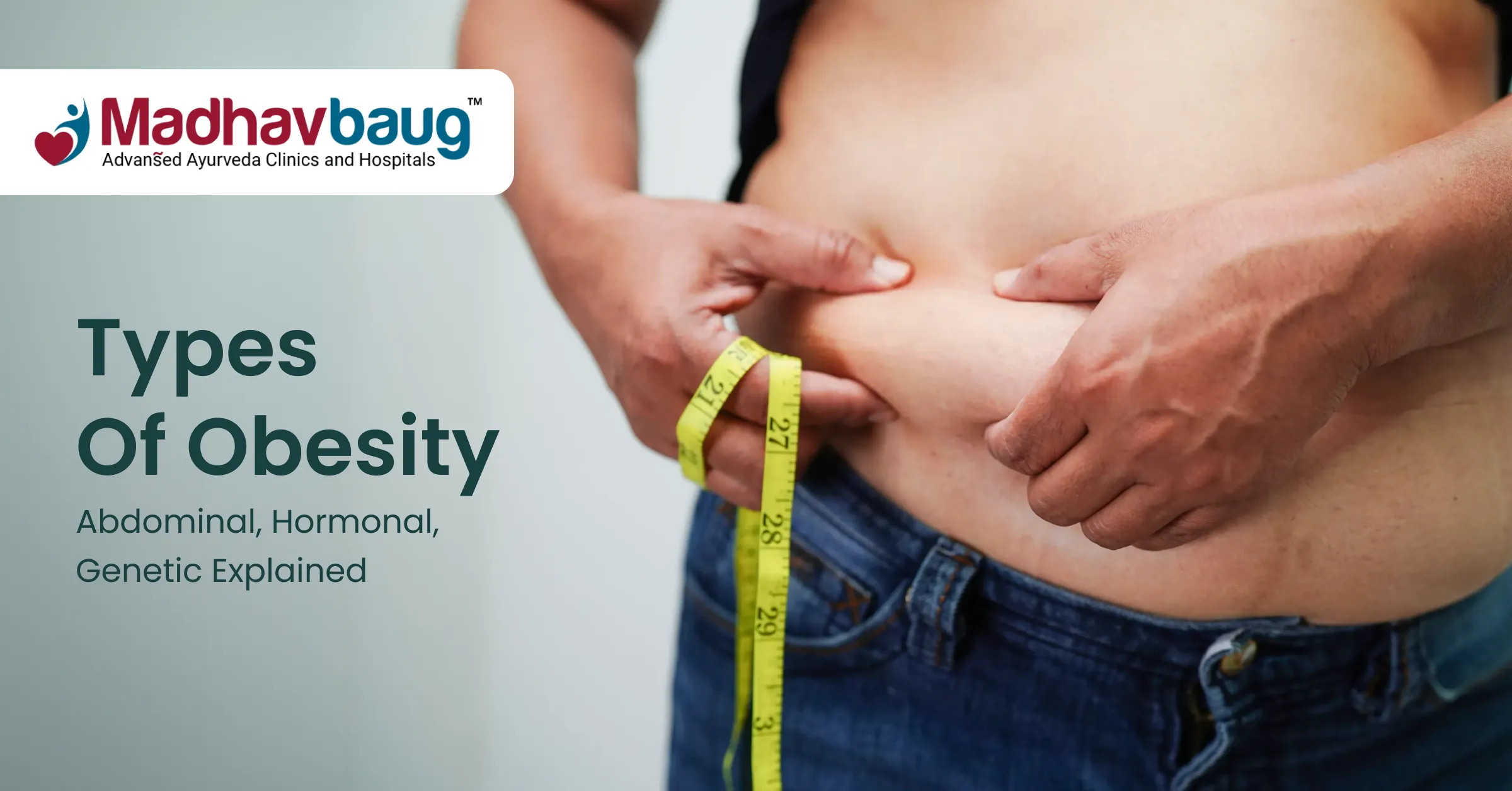
You eat carefully. You try to stay active. But the weight keeps climbing anyway.
If that sounds familiar, you are not alone, and honestly, it is probably not your fault. Weight gain is not always about eating too much or moving too little. Where your body stores fat, how your hormones behave, your genetic makeup, these things influence weight far more than most people are told.
Obesity is not one condition with one fix. It shows up differently in different people, and the reasons behind it vary just as much. Figuring out which type is at play for you is what actually makes treatment work.
Not sure why your weight keeps rising despite your best efforts? Madhavbaug’s specialists can help identify the real cause. Book an appointment today.
At its simplest, obesity means excess body fat that puts your health at risk. Doctors use BMI as a first screening tool. It is your weight in kilograms divided by your height in metres squared, and it groups people roughly like this:
Here is the thing though. BMI does not tell you nearly enough. Two people can have identical BMI scores and face completely different health risks depending on where their fat sits and what is driving it. A woman with most of her fat around the abdomen faces a very different cardiac risk than someone carrying weight on their hips and thighs. The number alone does not capture that. This is why the type of obesity matters as much as the classification.
Most people fall into more than one category, which is part of why generic diet plans produce such inconsistent results.
| Type | Primary Cause | Where Fat Sits | Key Signs |
| Abdominal | Diet, stress, inactivity, poor sleep | Around the Belly | Waist above 80 cm (women), 90 cm (men) |
| Hormonal | Thyroid, PCOS, insulin resistance, cortisol | Abdomen, face, upper body | Weight gain despite normal eating, fatigue, irregular periods |
| Genetic | Inherited metabolic tendencies | often all over | Family history of obesity, slow metabolism, strong hunger signals |
This is the type most commonly seen in India, and from a health standpoint, it is the most serious one.
Abdominal obesity is not just fat you can pinch around your waist. The more dangerous part is visceral fat, the fat that wraps around your internal organs and sits deep inside the abdomen. This fat does not just sit there quietly. It releases inflammatory compounds that damage blood vessels, interferes with how the body processes insulin, and significantly raises the risk of heart disease, type 2 diabetes, high blood pressure, and fatty liver disease.
For Indians, the thresholds to watch are a waist above 90 cm in men and above 80 cm in women. Even if your overall weight looks fine on paper, crossing these numbers is worth taking seriously.
What tends to drive abdominal fat:
This is probably the most commonly missed type, especially in Indian women.
When weight keeps creeping up despite no real change in eating habits, hormones are often the reason. A few of the main culprits:
Cutting calories will not fix any of this. The hormonal imbalance driving the gain needs to be identified and treated first.
Genetics play a bigger role than most people are comfortable admitting.
Some people genuinely are wired differently. Their metabolism runs slower. Their hunger signals are stronger and harder to override. Their bodies are more efficient at converting food into stored fat. Their cells are more prone to insulin resistance. None of this is a character flaw; it is biology.
Genetic factors that can contribute:
If obesity has been a pattern across generations in your family, particularly appearing early in life, there is a real biological component involved. That does not mean nothing can be done. It means the approach needs to account for it properly.
Individual choices matter, but they are influenced by many other factors. In India, the environment itself has become a significant driver of weight gain.
When these external pressures stack on top of hormonal imbalances or genetic tendencies, weight gain becomes much harder to reverse without proper, targeted support.
If you have tried repeatedly to lose weight and the results never stick, the problem is likely not effort. It is that the root cause has never been properly identified or treated.
Madhavbaug takes a different approach. Weight is treated as a metabolic and cardiac health concern, not just a lifestyle issue.
The team works with you to:
Treatments like thermal vasodilatation and Ayurvedic protocols go after visceral and subcutaneous fat while addressing the underlying metabolic damage, not just the surface weight.
This is not a standard diet programme. It is a medically supervised approach built around what is actually driving your weight gain.
Ready to find out what is really going on? Visit madhavbaug.org to book your consultation today.
Class 1 is BMI 30 to 34.9 (moderate risk), Class 2 is BMI 35 to 39.9 (high risk), and Class 3 is BMI 40 and above, also called morbid obesity (very high risk).
The five most common symptoms are persistent fatigue, breathlessness during light activity, joint pain in the knees and lower back, excessive sweating, and skin darkening around the neck or underarms.
Visceral fat, stored deep around the abdominal organs, is typically the hardest to lose due to its strong link with hormones and metabolism.
Obesity is influenced by a combination of factors including poor diet, lack of physical activity, genetics, hormonal imbalances, stress, and inadequate sleep.
Obesity is commonly classified using BMI, but it can also be grouped into types such as abdominal obesity, hormonal obesity, and genetic obesity based on underlying causes and fat distribution.

Quick answer Chest discomfort remains the most common heart-attack symptom in women, but women are more likely to experience additional

Have you ever been through this situation wherein you had chest pain, you visited your doctor and they suggested an