
Coronary Artery Disease in Women: Symptoms, Risk Factors and Prevention
Quick answer Chest discomfort remains the most common heart-attack symptom in women, but women are more likely to experience additional


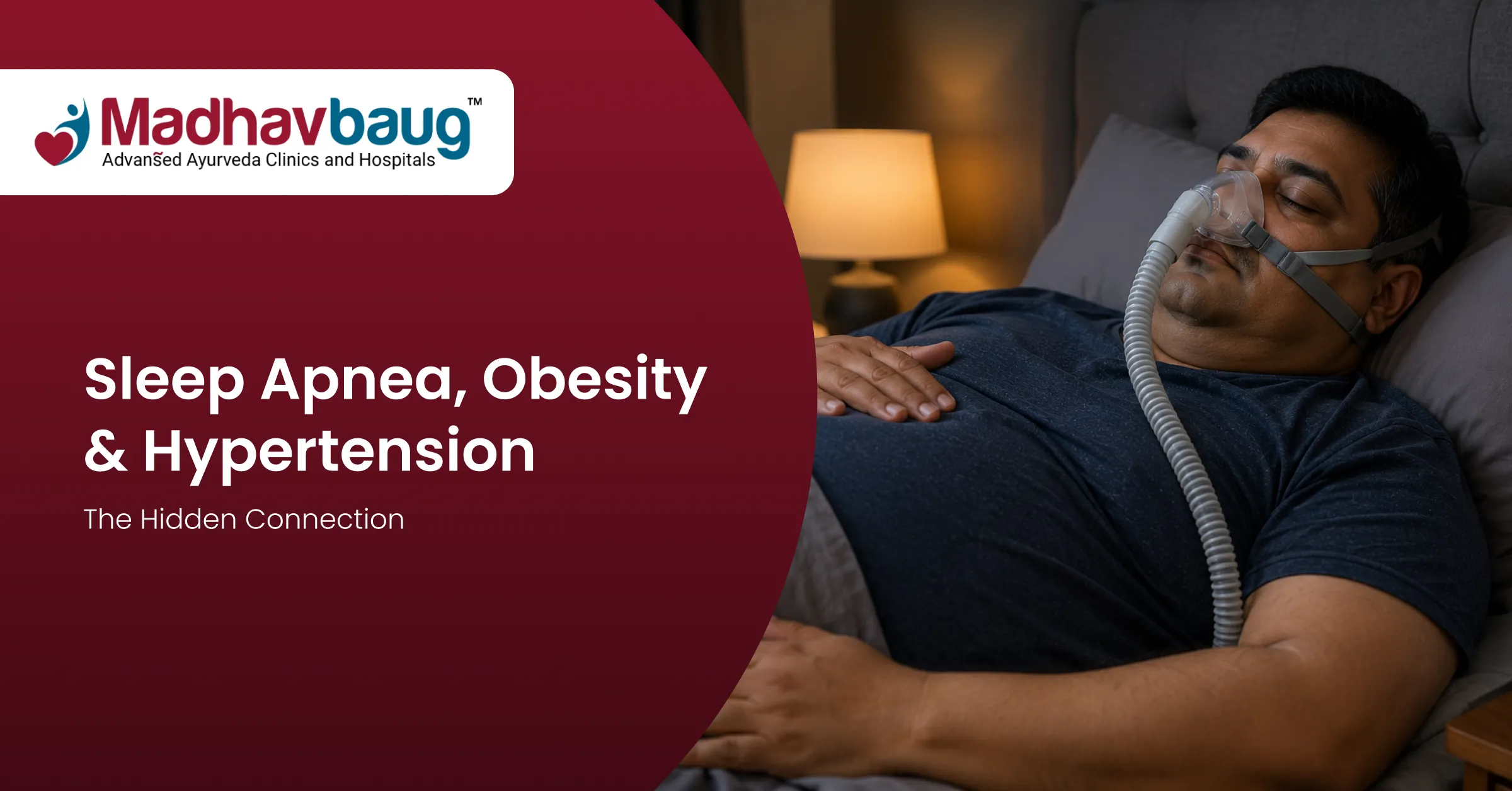
Sleep apnoea is a condition marked by repeated interruptions in breathing during sleep, without even realising it is happening. It shares common metabolic risk factors with extra weight and high blood pressure, which is why the three so often occur together and make each other worse.
If left untreated, it quietly puts strain on the heart over a longer period and raises the risk of other serious problems too, including diabetes, stroke, arrhythmias, and heart failure. This blog explains how these three problems are connected, why they so often appear together, and what can be done to break the cycle
Sleep apnoea is a problem with breathing during sleep. The airway at the back of the throat narrows or closes, so breathing stops for a short while, usually lasting for 10 seconds or more. The body senses the drop in oxygen and wakes you just enough to start breathing again. This can happen many times in an hour and may go on throughout the night.
Most people do not remember these moments at all. They only notice the results the next day, like excessive daytime sleepiness, tiredness, a headache or trouble focusing. In most cases, it is the partner who spots it first, usually because of loud snoring, followed by a silent gap, and then a sudden gasp.
The most common form is called obstructive sleep apnoea. It happens when the throat muscles relax too much during sleep and block the airway. This is the type that is most closely tied to weight and blood pressure. Excessive daytime sleepiness is one of the most common complaints associated with it.
The signs of sleep apnoea often go unnoticed, mostly because the clearest ones happen while you are asleep. The daytime signs are easier to feel but simple to blame on a busy life, so it helps to know both.
| Signs during sleep | Signs during the day |
| Loud, regular snoring | Waking up tired, even after a full night of sleep |
| Gasping or choking sounds | Headache in the morning |
| Long pauses in breathing, often noticed by a partner | Feeling sleepy or low on energy through the day |
| Restless, broken sleep | Trouble concentrating or remembering |
| Waking often to pass urine | Feeling irritable, low mood, or other mood changes |
| Dry mouth on waking | Reduced libido |
| Poor memory | |
| Difficulty controlling blood pressure | |
| Mood changes |
Extra weight is a major cause of obstructive sleep apnoea. The reason is simple. When fat builds up around the neck and throat, it presses in on the airway and decreases the space for air to pass. During sleep, the throat muscles relax, and the airway, which is already narrower, may close during this time (Lv et al., 2023). BMI and neck circumference are both used as predictors of this risk, since they reflect how much fat is sitting around the airway.
Belly fat plays a part too, as it presses up against the lungs and lowers the amount of air they can hold, which makes the airway close even more easily. This is why sleep apnoea is so common in people who carry extra weight around the middle. Extra weight also drives insulin resistance and chronic low-grade inflammation in the body, which affect the airway tissues and make them more likely to collapse during sleep.
It also works the other way. Sleep apnoea breaks up sleep every night, and poor sleep disturbs the hormones that regulate hunger. Leptin, which signals fullness, drops and ghrelin, which drives hunger, rises. Together, this leads to more cravings and more weight gain, which then makes the sleep apnoea worse. It becomes an ongoing cycle, where one problem makes the other worse.
Every time breathing stops during sleep, the level of oxygen in the blood drops. The body treats this as an emergency and activates the sympathetic nervous system, the body’s stress response system, sending a rush of stress signals to wake you, and these signals also make the heart beat faster and tighten the blood vessels. Because of this, blood pressure shoots up for a moment (Shiina, 2024).
In someone with sleep apnoea, this happens over and over, all night long. The blood pressure keeps spiking through the night instead of resting the way it should. These repeated surges also damage the lining of the blood vessels, known as the endothelium, leading to a condition called endothelial dysfunction. Along with this, the process increases oxidative stress, an imbalance that harms cells and blood vessel function over time. Over the longer period, this keeps the blood pressure high even during the day.
This is one reason sleep apnoea is so often found in people whose blood pressure is hard to control. This is one reason sleep apnoea is so often found in people whose blood pressure is hard to control. When high blood pressure does not settle with the usual medicines, this is known as resistant hypertension, and undiagnosed sleep apnoea can be part of the reason.
Extra weight makes sleep apnoea more likely. Sleep apnoea then pushes up blood pressure every night. High blood pressure and broken sleep both make it harder to stay active and manage weight, so the weight also tends to increase. And as the weight increases, the sleep apnoea gets worse again.
The good news is that the loop works in reverse, too. Losing even a modest amount of weight can ease sleep apnoea, which helps blood pressure settle, which in turn makes it easier to keep going.
Sleep apnoea is far more common than most people think, and a large number of those who have it never even find out. Studies estimate that close to a billion adults around the world have some degree of sleep apnoea, and India is among the most affected countries. Many of these cases are never diagnosed (Benjafield et al., 2019).
In India, research suggests around 11% of adults have some degree of sleep apnoea, affecting 13% of men and 5% of women, which is around 104 million working-age Indians. Of these, around 47 million have a moderate-to-severe form (Suri et al., 2023). Many of these cases are never diagnosed.
Some people are more likely to develop it than others. You are at higher risk if you:
A doctor will often start with a few simple questions about your sleep, your snoring, and how you feel during the day. A partner’s description of your nighttime breathing is very useful here, since the clearest signs happen while you are asleep. If these point towards sleep apnoea, the next step is a proper test, either a Home Sleep apnoea Test (HSAT) done at home, or polysomnography (gold standard test) done overnight at a sleep centre. Both are covered in more detail below.
The main test for sleep apnoea is a sleep study, which measures your breathing, oxygen levels and heart rate while you sleep.
There are two common ways this is done:
| Home sleep test | Polysomnography (sleep study at a centre) |
| Done in your own bed with a small device | Done overnight at a sleep lab or hospital |
| Measures breathing, oxygen and heart rate | Measures the same, plus brain activity and sleep stages |
| Simpler and lower cost | The gold standard test, more detailed, used for unclear or complex cases. |
Because sleep apnoea is closely associated with weight and blood pressure, a doctor will usually check these at the same time.
This usually includes measuring BMI and waist circumference, along with an ECG to assess heart function.
Blood pressure, blood sugar and cholesterol should be checked together, because diabetes, hypertension and heart disease are connected, and one problem often points to another.
None of these tests is difficult, and most people find the process far easier than they expected. The hardest part is only deciding to get checked.
It is worth speaking to a doctor if you notice:
Some signs need quicker attention. Get medical help without delay if you have:
The last group can be signs of a serious heart or brain problem and should be treated as an emergency.
For most people, though, this is not about panic. It is about noticing a pattern early, when there is a lot that can be done. If any of the everyday signs sound familiar, a simple conversation with a doctor is the right first step, and your nearest Madhavbaug clinic can be a good place to start.
Since extra weight is one of the major causes of both sleep apnoea and high blood pressure, Madhavbaug works on that through its weight and blood pressure programmes, rather than treating each problem on its own.
Panchakarma therapies:
Panchakarma is used as part of a comprehensive Ayurvedic management programme aimed at improving metabolism, supporting healthy weight management, and easing the inflammation linked to high blood pressure, all of which support overall cardiovascular health. These therapies form the base of both the Ayurvedic treatment for weight loss and the Ayurvedic treatment for high & low blood pressure.
Herbal formulations: High-quality Ayurvedic medicines support the work of the therapies. These medicines are prescribed only after a physician’s assessment. Each formulation is individualised based on the patient’s condition and treatment goals.
Diet: A personalised diet plan corrects the eating patterns behind weight gain and raised blood pressure. It focuses on calorie restriction, a low glycaemic diet, and foods that balance metabolism and reduce strain on the heart. The goal is sustainable lifestyle modification rather than a short-term fix.
Yoga and Pranayama: Guided yoga and Pranayama (breathing exercises) help lower stress, which is one of the main contributors to both weight gain and blood pressure spikes. Structured pranayama protocols such as Anulom Vilom and Bhramari reduce systemic inflammation driven by chronic stress and improve heart rate variability and autonomic balance (how well the body switches between stress and calm) over time.
A recent study found that yoga was linked to a modest reduction in blood pressure compared to not practising it at all (Geiger et al., 2025). Consistent practice also supports better sleep, which matters directly for blood pressure control.
Monitoring with data: Progress is tracked closely, not just for one number but for the wider picture of weight, blood pressure and metabolic health. This is supported by Madhavbaug’s PowerMAP technology, a medical analytics platform that gives doctors a complete, visual picture of a patient’s disease reversal journey, comparing current health data against past readings so treatment can be adjusted with precision at every step.
Losing even a modest amount of weight can bring blood pressure down noticeably, which is why weight is such a useful place to start when these problems appear together.
Sleep apnoea, extra weight and high blood pressure make each other worse, and sleep apnoea is usually the one that goes unnoticed. But it works both ways. Lose a little weight, and all three often start to get better.
This is the principle behind Madhavbaug’s approach: treating sleep, weight and blood pressure as one connected picture rather than separate problems.
If you snore loudly, wake up tired, or your blood pressure does not settle, get it checked early, since early diagnosis and lifestyle correction remain the most effective way to prevent long-term cardiovascular complications. Book a consultation with Madhavbaug to look at your weight, sleep and blood pressure together.
Frequently Asked Questions (FAQs)
Is there a connection between hypertension and sleep apnoea?
Yes, and it is a strong one. When breathing stops during sleep, the body reacts by pushing up blood pressure again and again through the night. Over time, this can leave blood pressure high even during the day, which is why the two so often go together.
Is there a link between obesity and sleep apnoea?
Yes, a strong one. Carrying extra weight, particularly around the neck and middle, is the main reason obstructive sleep apnoea develops. The fat around the throat leaves the airway narrower than it should be, so during sleep, it closes more easily.
What is the 4% rule for sleep apnoea?
This is one of the ways sleep apnoea is measured during a sleep study. If your airflow drops and the oxygen in your blood falls by 4% or more, that counts as one event. Doctors then look at how many of these events happen each hour, and that tells them whether the sleep apnoea is mild, moderate or severe.
Does losing weight help with sleep apnoea?
Yes. Losing even a modest amount of weight can reduce the fat around the airway and ease the breathing pauses. It often helps blood pressure at the same time, which is why weight is such a useful place to start.
Is sleep apnoea dangerous if left untreated?
It can be. Over time, untreated sleep apnoea raises the risk of high blood pressure, heart problems and stroke, and it leaves you tired and less able to focus during the day. The good news is that it is very treatable once found.

Quick answer Chest discomfort remains the most common heart-attack symptom in women, but women are more likely to experience additional

Have you ever been through this situation wherein you had chest pain, you visited your doctor and they suggested an