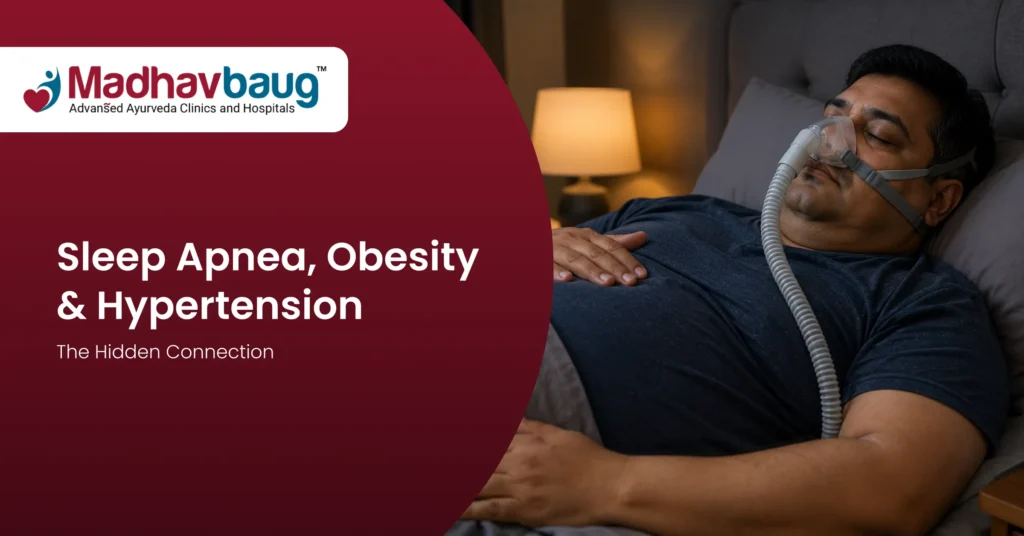
Sleep apnoea is a condition marked by repeated interruptions in breathing during sleep, without even realising it is happening. It shares common metabolic risk factors with extra weight and high blood pressure, which is why the three so often occur together and make each other worse. If left untreated, it quietly puts strain on the heart over a longer period and raises the risk of other serious problems too, including diabetes, stroke, arrhythmias, and heart failure. This blog explains how these three problems are connected, why they so often appear together, and what can be done to break the cycle What Is Sleep Apnoea? Sleep apnoea is a problem with breathing during sleep. The airway at the back of the throat narrows or closes, so breathing stops for a short while, usually lasting for 10 seconds or more. The body senses the drop in oxygen and wakes you just enough to start breathing again. This can happen many times in an hour and may go on throughout the night. Most people do not remember these moments at all. They only notice the results the next day, like excessive daytime sleepiness, tiredness, a headache or trouble focusing. In most cases, it is the partner who spots it first, usually because of loud snoring, followed by a silent gap, and then a sudden gasp. The most common form is called obstructive sleep apnoea. It happens when the throat muscles relax too much during sleep and block the airway. This is the type that is most closely tied to weight and blood pressure. Excessive daytime sleepiness is one of the most common complaints associated with it. What are the Symptoms of Sleep Apnoea? The signs of sleep apnoea often go unnoticed, mostly because the clearest ones happen while you are asleep. The daytime signs are easier to feel but simple to blame on a busy life, so it helps to know both. Signs during sleep Signs during the day Loud, regular snoring Waking up tired, even after a full night of sleep Gasping or choking sounds Headache in the morning Long pauses in breathing, often noticed by a partner Feeling sleepy or low on energy through the day Restless, broken sleep Trouble concentrating or remembering Waking often to pass urine Feeling irritable, low mood, or other mood changes Dry mouth on waking Reduced libido Poor memory Difficulty controlling blood pressure Mood changes Why Obesity Raises the Risk of Sleep Apnoea Extra weight is a major cause of obstructive sleep apnoea. The reason is simple. When fat builds up around the neck and throat, it presses in on the airway and decreases the space for air to pass. During sleep, the throat muscles relax, and the airway, which is already narrower, may close during this time (Lv et al., 2023). BMI and neck circumference are both used as predictors of this risk, since they reflect how much fat is sitting around the airway. Belly fat plays a part too, as it presses up against the lungs and lowers the amount of air they can hold, which makes the airway close even more easily. This is why sleep apnoea is so common in people who carry extra weight around the middle. Extra weight also drives insulin resistance and chronic low-grade inflammation in the body, which affect the airway tissues and make them more likely to collapse during sleep. It also works the other way. Sleep apnoea breaks up sleep every night, and poor sleep disturbs the hormones that regulate hunger. Leptin, which signals fullness, drops and ghrelin, which drives hunger, rises. Together, this leads to more cravings and more weight gain, which then makes the sleep apnoea worse. It becomes an ongoing cycle, where one problem makes the other worse. How Does Sleep apnoea Affect Blood Pressure and the Heart? Every time breathing stops during sleep, the level of oxygen in the blood drops. The body treats this as an emergency and activates the sympathetic nervous system, the body’s stress response system, sending a rush of stress signals to wake you, and these signals also make the heart beat faster and tighten the blood vessels. Because of this, blood pressure shoots up for a moment (Shiina, 2024). In someone with sleep apnoea, this happens over and over, all night long. The blood pressure keeps spiking through the night instead of resting the way it should. These repeated surges also damage the lining of the blood vessels, known as the endothelium, leading to a condition called endothelial dysfunction. Along with this, the process increases oxidative stress, an imbalance that harms cells and blood vessel function over time. Over the longer period, this keeps the blood pressure high even during the day. This is one reason sleep apnoea is so often found in people whose blood pressure is hard to control. This is one reason sleep apnoea is so often found in people whose blood pressure is hard to control. When high blood pressure does not settle with the usual medicines, this is known as resistant hypertension, and undiagnosed sleep apnoea can be part of the reason. On their own, extra weight, sleep apnoea and high blood pressure are each serious. Together, they form a loop where each one keeps the others going. Extra weight makes sleep apnoea more likely. Sleep apnoea then pushes up blood pressure every night. High blood pressure and broken sleep both make it harder to stay active and manage weight, so the weight also tends to increase. And as the weight increases, the sleep apnoea gets worse again. The good news is that the loop works in reverse, too. Losing even a modest amount of weight can ease sleep apnoea, which helps blood pressure settle, which in turn makes it easier to keep going. What Screening Tools Are Used for Sleep apnoea? Sleep apnoea is far more common than most people think, and a large number of those who have it never even find out. Studies estimate that close to a
Most people assume health checkups are only necessary when something feels wrong. If you feel fine, everything must be fine. However, we may not be aware of imbalances which silently harm our bodies. Lifestyle diseases like diabetes, high blood pressure, and heart disease do not have a sudden onset. They develop gradually, until complications have already set in. Ayurveda focuses on the principle of preventing diseases first. Thus, it becomes important to prevent them by correcting our lifestyle. Madhavbaug focuses on holistic healing and not just symptomatic relief but addressing the root cause in order to prevent diseases and even reverse such diseases. Book a preventive health consultation at Madhavbaug today and get ahead of lifestyle diseases before they get ahead of you. Why Early Detection Actually Matters The prevalence of lifestyle-related conditions has increased across all age groups. Therefore, early detection of lifestyle diseases gives you the opportunity to act before complications develop. What early screening gives you: Control Better options Simpler fixes Lower costs Fewer complications Catching a risk early means lifestyle changes rather than complex medical intervention later. That tradeoff is significant. When to Test for Diabetes Many people associate diabetes with older age. That pattern has shifted considerably, particularly in India where metabolic risk develops earlier than global averages suggest. Screening by age: 18 to 25: screen if risk factors present 25 to 30: baseline testing recommended 30 and above: annual testing How often to check blood sugar: Lower risk: every 1 to 2 years High risk: every 6 months The goal is to establish a baseline early and track changes over time. Not to wait until something feels off. What Is the Right Age to Start Checking Blood Pressure? High blood pressure rarely causes noticeable symptoms in its early stages. That silence is precisely why it causes so much damage before it is caught. Screening guidelines for hypertension: From 18: every 2 years From 30: annually Any age: sooner if symptomatic With chronic stress, long work hours, and dietary imbalances becoming the norm, blood pressure monitoring has become relevant well before 30 for a significant proportion of Indians today. Who Should Start Early Screening for Heart Disease? Heart health involves multiple systems simultaneously. Cholesterol, blood pressure, blood sugar, and lifestyle habits all feed into each other, which is why early screening for heart disease matters even before symptoms appear. Age 20: baseline lipid profile Age 30: regular monitoring if risk factors present Age 40: full cardiac assessment including ECG Any age: immediate if symptomatic Starting early identifies risk patterns before the window for easy correction closes. What a Preventive Health Checkup Includes A standard preventive health checkup covers: Fasting glucose and HbA1c Lipid profile BP measurement Liver and kidney function CBC and thyroid BMI and waist circumference ECG if indicated Together these tests provide a comprehensive metabolic picture and catch issues that would otherwise stay invisible for years. When Should You See A Doctor? Some groups should not wait for a scheduled checkup: Family history of diabetes, BP, or heart disease High BMI or abdominal weight Sedentary lifestyle Smokers or regular drinkers PCOS or gestational diabetes history No checkup in two years The absence of symptoms is not the same as the absence of risk. That distinction matters more than most people realise until it is too late. How Madhavbaug Can Help At Madhavbaug, preventive screening is the starting point for everything that follows. The approach is built around identifying individual risk factors before they become clinical diagnoses. Charak Samhita (one of the main books of Ayurveda) states that the aim of Ayurveda is स्वस्थस्य स्वास्थ्य रक्षणम्, which means to prevent first and then treat those with diseases. Madhavbaug focuses on considering an integrated approach towards health which includes examining Ayurvedic principles as well as modern tools to ensure sustainable health for all. This uniqueness of Madhavbaug provides holistic healing. The doctors here assess on the basis of Ayurveda, which includes Prakriti assessment, assessment of the vitiated doshas such as Vata, Pitta, and Kapha, assessment of vitiated dhatus (the 7 entities which are one of our body’s building blocks) and much more. With this, the preventive screening also includes the modern diagnostic tests, such as blood reports and similar assessments. Ayurveda also focuses on lifestyle correction, for which Madhavbaug has developed many disease-specific diet kits, contributing towards holistic healing. Furthermore, following the principle of Ayurveda that every person is unique, it focuses on giving personalised care to every patient in the form of a personalised exercise routine, a personalised diet chart and personalised protocols to help the individual not only maintain good health but also reverse the disease conditions. Also screening once is not enough. The MIB Pulse app by Madhavbaug helps one continuously monitor oneself, which helps one keep an account of even minute changes in the BP and glucose-related patterns, which aids early diagnosis of any developing complications leading to early prevention. Take a first step towards holistic healing by booking your consultation at Madhavbaug today. Frequently Asked Questions What is the ideal age to start health screening checkups? The ideal health screening age is typically around 25 for baseline tests, though earlier screening may be needed if risk factors are present. When should I begin early screening for heart disease? Early screening for heart disease can start as early as 20, especially if you have lifestyle or genetic risk factors. How often should I check my blood sugar? How often to check blood sugar depends on your risk level, every 1–2 years for low-risk individuals and more frequently for those at higher risk. What are the screening guidelines for hypertension? Screening guidelines for hypertension recommend starting checks from age 18, with increased frequency as you age or if risk factors develop. Who should get a preventive health checkup? Anyone above 25 should consider regular screening, especially those with risk factors or long gaps between checkups.

