
Prediabetes is an early warning, and one worth listening to. The good news is that at this stage, the right changes can often turn things around before diabetes ever sets in. This blog gives you a simple 90-day plan covering food, movement, sleep and Ayurveda-informed habits to help lower your blood sugar, along with your doctor’s guidance. Madhavbaug can help with its ayurvedic diabetes reversal treatment programme, which works to lower blood sugar by treating what causes it. What Does Prediabetes Mean? Prediabetes is the stage just before type 2 diabetes. Your blood sugar is higher than it should be, but not high enough to be called diabetes. The system that keeps your blood sugar stable has started to struggle, which usually happens when the body is not responding to insulin the way it used to. If not addressed at this point, this often moves on to full diabetes over time. But if it is caught early, it can often be slowed, stopped, or even reversed with the right lifestyle changes (Galaviz et al., 2022). The tricky part is that prediabetes usually has no clear symptoms. Most people feel completely fine and have no idea that anything is wrong. That is why it is often picked up by chance, during a routine blood test. The Tests and What the Numbers Mean Because prediabetes has no symptoms, the only way to know is with a blood test. Doctors use three common tests, and any one of them can show prediabetes (American Diabetes Association, 2026). Test What it checks Prediabetes range HbA1c Your average blood sugar over the past 2–3 months 5.7% to 6.4% Fasting blood sugar Your blood sugar after not eating for 8 hours 100 to 125 mg/dL Oral glucose tolerance test Your blood sugar 2 hours after a sugary drink 140 to 199 mg/dL If your reading falls in one of these ranges, it means you are in the prediabetes zone, above normal, but below the level that would be called diabetes. It is best to consult your doctor with the number and avoid self-diagnosis. Your doctor will look at the full picture, including your weight, family history and other risks, before deciding what to do next. Who is at Risk? Anyone can develop prediabetes, but a few things can increase the chances. According to the American Diabetes Association (2026), your chances are higher if some of these apply to you: You carry extra weight, especially around the middle Type 2 diabetes runs in your family, and a parent or a sibling has diabetes You spend most of your day sitting and move very little Your blood pressure is on the higher side, or your cholesterol is out of balance You had diabetes during pregnancy You live with PMOS, the condition previously known as PCOS You are past 45, since the risk increases with age And prediabetes rarely shows up on its own. It often comes with high blood pressure and unhealthy cholesterol. Together, these put strain on the heart. That is why catching it early matters. Seeing how diabetes, hypertension and heart disease make each other worse shows just how important it is to act. Your 90-Day Action Plan Ninety days is enough time to build real habits and see a change in your numbers. The aim is not to do a crash effort, but to take steady, doable steps you can keep up with. Here is how to build them in, week by week. Timeframe Focus What to do Days 1–7 Start simple Follow the plate method (half vegetables, quarter protein, quarter whole grains). Cut back on sugary drinks and refined flour. Start a daily walk. Set a regular sleep and wake time. Days 8–14 Build the base Bring in fenugreek, turmeric and cinnamon. Make the walk brisk. Wind down before bed, away from screens and bright light. Days 15–30 Add strength and structure Add strength work twice a week (light weights, resistance band, or bodyweight). Start tracking weight once a week. Begin Dinacharya basics, waking earlier and eating a lighter dinner. Days 31–60 Build consistency Keep walks and strength sessions steady. Track weight weekly, and keep an eye on your waist size. Note energy and sleep quality. Review food choices and adjust. Days 61–90 Keep it going Maintain all habits. Review weight, waist and habit notes from the full 90 days. Speak with your doctor about retesting HbA1c or fasting blood sugar. And here is the encouraging part. For a lot of people, these everyday changes are enough on their own to bring blood sugar back to normal and stop prediabetes before it becomes diabetes (Galaviz et al., 2022). This is really the core of how to reverse prediabetes naturally, not one big fix, but several small ones, done consistently, with your doctor keeping an eye on your progress. Here is more on each of these to help you put them into practice. Meal Planning and Timing What you eat matters, but it does not have to be complicated. A simple way to picture a balanced meal is to think of your plate in parts. Half your plate: vegetables and leafy greens, especially bottle gourd, bitter gourd (karela) and other colourful options A quarter: protein, like dal, beans, egg white ( fish or chicken weekly thrice that should be in lunch time only). A quarter: millets, like barley ,brown rice, ragi, jowar. This balance slows down how fast sugar enters your blood and helps keep your levels steadier after meals. Ayurveda adds a few useful principles here too: favour fresh, warm, whole foods, lean on spices like fenugreek (methi), turmeric and cinnamon, and use healthy fats such as ghee, coconut oil, almonds and walnuts in moderation. A few things are worth cutting back on: Sugary drinks, sweets and refined flour (maida) Fried, packaged, or overly processed foods Fruit juice, in place of whole fruit Long gaps between meals that lead to overeating later How you eat counts too. Eat slowly, and stop before you
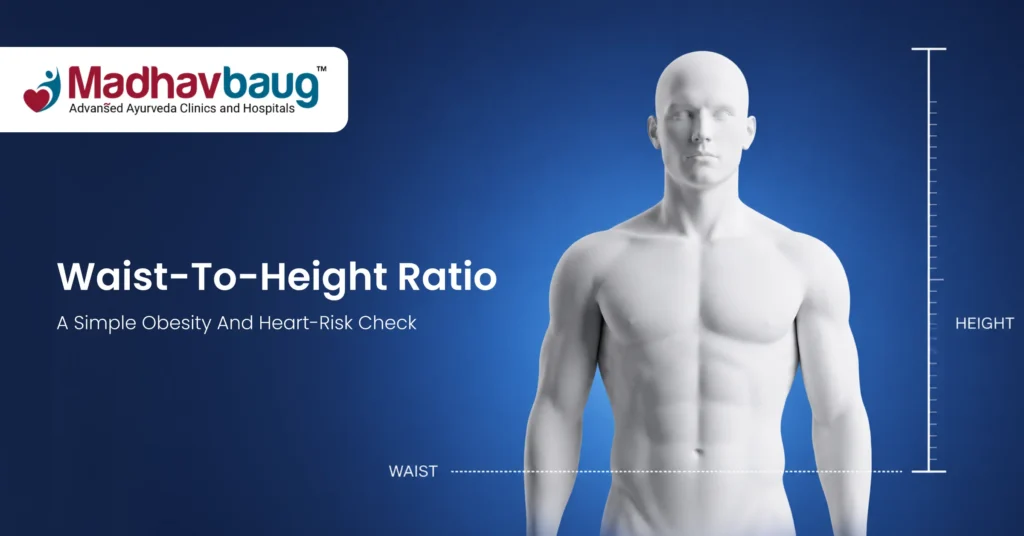
Tracking body weight is a good start, but weight alone cannot tell you the full story. It cannot show you where the fat is stored in your body, even though this fat is what actually influences your risk for Type 2 Diabetes, Hypertension (High Blood Pressure), and Heart Disease. The Waist-to-Height Ratio helps solve this problem. It is a simple and easy calculation that measures your belly fat. Because of this, doctors are now using this calculation more often as a screening tool. While this ratio cannot directly diagnose a disease, it is very helpful in pointing out the fat patterns that may need a closer view. This article explains how to measure your ratio correctly, what your results mean and how to use the waist-to-height ratio to get a better understanding of your health and related risks. What Is Waist-to-Height Ratio? Waist-to-height ratio (WHtR) is a simple way of comparing your waist circumference with your height. The calculation takes less than a minute. Measure your height and your weight using the same units (like in centimeters) Divide one by the other to get the waist-to-height ratio (WHtR) For example, a waist circumference of 85 cm and a height of 170 cm is 85/170 and gives a WHtR of 0.50. If you prefer not to calculate it manually, a waist-to-height ratio calculator can provide the result instantly once you enter the measurements. That simple number can tell you how much fat has gathered in your belly area, especially around your internal organs. Since the calculation includes your height, the exact same waist size may mean different levels of health risk for people of different heights. Clinical guidelines recommend having a waist circumference below half the total height, which is a waist-to-height ratio of less than 0.5 (National Institute for Health and Care Excellence, 2022). Why Does Waist Size Matter More Than Total Weight? Total body weight does not reveal where fat is stored, but the waist size does. That difference matters more than most people realise. Not all fat behaves the same way in the body. The layer stored just beneath the skin (subcutaneous fat) is generally less harmful. Visceral fat, the fat around internal organs, is far more concerning. Visceral fat releases inflammatory chemicals and fatty acids directly into the bloodstream. It disrupts the hormonal balance and reduces insulin sensitivity. The cumulative effect raises the risk of serious chronic conditions, including heart blockage and cardiovascular disease, and this can happen well before body weight gives any other indication that something is wrong. For the Indian population, this concern is even more serious. South Asians tend to collect higher levels of abdominal and visceral fat at lower Body-Mass Index (BMI, a simple calculation that uses your height and weight to estimate whether you are underweight, at a healthy weight, or overweight) levels than many other populations. Obesity-related health risks may therefore develop at BMI readings that would otherwise appear acceptable by standard measures (Misra et al., 2025). How to Measure Your Waist-to-Height Ratio Correctly Small errors in technique are easy to make, and they do affect the final figure. The steps below ensure the measurement is taken correctly. For the waist measurement: Stand upright and breathe out normally Wrap a flexible measuring tape around the bare abdomen at the midpoint between the bottom of the lowest rib and the top of the hip bone, roughly level with the navel Do not pull the tape tight or draw the stomach in Record the figure in centimetres For height: Stand against a flat wall without footwear Mark the point level with the top of the head Measure from the floor to that mark in centimetres Divide the waist measurement by the height measurement. The result is the waist-to-height ratio. A waist-to-height ratio calculator can also do this instantly if preferred. Interpreting Your Result Without Self-Diagnosis Once the ratio is calculated, the result can be read against the following ranges. (Note that these are screening indicators and are not complete diagnostic tools) WHtR Range Risk Category What It Suggests Below 0.40 Very low Waist may be slimmer as per height 0.40 to 0.49 Acceptable Lower cardiometabolic risk range 0.50 to 0.59 Increased risk Belly fat storage needs attention 0.60 and above High risk Significantly elevated cardiometabolic risk A waist-to-height ratio of 0.50 or above also does not confirm a disease but suggests that abdominal fat may be deposited at a level that carries a higher risk of conditions such as type 2 diabetes, high blood pressure, and heart disease. Madhavbaug’s PowerMAP programme evaluates all other aspects like blood pressure, blood sugar, cholesterol levels, medical history, and lifestyle factors as well, rather than relying on a single measurement, which helps doctors develop a personalised treatment plan based on an individual’s overall health profile. How Does Waist-to-Height Ratio Compare to BMI? BMI has been the default measure of weight-related health risk for decades. It is calculated from body weight and height, and though it is a commonly referred-to tool, it has well-documented limitations. It cannot distinguish between fat and muscle It says nothing about where fat is distributed in the body. Two people can have an identical BMI and still carry entirely different levels of health risk, depending on how their fat is distributed. A person with a BMI in the normal range can still carry significant visceral fat concentrated around the abdomen. Studies in cardiovascular and metabolic health have found WHtR to be a more reliable predictor of risk than BMI alone (Tewari et al., 2023; Chan et al., 2024). The two measures work together and not against each other. BMI gives you a starting point, but waist-to-height ratio shows exactly where extra fat is stored and how closely it sits to your internal organs. When used together, these can give you a clearer picture of your health. For a broader assessment of how weight and metabolic health interact, Madhavbaug’s approach to weight loss and obesity management looks beyond surface numbers to address

Do you feel out of breath climbing a few stairs? Have you ever felt a heavy or uncomfortable feeling in your chest while walking? Do you feel exhausted very often, even when you haven’t done much? Most people ignore these signs as something that is a normal result of age, stress, or being busy. However, these changes can be your body’s way of telling you that something is wrong with your heart. Heart problems do not always start with severe chest pain or a sudden emergency. In many cases, the warning signs are mild and show up during everyday activities. These early signs are easy to miss, but early intervention can help you take action before the problem becomes serious. In this blog, we will look at some common warning signs of poor heart health, when you should be concerned, and how both modern diagnostics and Ayurveda can help support a healthy heart. Why Daily Activities Matter More Than You Think Your heart’s real condition often reveals itself under the workload of everyday movement, not at rest. Walking up stairs, carrying groceries, hurrying to catch a bus, or even taking a shower can reveal how your heart is actually working. When arteries are narrowed or the heart is under strain, even routine activities become demanding on your heart and symptoms start surfacing. If your body is responding differently to activities it once handled easily, you should pay attention. Heart Disease Warning Signs to Watch For During the Day 1. Chest Pain or Tightness Chest pain is the most recognised symptom of all chest pain symptoms. Watch for: A squeezing or heavy pressure across the chest A burning sensation that feels like indigestion Tightness that appears when you exert yourself and eases when you sit down Pain that radiates to the left arm, jaw, neck, or back The pattern matters as much as the sensation. If these symptoms arise when you are performing daily activities and go away when you rest, it is a strong indication that your heart is not receiving the right amount of blood. 2. Shortness of Breath During Routine Tasks Shortness of breath becomes concerning when you feel it after simple tasks like showering or climbing just one flight of stairs. This is one of the early signs that your heart’s health is compromised. It can be an indicator of conditions like reduced blood flow, a heart valve issue, or, in some cases, early heart failure. If it is a recent change you have noticed, get evaluated. 3. Unusual Fatigue Unusual fatigue would mean feeling increasingly tired even after small tasks or feeling exhausted with no real cause to it. This may indicate that your heart is working harder than normal to maintain blood flow. This is especially common in women, where fatigue is often the primary and occasionally the only early warning sign. 4. Heart Palpitations If you experience rapid heartbeats occasionally, it’s not abnormal. However, if palpitations are occurring frequently and last for long periods or come with dizziness and chest discomfort, the issue cannot be ignored. 5. Swelling in the Legs, Ankles, or Feet When the heart is not pumping properly, you may notice swelling in the lower half of your body. If you see this happening, especially in your calves, feet or ankles, discuss it with your doctor immediately. 6. Dizziness or Lightheadedness Feeling dizzy randomly or right after standing up or during some light activity could mean your blood pressure is not regulated in the right way. If you notice this in combination with any of the other symptoms, it’s worth informing your doctor. Heart Blockage Symptoms: What Makes Them Different Heart blockage symptoms can be hidden at first. Many times a blockage causes no symptoms at rest. The signs will only appear when the heart is under more strain than usual. What are the symptoms of reduced blood flow? Chest discomfort that is tied to increased physical work Shortness of breath on performing simple tasks Extreme tiredness after basic activities A cold sweat coupled with chest pressure Nausea or jaw pain These symptoms do not follow a certain order and can even be very mild and difficult to notice in some cases. When to Get a Cardiovascular Health Assessment Many heart conditions develop silently before symptoms appear. Regular check-ups give you a clear picture of your heart’s health before a problem becomes an emergency. Core Heart Screening Tests to Know About What It Checks Blood Pressure test Elevated pressure with no symptoms is one of the biggest risk factors Lipid Panel LDL, HDL, triglycerides and total cholesterol levels Blood Sugar Test Uncontrolled diabetes significantly increases cardiac risk ECG (Electrocardiogram) Detects irregular heart rhythms and electrical abnormalities Echocardiogram Ultrasound imaging of hearts’ structure and function Stress Test Assesses heart performance during physical exertion Coronary Calcium Score (CT) Detects early arterial plaque before symptoms develop Adults over 30, or those with risk factors such as family history, diabetes, high blood pressure, or a sedentary lifestyle, should consider a structured cardiovascular health assessment rather than waiting for symptoms to appear. Concerned about your heart health and looking for a non-invasive approach? Madhavbaug Advanced Ayurveda Clinics and Hospitals offers a comprehensive heart health assessment and a clinically supported Ayurvedic reversal programme for those managing heart blockage, hypertension, and early cardiovascular disease. Book Your Heart Health Consultation at Madhavbaug What Ayurveda Says About Heart Health Ayurveda has understood the heart’s importance for thousands of years. In Ayurvedic science, the heart is called ‘Hridaya’ and is considered one of the three most important organs of the body. It is not seen purely as a mechanical pump but as the one who holds consciousness, emotion, and vital energy, which Ayurveda calls Ojas. Heart disease in Ayurveda is referred to as Hridroga, and it is understood as a consequence of imbalance in the body’s three fundamental energies, or doshas. The Three Dosha Connections to Heart Health Nature When Imbalanced Vata Movement and rhythm Irregular heartbeat, palpitations, anxiety Pitta Metabolism and transformation Swelling, hypertension, heart strain Kapha Structure and stability Plaque buildup,

