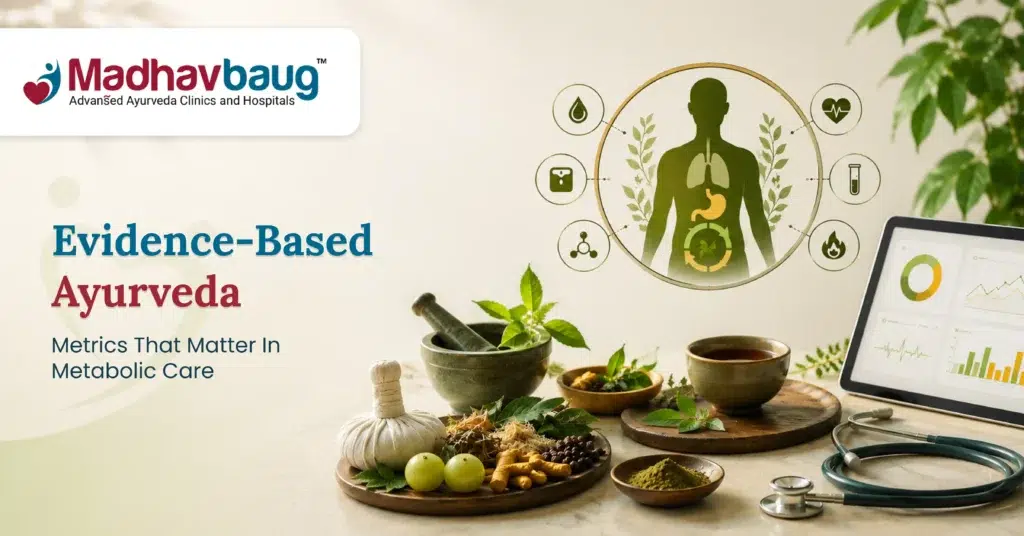
Ayurveda is often talked about in terms of balance and well-being. That sounds nice, but it does not tell you if the treatment is actually working. For diabetes, blood pressure, heart disease or weight, the real question is simple: have the numbers moved? This blog looks at what actually counts as proof that something is working, which numbers are worth tracking for diabetes, blood pressure, heart health and weight, and whether the care is conventional, Ayurvedic, or both together. At Madhavbaug, this is the standard every programme is measured against, not just how someone feels, but what the numbers show. What Evidence-Based Care Means Evidence-based medicine simply means using the best available science, combined with a doctor’s clinical experience and the patient’s own situation, to make the best possible healthcare decision (Tenny & Varacallo, 2024). This rests on one idea that a treatment should be judged by what can be measured and repeated, not only by how it is described or how people say they felt. If ten people try a treatment and feel better, that is useful to know, but it is not proof on its own. If their blood tests also improve, that becomes evidence. Feelings can change for many reasons, like having a good week, less stress, or simply hope. A blood test does not work that way. It either improved or it did not. This is why doctors look for both. How a person feels matters, but a measured result confirms it, and shows exactly how much progress has been made. This same standard applies whether the treatment is conventional, Ayurvedic, or a mix of both. Patient-Reported vs. Clinical Outcomes Ask someone how a treatment is going, and they will usually talk about how they feel or their latest test result. Good care will pay attention to both. What the Person Reports What a Doctor Measures What it captures Energy, sleep, mood, day-to-day comfort Blood tests, blood pressure, weight, scans Who checks it The person themselves A doctor, using a proper test Strength Shows how life actually feels for the person Can be compared over time, and between people Limitation Can shift with mood, stress, or expectation Does not show how someone feels day to day Neither one tells the full story on its own. A person can feel much better while a blood test barely improves. Another person can have strong test results while still adjusting to a new routine. Good care, whether conventional or Ayurvedic, will keep a check on both, rather than completely relying on just one. This is also where many health claims fall short. A good testimonial can capture how someone feels, but without a matching test result along with it, it only shows half the picture. What to Track for Diabetes For diabetes, a few numbers need to be tracked as they show the full pattern. Metric What It Shows Why It Matters HbA1c Average blood sugar over the past 2 to 3 months Reflects a long-term pattern, not a single good or bad day Fasting blood sugar Blood sugar after not eating for 8 hours A same-day check is useful along with HbA1c, and is not a replacement for it Post-meal blood sugar Blood sugar 1 to 2 hours after eating Shows how well the body handles food, which fasting numbers can miss Medication dose over time How much medicine is needed to stay controlled A decreasing dose, along with stable blood sugar, is a measurable sign of progress HbA1c is the number doctors usually check first, since it reflects the last two to three months, not a single day (American Diabetes Association, 2026). But it should not be the only number used. Two people can have a similar HbA1c, even if one has big swings after meals and the other does not. Medication dose matters too and is often missed. If blood sugar stays controlled on a lower dose, with your doctor’s guidance, that is real progress. This is different from stopping medicine on your own, which should never be done without medical advice. Together, HbA1c, daily readings, and medication dose are what integrated diabetes care outcomes actually look like, rather than a single number on its own. What to Track for Blood Pressure Blood pressure numbers are simple to read, but more likely to be tracked incorrectly, which can make a good result look worse than it is or hide a real problem. Metric What It Shows Why It Matters Home BP average Multiple readings, same time of day, over a week More reliable than a single reading, especially one taken at a clinic Systolic and diastolic trend Whether both numbers are moving down together A drop in one number without the other can still mean risk remains Medication dose over time How much medicine is needed to stay controlled A lower dose with stable readings is real progress A single blood pressure reading can be misleading. Stress, activity, or simply being at a clinic can raise it temporarily, as it is a well-documented pattern called white coat hypertension. Current guidelines recommend confirming a diagnosis with readings taken at home, averaged over multiple days, rather than relying on one clinic visit alone (AHA/ACC, 2025). The top number (systolic) and bottom number (diastolic) both matter. If the top number gets better but the bottom one stays high, or the other way around, it still needs attention. Real progress means both moving down together. What to Track for Heart Health Heart health is often judged by how someone feels. But many important changes happen quietly, well before any symptoms show up. Metric What It Shows Why It Matters LDL cholesterol (bad cholesterol) The type of cholesterol linked most closely to blocked arteries Lower is generally better, and it responds to diet, activity and medication Resting heart rate Heart rate while completely at rest A gradually lower resting rate often reflects a stronger, more efficient heart Exercise tolerance How much activity you can do before feeling breathless or tired
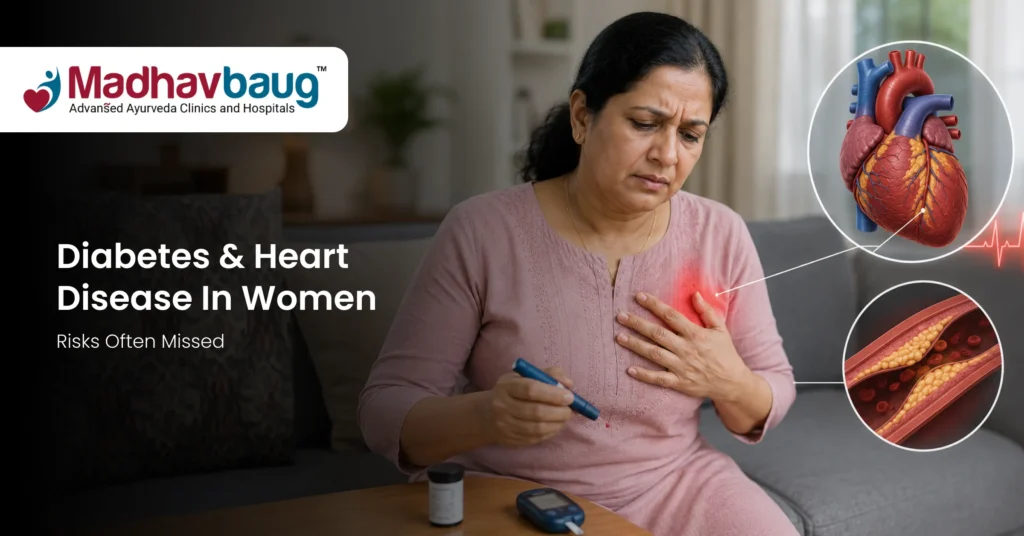
Most people think of diabetes as a blood sugar problem. That is true, but after a while, it starts to affect the heart too. In women, it often goes unnoticed because the signs are easy to miss or are assumed to be something else. This blog looks at how the two are linked in women, what to watch for, and how to catch a problem early. Why Diabetes Affects a Woman’s Heart Differently Before menopause, most women have natural protection against heart disease. Hormones, particularly oestrogen, help keep blood vessels flexible and the cholesterol in balance. Diabetes slowly takes that protection away. When blood sugar stays high over time, it slowly damages the lining of blood vessels and speeds up the buildup that further narrows them. Large studies have found that diabetes raises the risk of heart failure more in women than in men with the same condition (Ohkuma et al., 2019). The reasons are still being studied. Part of it may be that women with diabetes often have other problems at the same time, like high blood pressure, high cholesterol and extra fat around the belly. Together, these harm the heart sooner than diabetes would on its own. Warning Signs That Often Get Overlooked Most people picture a heart attack as sudden, crushing chest pain. But heart attack symptoms in women are not always so clear. Women often feel chest pain too, but they are more likely to have other symptoms along with it, and those extra signs are easy to misread. The signs can vary quite a bit from one person to the next. Some of the more common ones to be aware of are: Shortness of breath, even without much effort Unusual or sudden tiredness Nausea, or a feeling of indigestion that will not settle A cold sweat with no clear reason behind it Discomfort that spreads to the jaw, neck, back or upper stomach Light-headedness or feeling faint On their own, each of these can seem like a small problem. That is one reason the warning signs get missed. Women are more likely than men to think their symptoms are just stress or worry. And even when they do go to a doctor, their symptoms are less often seen as heart-related (Lichtman et al., 2018). This delay is dangerous because the longer a heart attack goes untreated, the more damage it does. Diabetes can also make these signs harder to feel. Over time, high blood sugar can harm the nerves that control the heart. Because of this, the usual warning pain from the heart may feel dull or may not be felt at all. A problem that would normally send someone to the hospital can go unnoticed. Life-Stage Factors That Are Easy to Overlook A woman’s health history often holds early clues about her heart and blood sugar. Several of them are tied to hormones and to pregnancy, and are usually forgotten once the life stage has passed. A few are worth keeping in mind. Polyendocrine metabolic ovarian syndrome (PMOS) PMOS, previously known as PCOS, is a common hormonal condition linked to irregular periods and difficulty managing weight. It is tied to insulin resistance, where the body does not respond to insulin as it should. This is again closely related to weight, and studies show that women with PMOS who are overweight or obese carry a higher risk of developing type 2 diabetes (Anagnostis et al., 2021). Because the same insulin resistance also affects the heart, PMOS can quietly build up trouble years before it shows. Gestational diabetes This is diabetes that appears during pregnancy and usually settles after the baby is born, which is why it is often treated as a passing event. Yet women who have had it carry a higher risk of heart problems in the years that follow, even if they never go on to develop diabetes (Kramer et al., 2019). A single line in an old pregnancy record can be an important signal. High blood pressure in pregnancy Pre-eclampsia, a condition with raised blood pressure during pregnancy, can affect the heart for a long time. Women who have had it face a higher risk of heart problems later in life, which is why a history of it is now treated as an important warning sign (Wu et al., 2017). It is worth mentioning to a doctor even years after the pregnancy. Menopause Around menopause, oestrogen drops, and the natural protection it gave the heart starts to fade away. For a woman who already has diabetes, this can further increase the risk. So the years around menopause are a good time for a closer look at the heart and blood sugar. Together, these point to a simple idea. A woman’s history with periods and pregnancy is also part of her heart’s story. Sharing it fully with a doctor can highlight the hidden risks. Tests Worth Discussing With Your Doctor A few simple numbers can show a problem long before you feel anything. Do not try to read these tests on your own. It is best to talk to a doctor about them. HbA1c and fasting blood sugar An HbA1c test shows the average blood sugar over the past two to three months, which gives a clearer picture than a single reading. A fasting blood sugar test should be checked along with it, and it helps track day-to-day control. Lipid profile This measures the different fats in the blood, including LDL (bad cholesterol) and HDL (good cholesterol). Diabetes often raises bad cholesterol and lowers the good, which adds to the strain on the heart. Blood pressure Raised pressure often has no symptoms of its own, which is why regular checks matter, and it helps to monitor it at home between appointments. These three problems often affect one another, so it helps to understand how the diabetes, hypertension and heart disease connection works. ECG or stress test Depending on your history, a doctor may suggest checks such as an ECG, which records the heart’s electrical
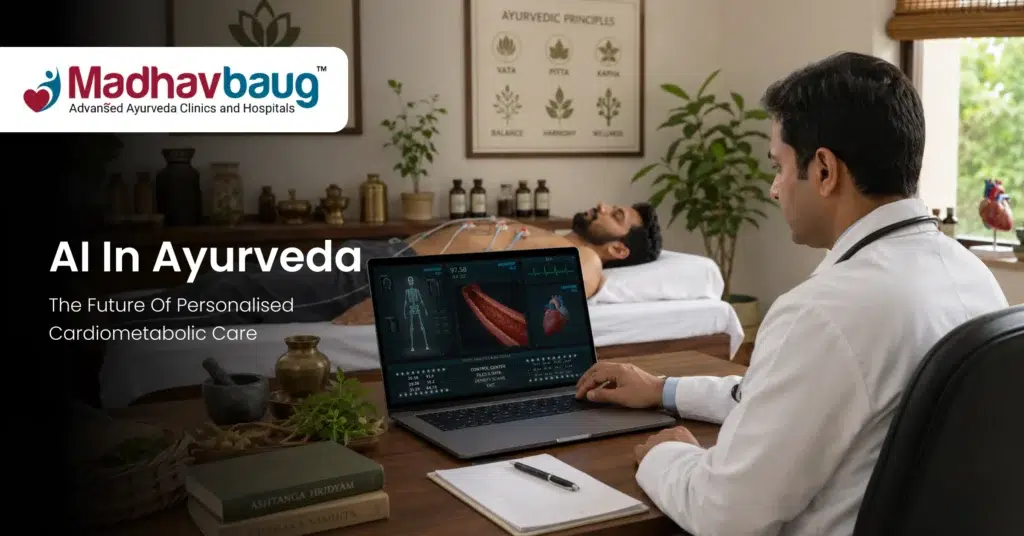
AI has risen as a highly promising instrument for transforming the health care sector, and its fusion with Ayurveda is paving the way for innovative possibilities within traditional medicine. Ayurveda, a time-honoured medical system with its origins in India, emphasises the holistic approach to healing, focusing on the individual’s unique constitution and imbalances. The incorporation of AI into Ayurvedic diagnosis presents an exciting opportunity to enhance the accuracy and precision of assessments, thereby providing personalised treatment plans for patients. Madhavbaug focuses on holistic wellness through an integrated approach. Many developments like the MIB pulse app are stepping stones towards integrating AI in the Ayurveda in order to balance innovation with evidence, privacy and clinician oversight. Artificial Intelligence in Healthcare Recently AI techniques have been emerging, especially in the field of healthcare. It is not possible to replace human physicians with machines, but AI can definitely assist physicians to make better clinical decisions. The increasing availability of healthcare data and rapid development of big data analytic methods have made possible the recent successful applications of AI in healthcare. Guided by relevant clinical research, powerful AI techniques may assist clinical decision-making as follows: AI in Ayurveda Following are the areas where AI can be utilised in Ayurveda: AI in Ayurvedic Diagnosis AI can be a great help in streamlining the diagnostic process in Ayurveda. Traditional diagnosis methods like Prakriti assessment (body-type assessment), pulse examination (nadi pariksha), tongue diagnosis (jihva pariksha) etc. require precision and accuracy. These diagnostic tools using AI-driven technologies may be a more accessible approach for Ayurvedic practitioners worldwide. Customised Ayurvedic Treatments One of the founding principles of Ayurveda is purusham purusham vikshya, which means that every individual is unique. Going deeper, every human being, although suffering from the same disease or similar symptoms, should be treated differently based on his prakriti and his body equilibrium. AI-powered systems may prove promising in analysing patient data, genetic information and lifestyle factors to provide personalised treatment recommendations based on Ayurvedic principles. AI for Ayurvedic Drug Discovery One of the most important contributions of AI in Ayurvedic herbology is the faster identification of potential medicinal herbs and their therapeutic properties. AI algorithms can also analyse huge repositories of ancient texts, research papers and clinical data to identify patterns and correlations between specific herbs and their effects on various health conditions. For example, Fathifar et al. (2021) showed the utility of AI-driven natural language processing techniques in extracting valuable information from historical Ayurvedic texts, leading to the identification of novel herbs with potential anti-inflammatory properties. Powered by AI, such discoveries can greatly augment the Ayurvedic pharmacopoeia and expand the spectrum of treatment options accessible to practitioners. Integrating AI with Ayurvedic Lifestyle AI can assist individuals in adjusting to the Ayurvedic lifestyle across varied cultural settings. Personalised Ayurvedic lifestyle recommendations are developed by AI algorithms by analysing data from diverse populations and geographical regions to cater to the unique needs and preferences of individuals from varied backgrounds (Benke K, 2018). This customisation allows the effective and inclusive application of Ayurvedic principles, crossing cultural boundaries to promote holistic well-being globally. AI in Lifestyle Disorders Lifestyle diseases like type 2 diabetes, hypertension and obesity are associated with dietary patterns, physical activity, smoking and drinking. The public and personal healthcare demand is to detect and prevent these metabolic disorders at early stages. The use of AI technology to analyse and identify lifestyle patterns for early detection of individuals at risk of developing metabolic disorders could be a promising tool for the future. AI and Cardiac Diseases Artificial intelligence is changing the way heart diseases are detected, monitored and treated. Artificial intelligence systems can analyse large amounts of medical data, such as ECG signals, medical images and patient records to spot early indications of cardiovascular problems. It helps doctors to make better diagnoses, predict risk, tailor treatment and provide better care for patients. AI can be helpful in heart disease in the following way : Diagnosis: AI can be used to detect abnormalities in ECG scans, etc. Prediction of Risk Factors: We could use AI models to identify patients with an increased risk for developing heart disease. Continuous monitoring: Wearables track heart rate and other health metrics in real-time. Personalised care AI supports treatment decisions based on individual patient data that is specific and unique to them. Obesity and AI AI can help to improve obesity prevention, diagnosis and management by reading an individual’s health data and their specific lifestyle pattern. AI may be able to help with personalised care and weight management plans, diagnosis and management by looking at health data, lifestyle patterns and medical information. AI can help doctors provide accurate treatment strategies, support personalised weight management treatment, predict complications and monitor personal physical activity. Here’s how AI can help in the fight against obesity: Obesity risk prediction: AI can analyse individual health records to help assess the risk of developing obesity. Personalised weight management AI tends to generate personalised diet suggestions. Smart monitoring: Wearables and apps monitor your physical activity, sleep and health patterns. Clinical support: AI can help doctors in creating customised treatment plans for patients. AI and Diabetes AI in diabetes care includes early detection to avert complications, continuous glucose monitoring, and a personalised approach to treatment. AI-based technologies could be used for the analysis of patient data, changes in blood glucose pattern and lifestyle-related information to ensure a fitting treatment plan. AI can help in controlling diabetes by following: Early diagnosis: AI could be used to early diagnosis of diabetes in life and prevent age related complications. Monitoring blood glucose. AI based devices help in continuous monitoring of glucose and detect changes in patterns, helping doctors track the progress of disease. Personalised care: AI helps to tailor treatment, diet and lifestyle recommendations. Complications: AI technologies can help detect changes in nerve sensation and temperature sensitivity, allowing for timely interpretation of neuropathy related complications. Madhavbaug’s AI Integration with Ayurveda Madhavbaug’s digital care ecosystem combines remote patient engagement with a physician platform that brings together

