
Have you ever been through this situation wherein you had chest pain, you visited your doctor and they suggested an ECG report, but your ECG report turns out to be normal and your doctor suggests more tests? You may be confused and find a normal ECG but chest pain unusual. The secret is that whenever you have a chest pain, it is not always due to an abnormality in the heart. Studies suggest that half of the chest pain may occur due to other factors. (Lenfant, C.,2010) Thus, suffering from chest pain but with a normal ECG can be possible, so let’s explore our Madhavbaug doctor’s 6 reasons why more tests for chest pain are required. 6 Reasons Why Can ECG Miss Heart Problems Only One Test May Not Be Enough If you suffer chest pain in the morning and get an ECG report in the afternoon which is normal, then it might not have been able to record the heart’s activity in the morning. For this your doctor may suggest more test for chest pain, which is a Holter ECG monitoring. Traditional ambulatory Holter monitors are simple devices that continuously register the ECG. They can be short- (24–48 hours) or long-duration (1–2 weeks) devices. (Galli, A., Ambrosini, F., & Lombardi, F. 2016) Functional Testing of Heart ECG records the electrical activity of the heart at rest. This is important, but with this, recording the electrical activity of a functional heart is equally important. This can be done through a stress test. A stress test helps us to know whether the heart itself is receiving a sufficient amount of blood or not to deliver blood to the whole body. In short, an exercise stress test can reveal problems with blood flow within your heart, and so it is an important test for chest pain. Locating The Exact Area of Heart Muscle Damage The ECG graph is unable to show the exact location of the heart muscle damage for which another test, called the MPI, is required. A Myocardial Perfusion Imaging (MPI) Study is a type of stress test that uses PET imaging of a patient’s heart before and after exercise to test the effect of physical stress on the flow of blood through the coronary arteries and the heart muscle. Images produced in MPI are called ‘perfusion images’, and they show the exact area of the perfused heart muscle. Assessment of Early Plaque Build-Up A normal ECG but chest pain may indicate early plaque build-up in the coronary arteries. (Bugiardini, R. and Merz, C.N.B., 2005). Angiography, a further test for chest pain, is carried out to diagnose and treat blood vessel diseases and conditions. After visualising the coronary arteries, if blockages are noted, your doctor may suggest surgery. Angiography कब और किसको करवानी चाहिए? | कब ज़रूरी है Angiography? | Heart Blockage Explained Is The Heart Muscle Injured or Dead? A positive troponin assay is a blood test showing high levels of heart muscle proteins. It shows actual heart muscle cell death or injury. An ECG only shows heart electrical activity, meaning a patient can have a normal ECG while troponin reveals hidden damage. (Murryam, S., Cook, P., & Ellis, S. 2022) Is Heart The Actual Cause? Studies suggest that half of the chest pain may occur due to other factors. (Lenfant, 2010). Most of the times it may be gastro-oesophageal reflux, which is an oesophageal disease. For such conditions, another test for chest pain includes upper GI endoscopy or EGD, which is a procedure where your doctor uses a flexible, lighted tube with a camera to examine the oesophagus, stomach, and duodenum (first part of the small intestine). What Dr. Shradha Pitale Says About Chest Pain With Normal ECG “Your heart whispers Chest pain, listen to it with tests.” Don’t Google Chest pain. Get an ECG, EPS, Stress test, Echo, Troponin tests done. Dr. Shradha Pitale Dr. Shradha and other Madhavbaug doctors believe in assessing the root cause and providing holistic care based upon Madhavbaug’s SHS programme. With Panchakarma detoxification, personalised diet and exercise care along with modern diagnostic tools, SHS programme is an integrated solution. If you are suffering from chest pain and want to know more, book a consultation with Dr Shradha or your nearest Madhavbaug centre today. Final Thoughts Chest pain is a very common symptom and mainly addresses urgent medical attention. The first thing which comes to mind is ECG, and when the ECG is normal, people tend to feel relieved, but that’s not all. Chest pain with a normal ECG may need further investigations to be done in order to find the root cause. This can be done at your nearest Madhavbaug clinic or hospital. With advanced modern diagnostic tools like stress tests, etc., we have continuous monitoring technologies which can detect even the slightest fluctuations in the readings that can easily help prevent the occurrence of future complications. Visit today to meet a healthier you. Frequently Asked Questions Q.1 Can ECG be normal before a heart attack? Changes in electrical activity do not always lead to cardiovascular diseases. Most people presenting with acute chest pain may have a normal ECG. Q.2 What is the first test for a heart attack? An electrocardiogram (EKG) is the most common first test, and this may be done as soon as you arrive at the hospital. An EKG can tell if you are having a heart attack. Based on the results of the EKG, your doctor may order additional tests and ask questions about your medical history and perform a physical exam. Q.3 Does a normal ECG mean no blockage? A normal ECG does NOT always mean your arteries are clear. ECG cannot reliably detect mild to moderate heart blockages that are not affecting blood flow at rest. Q.4 Can MRI detect chest pain? A cardiac MRI can help your healthcare team diagnose heart conditions such as a heart attack or damage to heart tissue. Q.5 Which is more important, ECG or Echo? ECG is quick

A sharp rise in blood sugar after eating is common, and for many people, it goes higher and lasts longer than it needs to. Such a rise is usually what is meant by a post-meal blood sugar spike. The encouraging part is that two small habits, the order you eat your food in and a short walk afterwards, can meaningfully soften that rise without a stricter diet or more medication. This blog covers what a normal post-meal response looks like, why repeated spikes matter, and what the evidence says about meal sequencing, portions, and walking after meals, to help you and your doctor manage these issues together. What Counts as a Normal Post-Meal Rise? Blood sugar always rises after eating; that part is normal. In someone without diabetes, it typically peaks 30 to 60 minutes after a meal and settles back down within about two hours. For someone with prediabetes or type 2 diabetes, that same meal can push blood sugar higher and keep it up for longer, since the body is not clearing glucose from the blood as efficiently. This is what is usually meant by a spike, a rise that goes further and lasts longer than it should. Why Do These Spikes Matter? An occasional spike is not something to worry over. What matters is the pattern, repeated sharp rises that occur with every meal and continue day after day. Frequent post-meal spikes are linked to higher HbA1c over time and can put extra strain on blood vessels. This is one reason doctors look at more than just fasting sugar. Two people can have the same fasting number and a very different post-meal pattern, and it is often the post-meal pattern that tells the fuller story. If sugar itself is a big part of your diet, it helps to know how much sugar is too much before trying to fix the pattern. The good news is that this is one of the more responsive parts of blood sugar control. Small, specific changes can reduce these spikes without any major shift in your entire diet. Does the Order You Eat In Really Matter? It sounds too simple to work, but yes, food order changes how much your blood sugar rises after a meal. In a study of adults with prediabetes, eating protein and vegetables first, and carbohydrates last, a simple form of meal sequencing for diabetes, cut the size of the glucose spike by nearly 40% compared with eating the carbohydrate first, in the same meal, same portions, same calories (Shukla et al., 2019). The only thing that changed was the sequence. The idea behind it is simple. Protein, fibre and fat slow down how fast the stomach empties and how quickly sugar reaches the bloodstream. Save the rice, roti or sweet for last, and your body has an easier time keeping up. How Much Protein, Fibre and Carbohydrate Should Be on Your Plate? Food order matters, but so does what is actually on the plate. A simple way to picture it: Half the plate: non-starchy vegetables, for fibre and volume A quarter: protein, like dal, eggs, fish, chicken or paneer A quarter: carbohydrates, like rice, roti or millets Fibre and protein both slow digestion, which is part of why eating them first works. Getting the portions right also means there is simply less carbohydrate to deal with at once. This is close to what many Ayurvedic food habits for diabetes already recommend, favouring whole, fibre-rich foods and moderate portions of grains, so the two approaches work well together rather than as separate rules to follow. Walking After Meals A short walk after eating is one of the simplest ways to lower a blood sugar spike, and the timing matters more than the duration. A 2025 study had participants rest, walk for 10 minutes right after drinking a glucose solution, or walk for 30 minutes starting half an hour later. The 10-minute walk, done immediately, brought the peak blood sugar down more than the longer walk done later (Hashimoto et al., 2025). A few things worth keeping in mind: Timing beats duration: A short walk right away can do more than a longer walk later. Pace is not the point: A comfortable, everyday walking speed is enough; this is not about intensity. It works alongside meal order: Eating protein and vegetables first, then walking after, are two separate levers, not competing ones. Ayurveda-Informed Mindful Eating Ayurveda has its own take on many of these same ideas, just framed around awareness rather than measurement. A few principles line up closely with what the evidence shows: Eat slowly and stop before you are completely full, as slower eating naturally gives digestion more time to keep pace with what is coming in. Favour fresh, warm, whole foods over cold, processed or heavy ones, which are harder to digest and tend to spike sugar faster. Sit down to eat, without rushing or multitasking, so it is easier to notice portion size and fullness cues. None of this replaces meal sequencing or walking, but it works alongside both. The same Ayurvedic diet and lifestyle guide for diabetes that shapes these habits ties directly into managing spikes, not just long-term blood sugar. Testing Your Patterns You do not need to test after every meal, but checking in occasionally helps you see what is actually happening. A simple way to do this: Check your blood sugar 1 to 2 hours after a meal, a few times over a week or two, rather than just once. Try the same meal two ways, once in your usual order, once with protein and vegetables first, and compare the readings. Note which meals spike more, since starchy or sugar-heavy meals tend to show the biggest difference. This is not about tracking every number forever. It is about learning your own patterns, then keeping the habits that clearly help. A Note on Medication If you take insulin or medicines for diabetes that can lower blood sugar, you should talk to your doctor before changing when or how you eat. Your medication is timed
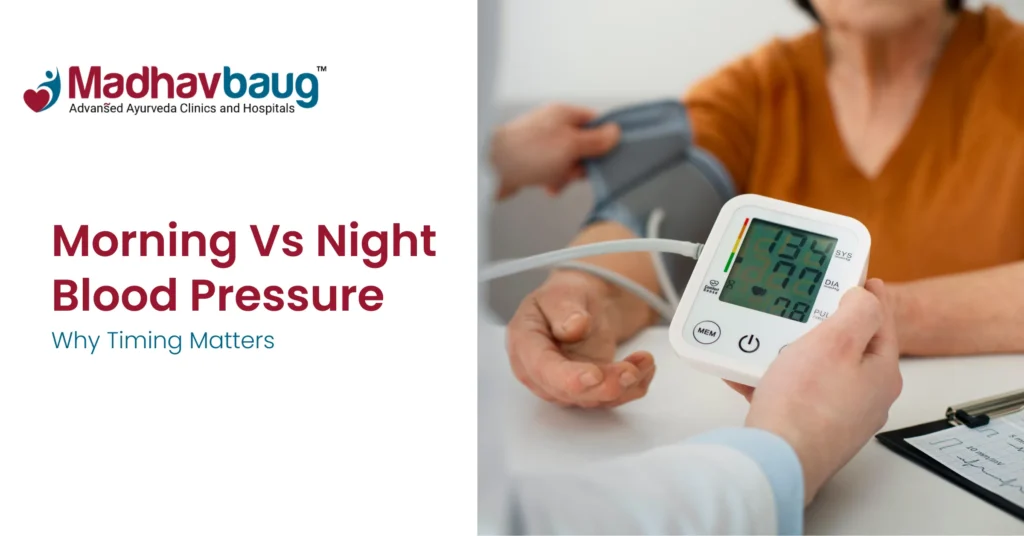
You check your blood pressure in the morning and the reading looks fine. You check again at night and it is noticeably different. Such variation happens to a lot of people. Your blood pressure is supposed to change throughout the day. What you should pay attention to is that the readings are within a healthy range and that you are measuring at the right times to understand what is going on with your heart. This is not a small detail. Knowing when to check, what to look for, and the difference between your morning and nighttime readings can improve your blood pressure management. Why Blood Pressure Changes Through the Day Your body runs on a 24-hour biological cycle called the circadian rhythm. This cycle takes care of your sleep, hormones, digestion, and blood pressure. Blood pressure is not a fixed number; it rises and falls in a predictable pattern every single day. Here is a table to help you understand a typical blood pressure cycle: Time of Day What Happens to Blood Pressure Early morning (6 AM to 10 AM) Sharp rise due to hormone release Mid-morning to afternoon Gradual decrease to normal range Evening Another smaller rise could be seen During sleep There should be a drop of 10 to 20%. 3 AM to 5 AM Typically at its lowest Understanding this rhythm is the foundation of effective blood pressure tracking. The Morning Blood Pressure Reading When you wake up, your body does not ease into the day quietly. Stress hormones rise as part of the body’s natural waking mechanism. This causes a rise in blood pressure, often referred to as the morning surge. For most people, blood pressure peaks between 6 AM and 10 AM. This period is also the window when heart attacks and strokes occur most frequently, which is why morning blood pressure is a very important reading. What to Watch for in Morning Readings: A reading that is continuously high before you eat, take medication, or move around is a clear indicator that your blood pressure is not being controlled overnight. A very sharp rise in your blood pressure in the morning, even in people whose overall blood pressure appears managed, is linked to higher heart risk. The morning reading is supposed to be your baseline blood pressure reading after a night of proper rest How to Take a Morning Reading Correctly: Sit quietly for 5 minutes before measuring Measure before eating, drinking tea or coffee, or taking medication Take two readings, one minute apart, and note the average Measure at the same time every morning The Nighttime Blood Pressure Reading Here is something that surprises many people: nighttime blood pressure is now being considered a stronger predictor of heart risk than morning readings. During healthy sleep, blood pressure naturally dips by 10 to 20%. This is called nocturnal dipping, and it gives your heart and blood vessels a small window to recover and repair. When this dip does not happen, or when blood pressure starts to rise instead of lowering at night, the heart is under continuous strain with no recovery period. The four nighttime blood pressure patterns: Pattern What It Means Risk Level Dipper 10 to 20 % drop during sleep Normal and healthy Non-dipper Less than 10 % drop Elevated risk Extreme dipper More than 20 % drop May indicate other issues Riser BP increases during sleep Highest Heart risk People with no decrease or rise in blood pressure at night are more prone to stroke, heart failure, and kidney disease, even when their daytime readings appear normal. This phenomenon is why relying only on daytime readings can give a dangerously incomplete picture. Morning vs Night: A Direct Comparison Factor Morning BP Nighttime BP What controls it Hormone activity Nervous system at rest, sleep quality What it tells you Baseline and effectiveness of your medication Heart’s recovery and hidden hypertension Risk if elevated Stroke, heart attack risk in morning hours Organ damage, uncontrolled hypertension How to check Before eating, medication, or activity Through a home monitor or a 24-hour ambulatory device Most useful for Daily tracking and medication routine Identifying masked hypertension When Home BP Monitoring Becomes Essential If your readings at a clinic seem normal but you have symptoms like early morning headaches, fatigue, or irregular readings at different times of day, monitoring your blood pressure at home provides the information that a single clinic visit cannot. Good home monitoring habits: Check at the same time daily: once in the morning and once in the evening Log every reading with the date and time Share the readings with your doctor regularly Avoid measuring immediately after eating, exercise, or stress Home blood pressure tracking over two to four weeks gives a far more accurate picture than any single reading. Not Sure What Your Readings Mean? If your morning readings and nighttime patterns are inconsistent, or if you have been managing hypertension and are not seeing the results you expected, a structured evaluation can help identify what is really going on. Madhavbaug Advanced Ayurveda Clinics and Hospitals specialise in cardiovascular care, including blood pressure management. Our team assesses your full blood pressure pattern, lifestyle, and any underlying imbalances to create a personalised treatment plan that works. Book a consultation at your nearest Madhavbaug centre today. What Ayurveda Says About Blood Pressure Timing Ayurveda has its own deeply detailed understanding of the body’s daily rhythm, and it maps closely onto what modern research is now confirming about blood pressure. In Ayurveda, the day is divided into cycles governed by the three doshas: Vata, Pitta, and Kapha. Each dosha has a timing in which peak activity takes place and disruption in those periods directly affects the heart and blood vessels. As Dr Partap Chauhan, founder of Jiva Ayurveda and one of India’s leading Ayurvedic physicians, has long observed, blood pressure fluctuations are rarely just a physical problem. They reflect the state of the body’s internal rhythms, and restoring those rhythms is what brings lasting stability. How

