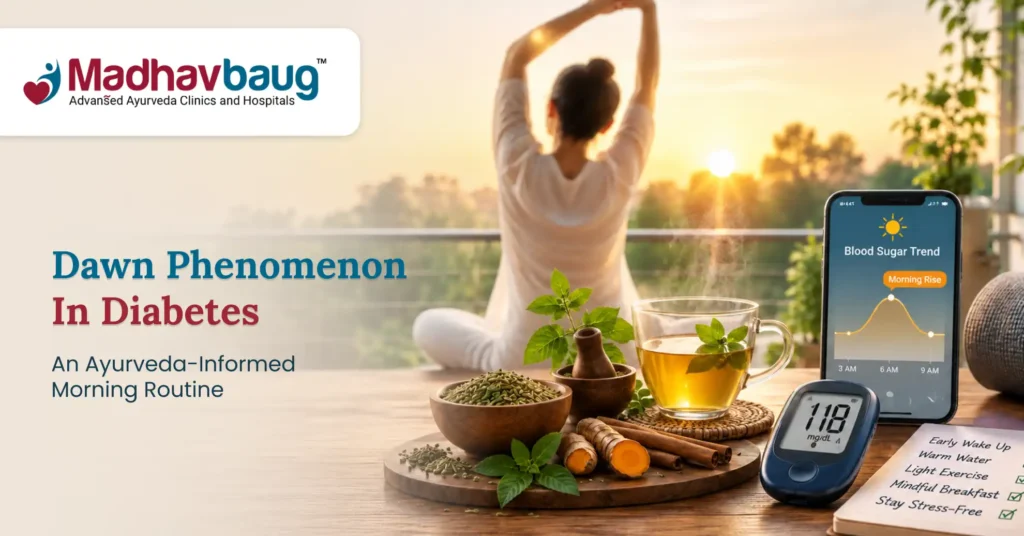
Waking up to a high blood sugar reading, even before you have eaten anything, can be confusing. Nothing seems to be wrong, and yet the number is up. This is actually common, and there is usually a clear explanation and a lot you can do about it. This blog covers what causes it, how it differs from a similar but less common pattern called the Somogyi effect, how to track your own numbers over a few days, and where an Ayurveda-informed morning routine fits in, all without changing any medication on your own. What Is the Dawn Phenomenon? In the early morning hours, roughly between 3 a.m. and 8 a.m., the body naturally releases hormones to help you wake up and get moving. These hormones tell the liver to release stored sugar into the blood for energy. In someone without diabetes, insulin quietly manages this extra sugar, so it barely shows up on a reading. In someone with diabetes, the body cannot produce or use enough insulin, so that same natural process shows up as a higher fasting blood sugar. This can happen in both type 1 and type 2 diabetes, affecting roughly half of people with either type, though the reason behind it is not always the same (Peng et al 2022). Dawn phenomenon in type 2 diabetes specifically has been linked to disrupted overnight insulin sensitivity, so it helps to know which type of diabetes you are managing. Dawn Phenomenon vs. the Somogyi Effect A high reading first thing in the morning does not always mean the same thing. It could be the dawn phenomenon, or it could be the Somogyi effect, and the two call for opposite responses, so it helps to know which one you are dealing with. Dawn Phenomenon Somogyi Effect Cause Natural hormone release before waking A low reading overnight, followed by a high one in the morning Overnight blood sugar Stays normal or rises gradually Drops low, often around 2–3 a.m., then rises How common Affects a large number of people with diabetes Less common The Somogyi effect was first described decades ago and was taught for a long time as a common cause of morning highs. More recent research using continuous glucose monitoring has questioned how often it actually happens. A 2022 study on type 2 diabetes found no evidence that low overnight blood sugar was followed by a high rebound, suggesting many “Somogyi-looking” mornings are actually dawn phenomenon (Huang et al., 2022). The only real way to tell them apart is to check blood sugar overnight, around 2 to 3 a.m., for a few nights. A normal or rising number points to the dawn phenomenon. A low around that time, followed by a high reading upon waking, points to the Somogyi effect. Common Causes A few things can make the dawn phenomenon more likely: Not enough medication overnight, there is less to counter the natural hormone spike A late or heavy dinner, which can leave more sugar circulating into the early morning hours Poor sleep or irregular sleep timing, which can disrupt the hormones involved (Peng et al., 2022) High stress, since cortisol is one of the hormones driving the rise Growth hormone changes, which is why the dawn phenomenon can be more pronounced in younger people and during puberty None of these causes is something to fix on your own by adjusting medication. They are useful to notice and should be discussed with your doctor. Tracking It for Three Days Before making any changes, it helps to see your own pattern clearly. A simple 3-day log can show whether this looks like the dawn phenomenon, the Somogyi effect, or something else. For three nights in a row, note down: Day Bedtime Blood Sugar 2–3 a.m. Blood Sugar Wake-Up Blood Sugar Dinner Time & Size Sleep Quality 1 2 3 A few things to look for once you have three days of numbers: Steady or rising overnight numbers, with a high wake-up reading, point to the dawn phenomenon A low around 2–3 a.m., followed by a high wake-up reading, points to the Somogyi effect A late or large dinner on the days with the highest wake-up numbers suggests dinner timing is playing a role Bring this log to your doctor rather than trying to interpret it on your own. It gives them exactly what they need to tell the two apart and adjust your plan accordingly. Breakfast and Morning Activity What you do in the first hour after waking can influence how quickly a high morning reading comes back down. A few habits that help: Do not skip breakfast, even if your morning number is high. Skipping it often leads to overeating later and does not fix the underlying rise. Lead with protein and fibre, and go lighter on refined carbohydrates like white bread or sugary cereal, which can add to an already elevated number. Add light movement soon after waking up; a short walk or some stretching can help your muscles use up some of that morning glucose. None of this replaces treating the underlying cause. It simply softens the number while you and your doctor figure out what is causing it. An Ayurveda-Informed Morning Routine Ayurveda has long placed importance on the start of the day, an idea it calls Dinacharya, or daily routine, and several of its principles form a natural Ayurvedic morning routine for diabetes and blood sugar patterns. A few that fit well here: Wake up early: Ayurveda points to the early morning hours, Brahma muhurta, as the ideal time to rise, rather than waking later into an already-active body clock. Do not skip the morning meal: Ayurveda says that digestion, or Agni, is strongest soon after waking, which is another reason not to skip breakfast. Keep a regular waking and eating time: Consistency in daily timing is one of its most basic principles, and it is also one of the more practical ways to create a morning pattern over time. Favour a lighter, earlier dinner the night before: This is a
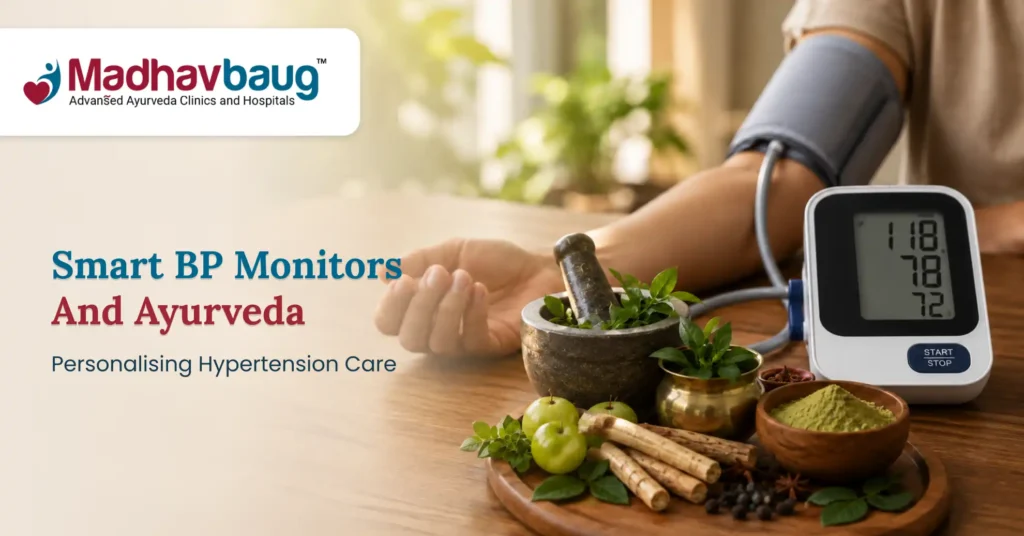
High blood pressure, or hypertension, is often called the “silent killer” because there may be no noticeable symptoms until severe complications develop. Therefore, blood pressure monitoring is one of the most important steps in the prevention of heart disease, stroke, kidney disease and other cardiovascular complications. Smart home blood pressure monitors make it easier than ever to keep track of your blood pressure from the comfort of your own home. When used correctly, they provide valuable information that helps both patients and doctors see trends in blood pressure over time, rather than just one reading in the clinic. At Madhavbaug, hypertension management is not just about bringing down the blood pressure numbers. Our approach to promoting long-term cardiovascular health combines modern diagnostics like mibPulse app and PowerMAP, evidence-based Ayurvedic therapies, personalised nutrition, exercise, stress management and ongoing clinical monitoring. Home blood pressure monitoring is an important part for doctors to personalise treatment and lifestyle recommendations. Why You Should Check Blood Pressure at Home Blood pressure naturally fluctuates throughout the day depending on the following: Physical exercise Levels of stress Quality of sleep Food Caffeine consumption Medicine Climate One reading at a clinic may not give accurate results. Home Blood Pressure monitoring is used to determine the following: White coat hypertension (high BP only in the doctor’s office) Masked hypertension (normal BP in clinic but high BP at home) Treatment response Daily blood pressure patterns Effectiveness of lifestyle modifications It also enables doctors to make more informed treatment decisions with not just one single reading but also a trend and graph of readings which can help them understand the variations better. Who Should Use a Home Blood Pressure Monitor? A home blood pressure monitor may be useful for individuals with high blood pressure or people with borderline or high blood pressure. Adults older than 40 years of age who may be diabetic patients or suffering from kidney disease are also advised to monitor blood pressure at home. However, it is important to note that home blood pressure monitoring is only a helping tool to understand blood pressure levels better. It cannot substitute a regular medical consultation. A doctor’s expertise is needed to supervise the regular readings. How to Measure BP at Home? Even the best BP monitor can produce unreliable readings if used incorrectly. Follow these simple guidelines each time you measure your blood pressure. Before the measurement, keep in mind the following: Do not drink tea or coffee, smoke or exercise for 30 minutes or more Void your bladder Before taking the reading, sit quietly for five minutes. Do not measure immediately after climbing stairs or walking. Proper sitting posture with your back supported. Always have both feet on the floor with no crossing legs. Rest your arm on a table at your heart level. Place the cuff on bare skin, not over clothes. Do not speak during the measurement. Guidelines to Measure BP at home: Measuring BP at the same time every day is important to maintain regularity. BP readings can fluctuate with movement and time, like eating, drinking or even sleeping. Thus, take the readings at the same time each day to ensure a similar setup by setting reminders every day at a time. Also, each time you measure, take two readings with a gap of one minute in between. You need to track them by noting them down every day on a chart or digitally keeping notes of it. Frequent Reasons for Wrong Readings Many people make mistakes while measuring blood pressure without even knowing it. Common mistakes are: Speech during measurement Crossed legs Clothing measurements Cuff placement is wrong Cuff size incorrect Measuring right after exercise Measurements after coffee or tea Sitting without back support Measuring when you’re anxious or stressed Using the right technique will greatly improve digital BP monitor accuracy and help the doctor to treat the condition better. How Madhavbaug Supports Home Blood Pressure Monitoring Madhavbaug aims to build an integrated approach towards health which includes all the components. With fundamental Ayurvedic therapies like Panchakarma and dietary changes including GoBipi kit, it also used modern diagnostic tools like mibPulse app and PowerMAP technology. They help continuous monitoring and not only keep a record of the readings but also show weekly tracks and fluctuations in the readings. This helps the doctor evaluate any particular cause or possible risk factor, thus helping both curative and preventive treatment measures. To know more, visit your nearest Madhavbaug clinic. Madhavbaug’s Approach to Hypertension Management Our blood pressure care programme is built to find and treat the real reasons behind your high readings, so we can ease the strain on your heart and protect your organs over the long run. We aim to treat the root cause by eliminating the toxins through Panchakarma procedures along with a holistic approach including dietary corrections, a personalised exercise plan and their own continuous monitoring system. Read more about the detailed treatment for Hypertension here: https://oldsite.madhavbaug.org/ayurvedic-treatment-for-high-low-blood-pressure/ Start your Journey with Madhavbaug Today One of the simplest and most effective ways to get a good sense of your cardiovascular health is to use a home blood pressure monitor properly. By monitoring for seven days, using the correct measurement method and sharing your results with your doctor, you will get a much better picture of your blood pressure than you would from a single visit to the clinic. These insights, along with personalised lifestyle modifications, regular follow-ups and an evidence-based Ayurvedic approach under clinical supervision, may help you manage hypertension better and reduce long-term cardiovascular risk. Keep in mind that your blood pressure monitor is a tool and not a replacement for professional medical advice. Always discuss your readings with your healthcare provider before making any changes to your treatment, and to manage hypertension effectively, book an appointment at the nearest Madhavbaug clinic. Frequently Asked Questions Q.1. What is the best blood pressure monitor for home use? Select an automatic upper arm monitor that is clinically validated and has the proper cuff size and memory storage. Your doctor may advise
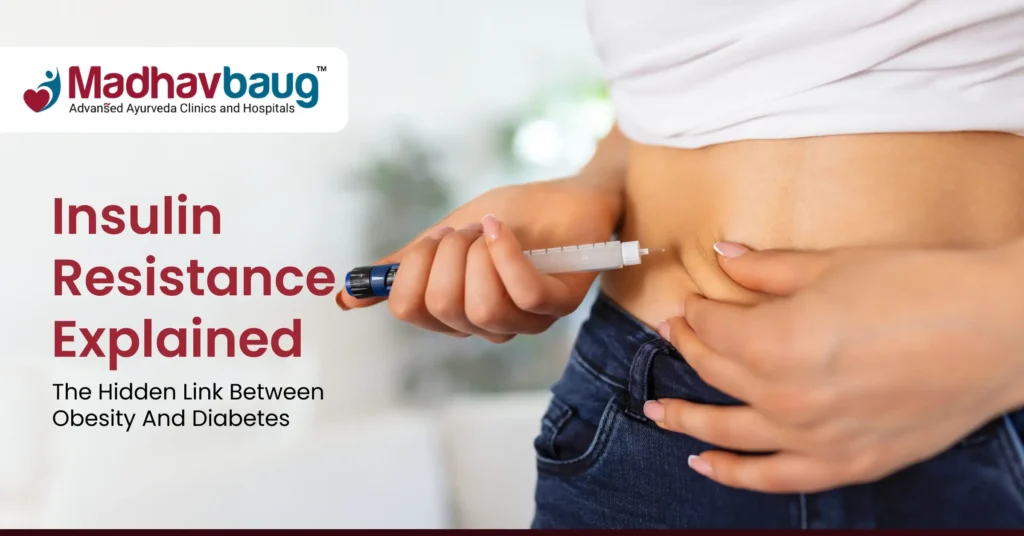
Most people know what diabetes is. Most people know what obesity is. What does not get talked about nearly enough is what connects the two. That connection is insulin resistance, and it is quietly one of the most common and most overlooked metabolic problems in India today. Catch it early and you can reverse it. Miss it and it becomes type 2 diabetes. Understanding it is worth your time. What Is Insulin Resistance? Insulin is a hormone the pancreas produces after you eat. Its job is straightforward: it acts like a key that unlocks your cells so glucose from the bloodstream can enter and be converted into energy. When everything is working, blood sugar stays stable and energy stays consistent. Insulin resistance is what happens when that key stops fitting the lock properly. The cells in your muscles, liver, and fat tissue stop responding to insulin the way they should. The pancreas compensates by producing more insulin. Then more. Blood sugar stays normal for a while because the pancreas is working overtime to keep it that way. But that cannot last indefinitely. Eventually the pancreas starts to lose the battle, blood sugar climbs, and type 2 diabetes follows. What Are The Causes of Insulin Resistance? There is rarely one single cause. Usually it is several things building on each other over time: Belly fat No movement Poor diet Chronic stress Bad sleep Hormonal shifts Genetics Inflammation Of all of these, the obesity and insulin resistance link is the tightest. Visceral fat, the kind that sits around the organs rather than under the skin, is particularly damaging. It releases inflammatory signals that directly interfere with how insulin works at the cellular level. Early Signs of Insulin Resistance Worth Paying Attention To Insulin resistance earns the label silent condition because it can develop for years with no obvious symptoms. By the time most people find out they have it, it has been present for a while. That said, there are early signs of insulin resistance that show up if you know what to look for: Skin darkening Post-meal fatigue Sugar cravings Stubborn weight High fasting sugar High triglycerides Low HDL Quick hunger Brain fog These insulin resistance symptoms overlap with a lot of other conditions, which is part of why it gets missed. A blood test measuring fasting insulin and fasting glucose together is the most reliable way to confirm it. How Insulin Resistance Leads to Diabetes The progression from insulin resistance to type 2 diabetes is not sudden. It takes years, which is actually good news because it means there is a long window to intervene. Here is how it typically unfolds: Visceral fat inflames Insulin spikes Blood sugar normalises Beta cells overwork Beta cells decline Prediabetes sets in Diabetes follows Every stage before the last one is an opportunity to reverse course. Can You Reverse Insulin Resistance Naturally? Yes, for most people and especially in the earlier stages. Reversing insulin resistance naturally does not always require medication. Lifestyle change is the most powerful tool available, and the evidence behind it is strong. What to eat: Cut sugar Add fibre Healthy fats Eat consistently Movement: Daily cardio Strength training Post-meal walks Sleep: 7 to 9 hours No late nights Stress: Daily meditation Try Pranayama Evening walks Losing 5 to 10 percent of body weight alone significantly reduces visceral fat and improves insulin sensitivity. It does not take dramatic weight loss to shift the trajectory. Insulin Resistance Treatment: When Lifestyle Is Not Enough For some people, particularly those with significant visceral fat, hormonal imbalances, or a strong genetic component, lifestyle changes alone may not fully correct insulin resistance. In these cases, medical support becomes part of the picture. The connection between obesity and diabetes means that treating insulin resistance is also preventing diabetes. The two cannot really be separated, which is why a comprehensive approach matters far more than addressing just one piece in isolation. How Madhavbaug Can Help At Madhavbaug, insulin resistance is treated as the metabolic root cause it is, not as a side note to weight management. Our approach integrates Ayurvedic protocols with modern cardiac and metabolic science because insulin resistance does not sit neatly inside one medical specialty. What that looks like in practice: Individual assessment Personalised diet Herbal formulations Detox therapies Specialist team If your weight is not responding to effort, if your energy is consistently low, if cravings are driving your eating rather than hunger, insulin resistance may be what is actually going on. Getting assessed is the first step. Book your consultation at madhavbaug.org. Frequently Asked Questions How do you know if you have insulin resistance? It is usually detected through blood tests, though signs like belly fat, fatigue, and sugar cravings can be early clues. Can you cure insulin resistance? It is often reversible with weight loss, a balanced diet, regular exercise, and improved sleep. How should you eat if you have insulin resistance? Focus on high-fibre foods, lean protein, healthy fats, and avoid refined carbs and added sugars. What is the main cause of insulin resistance? Excess body fat, especially visceral belly fat, is the primary driver. Can insulin resistance lead to type 2 diabetes if untreated? Yes, untreated insulin resistance can progress to prediabetes and eventually type 2 diabetes.

