
Many patients walk into the clinic with a common belief: “My ECG report is normal, so my heart must be perfectly fine.” But is that really true? Can ECG detect heart blockages accurately? Is a normal ECG enough to rule out coronary artery disease? Is ECG the gold standard test for confirming blockages? Let’s break this down in a simple, practical way so you clearly understand what an ECG can and cannot tell you. What Is an ECG? An Electrocardiogram (ECG or EKG) is a quick, non-invasive test that records the electrical activity of your heart. It measures how your heart beats by displaying electrical impulses as wave patterns while you are resting (usually lying down). It is one of the most basic and commonly prescribed heart tests. What Can an ECG Detect? An ECG is very useful — but within limits. It can help detect: Irregular heart rhythms (arrhythmias) Signs of an ongoing heart attack Evidence of a previous heart attack Severe ischemia (reduced blood supply to the heart muscle) Heart muscle enlargement Electrical conduction abnormalities If a blockage is severe enough to reduce blood flow significantly at the time of the test, the ECG may show changes. What ECG Cannot Reliably Detect? This is where most confusion begins. A normal ECG does NOT always mean your arteries are clear. ECG cannot reliably detect: Mild to moderate heart blockages Blockages that are not affecting blood flow at rest Exact location of blockage Percentage of artery narrowing A person may have a significant blockage and still have a completely normal ECG — especially if the test is performed while resting rather than under physical stress. Why Can a Normal ECG Be Misleading? Think of it this way: If blood flow to the heart is critically reduced even at rest, ECG changes will likely appear. But if the blockage only affects blood flow during exertion — such as walking fast, climbing stairs, or stress — a resting ECG may look perfectly normal. That is why ECG alone is not considered a confirmatory test for heart blockage. What Tests Help Detect Heart Blockage More Accurately? If your doctor suspects coronary artery disease, further evaluation may be required. Here’s the typical sequence: ECG (First Screening Test) When patients present with symptoms such as: Chest pain Left arm or shoulder pain Back pain Nausea Excessive sweating Palpitations Unexplained heartburn The first test advised is usually an ECG. If abnormalities appear, further tests are recommended. If the ECG is normal but suspicion remains high, additional testing is necessary. Stress Test (Treadmill Test) This test evaluates how your heart performs under physical stress. It answers an important question: “How does the heart behave when it needs more oxygen?” A stress test can detect early ischemic changes that are not visible in a resting ECG. If positive, further imaging like CT Angiogram or Angiography is advised. CT Angiogram (CTA) – Non-Invasive Gold Standard A CT Angiogram is a painless, non-invasive imaging test that uses contrast dye to create detailed 3D images of coronary arteries. It can: Detect plaque buildup Measure percentage of blockage Identify narrowing Guide further heart blockage treatment decisions The procedure usually takes 20–60 minutes and provides actionable clarity. Coronary Angiography (Invasive Test) This minimally invasive procedure uses a catheter inserted through the wrist or groin. It is often done when: Blockage is strongly suspected Intervention (angioplasty/stenting) may be required It allows both diagnosis and immediate treatment. So, Can ECG Detect Heart Blockages? Here’s the simple answer: An ECG is a screening tool — not a confirmatory test for heart blockages. It helps detect electrical abnormalities and severe ischaemia, but cannot reliably rule out coronary artery narrowing. If you truly want clarity about your coronary health, an ECG should be just the starting point — not the final verdict. What About Treatment Options? Once blockages are identified, management depends on severity. Options may include: Lifestyle modification Medical therapy Interventional procedures Structured heart blockage treatment programs In stable cases, integrative approaches such as Ayurvedic treatment for heart blockage focus on improving circulation, correcting metabolism, reducing inflammation, and supporting cardiac function under medical supervision. Comprehensive heart blockage treatment always depends on an accurate diagnosis first. Final Message From a Doctor Do not panic — but do not assume. A normal ECG does not always mean a clean heart. If you have: Diabetes Hypertension Obesity Family history of heart disease Persistent symptoms You deserve a thorough evaluation. Next time you check your heart health, don’t stop at just an ECG. Early clarity prevents emergencies.
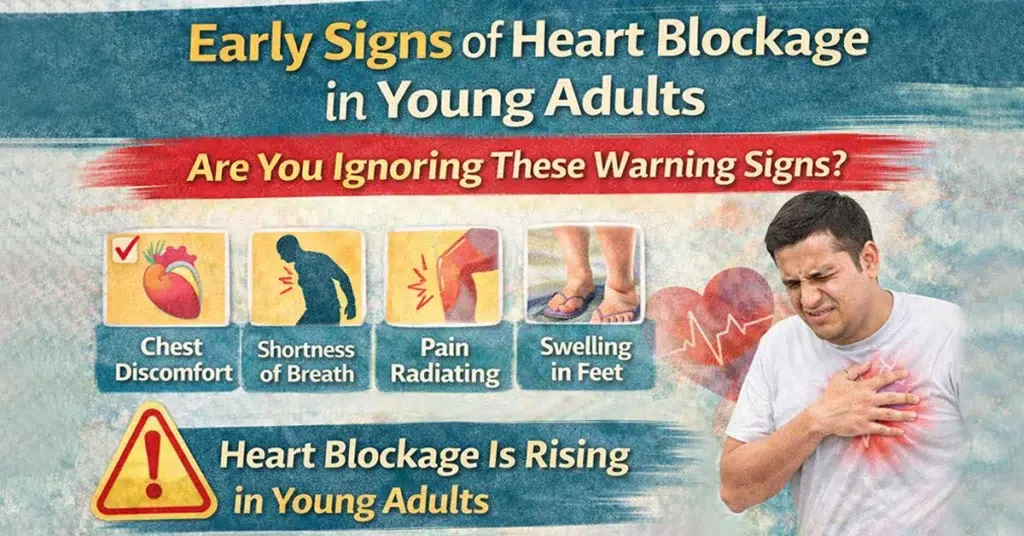
By Dr Nishchita Basappa Chief Consultant Madhavbaug Clinic in Jayanagar Over the past few years, we’ve all heard shocking news—young, active professionals collapsing due to heart attacks. This is no longer rare. As a clinician, I often meet patients in their late 20s or 30s who say, “Doctor, I thought heart problems happen only after 50.” Unfortunately, that belief is outdated. The early signs of heart blockage in young adults are often subtle. Many ignore them. Others panic over minor discomfort, thinking it’s a heart attack. The truth lies somewhere in between—awareness without fear. Let’s understand this clearly and calmly. What Exactly Is a Heart Blockage? Heart blockage, medically known as coronary artery disease, happens when the arteries supplying blood to the heart narrow due to plaque buildup. Plaque forms gradually from: Cholesterol Fat deposits Calcium Inflammatory cells When this narrowing reduces oxygen supply to the heart muscles, the condition is called ‘ischaemia’. In the early stages, the oxygen shortage is mild and intermittent, so symptoms may be barely noticeable. But over time, especially with an unhealthy lifestyle, stress, smoking, poor sleep, and metabolic imbalance, the narrowing worsens. That’s when symptoms begin to show. Early Signs of Heart Blockage in Young Adults These symptoms are often dismissed as stress, acidity, or overwork. Chest Discomfort (Not Always Severe Pain) It may feel like: Tightness Pressure Burning sensation Heaviness It may come during stress or physical activity and improve with rest. Young adults often label this as “gas.” Shortness of Breath If you feel breathless after mild activity like climbing stairs or walking fast, don’t ignore it. Difficulty breathing while lying down can also be a warning sign. Pain Radiating Elsewhere Heart-related discomfort can spread to: Left arm (most common) Both arms Jaw Neck Upper back This is a classic but often overlooked sign. Swelling Around Ankles or Feet Unexplained swelling may indicate poor circulation and reduced cardiac efficiency. Irregular Heartbeat or Palpitations If your pulse is Persistently above 100 Irregular Skipping beats Racing unexpectedly It deserves evaluation. Rising Blood Pressure Repeatedly high blood pressure readings in young adults should never be ignored. Hypertension can both cause and result from heart-related issues. Unusual Fatigue Feeling excessively tired without a clear reason—even after adequate sleep—may indicate reduced oxygen supply to tissues. Nausea or Indigestion-Like Symptoms Frequent “acidity,” bloating, or upper abdominal discomfort during exertion can sometimes reflect cardiac ischemia rather than digestive trouble. Cold Sweats or Dizziness Sudden sweating without exertion, light-headedness, or faintness may be subtle warning signs. Important Emergency Warning If chest pain lasts more than 5–10 minutes, spreads to the arm/jaw, or is accompanied by sweating and breathlessness, seek emergency medical care immediately. Why It Often Goes Unnoticed in Young Adults Young patients typically have: Better pain tolerance Busy lifestyles High stress levels Sedentary work patterns Irregular sleep Many symptoms are masked under “work pressure” or “fitness fatigue”. That’s why awareness of the early signs of heart blockage in young adults is critical. Essential Tests to Detect Blockage Early If you suspect symptoms, proper evaluation is important. Blood Tests: Lipid Profile & Lipoprotein(a) hs-CRP (inflammation marker) Investigations: ECG (resting electrical activity) Stress Test (to detect exercise-induced ischemia) CT Angiography (non-invasive confirmatory test showing percentage of blockage) CT angiography helps determine the severity and guides further heart blockage treatment decisions. Heart Blockage Is Not an Emergency—Until It Becomes One A blockage develops slowly over the years. It is not sudden. But if left untreated, it can lead to the following: Heart attack Arrhythmias Heart failure That is why early correction is more important than emergency reaction. Can Heart Blockage Be Managed? Yes—especially when detected early. Management includes: Weight correction Blood sugar control Blood pressure management Cholesterol regulation Structured exercise Stress reduction Depending on severity, doctors may recommend medical therapy, procedures, or lifestyle-focused heart blockage treatment. In selected stable cases, integrative approaches like Ayurvedic treatment for heart blockage focus on improving metabolism, circulation, inflammation control, and long-term lifestyle correction—always under proper medical supervision. Final Message to Young Adults Heart blockage does not happen overnight. It develops silently over the years. Being aware does not mean being afraid. It means being responsible. If you notice subtle changes in stamina, breathing, or chest comfort—listen to your body. Early detection prevents tragedy. Healthy lifestyle choices today protect your heart tomorrow.

