Today, some of the most common lifestyle-related health conditions are diabetes and obesity. Most people concentrate on what to eat, but recent research suggests that when you eat may be just as important. The idea is called chrononutrition, and is based on eating at the best time even for weight loss, according to your body’s natural biological clock. This helps to improve metabolism, blood sugar control and weight maintenance. The human body is driven by a 24-hour circadian rhythm that affects hormone secretion, digestion, insulin sensitivity and energy expenditure. Eating meals on time with this internal clock can improve glucose metabolism, decrease insulin resistance and promote healthy weight loss. On the other hand, irregular meal timings, skipping breakfast, frequent snacking and eating late at night may enhance the risk of obesity and type 2 diabetes. Ayurveda has long appreciated the importance of the timing of meals. Digestion is strongest in the middle of the day, when the digestive fire, or Agni, is strongest, according to Ayurveda. This is strikingly in agreement with modern chrononutrition. Thus, combining Ayurveda and meal timing is an effective strategy for metabolic health. Madhavbaug focuses on this and gives personalised care, including dietary modifications and necessary changes in order, leading to better health. What is Chrononutrition? Chrononutrition is the science of eating in accordance with the circadian rhythm of your body. It takes into account the timing and spacing of meals, not just calorie or nutrient content. The liver, pancreas, stomach, intestines and every other organ in the body all operate on biological clocks. Your body is more insulin sensitive in the morning and afternoon, so it can process carbohydrates more efficiently. As the day goes on, insulin sensitivity decreases, which means that food eaten later in the evening is more likely to result in higher blood sugar and fat storage. (Intemann T, 2024) Regular meal times help to synchronise the body’s metabolic processes, leading to better digestion, improved glucose control, balanced hunger hormones, and healthier body weight. Why timing of meals matters in diabetes Many people with type 2 diabetes also have insulin resistance, meaning the cells of the body don’t respond to insulin as they should. Eating a lot late at night can mess up blood sugar control because the body is less efficient at processing glucose at that time. There are several advantages of eating at regular times (Gómez-Ruiz RP, 2024): More consistent blood sugar levels all day long Greater insulin sensitivity Minimise post-meal glucose spikes Reduced risk of overeating Improved energy levels Better HbA1c over time when used with healthy eating and physical activity Skipping meals might seem like a way to lose weight, but it often leads to overeating at the next meal, uncontrollable hunger, and erratic blood sugar levels. Time to Eat for Weight Loss Many people trying to lose weight focus solely on calorie restriction. But eating patterns also influence weight regulation. Getting more of your calories earlier in the day might be better for your metabolism than getting the same amount of calories later in the day. Metabolic activity naturally slows in the evening, which is why late dinners and midnight snacking are associated with fat storage. People who eat on a regular schedule are also more likely to be able to control cravings, avoid binge eating, and lose weight for the long term. What Ayurvedic Meal Timing Ayurveda gives importance to eating as per the digestive capacity of the body and not just on the clock. The digestive fire called Agni is different at different times of the day. Morning After sunrise the digestive power gradually increases. Have a light but nourishing breakfast to kick-start your metabolism and give you lasting energy. Noon In Ayurveda, Agni is most powerful around noon. So the largest and most balanced meal of the day is ideally served at lunch. “Good digestion at this time leads to better nutrient absorption and energy production. Dusk As the sun goes down, digestion naturally slows. Ayurveda recommends that dinner should be light and preferably taken two to three hours before sleep. Eating heavy, oily, fried or sugary foods, especially curd, late at night can interfere with digestion and lead to weight gain and metabolic imbalance. These traditional principles are very similar to the findings of modern chrononutrition. The Dangers of Eating Late Late night eating is on the rise because of busy work schedules and social commitments. Unfortunately, it is associated with a lot of metabolic problems. (Intemann T, 2024) Eating dinner too close to bedtime can lead to: High fasting blood sugar Digestion problems Further fat accumulation Gain in weight Acid Reflux Trouble sleeping Whenever you can, try to finish dinner between 7:00 p.m. and 8:30 p.m. If you must eat, eat a small, light, easily digestible meal. The Importance of Meal Spacing Allowing the digestive system enough time between meals enables the hormones involved in metabolism to operate efficiently. Most adults will do well to have about three to five hours between meals. Constant grazing or snacking often keeps insulin levels high all day, which inhibits the body’s ability to efficiently burn stored fat. Hydrate with healthy drinks throughout the day, but stay away from sugary drinks. Example Meal Timing Schedules The below-mentioned is an exemplary meal timing schedule given. This may be followed based upon individual variations and work schedules. Regular Day Worker Hours 6:30 to 7:00 am: Wake up and drink water 7:30 to 9:00 am: Healthy breakfast 12:30 to 1:30 pm: Lunch (major) 4:30pm: Light healthy snack if needed 7:00 to 8:00 pm: Light dinner 10:00 pm: Go to bed This is a suggested example. Ayurveda focuses on a personalised approach, for which Madhavbaug aims to make personalised diet and exercise plans for all patients. For such a personalized diet plan, consult your nearest Madhavbaug centre today. Chrononutrition Plus Healthy Lifestyle Practices at Madhavbaug Untimely meals, as seen, may possibly lead to unhealthy eating habits, leading to diseases like obesity and diabetes. To manage and even reverse this,
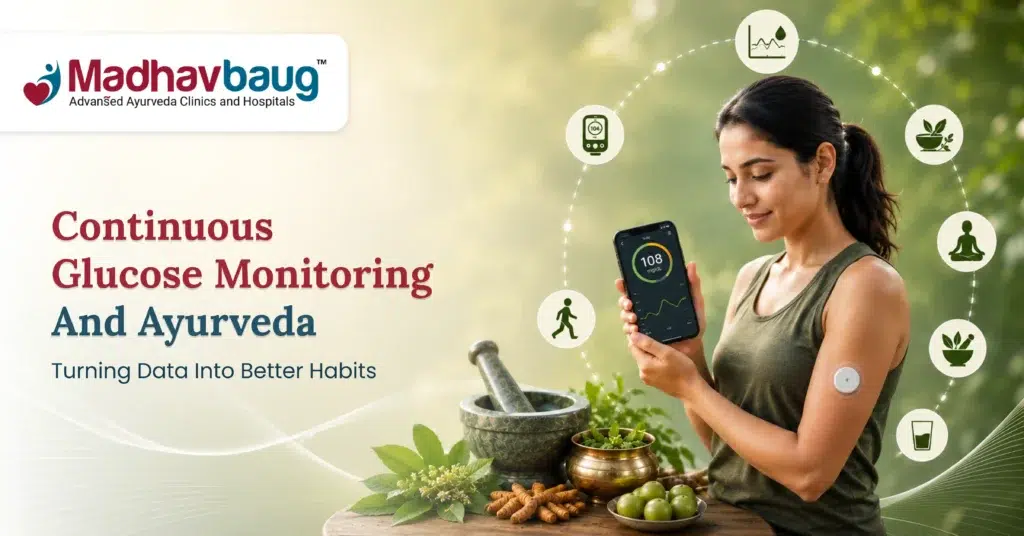
Managing type 2 diabetes is not about testing your blood sugar levels every now and then. With modern technology, you can easily learn how their body reacts to food, exercise, stress and sleep in real time. One such innovation is Continuous Glucose Monitoring (CGM), a device that gives valuable insight into glucose trends throughout the day and night. These insights, when integrated with Ayurveda-recommended lifestyle practices, personalised diet, exercise plan, and medical supervision, help patients take steps that support better blood sugar management. At Madhavbaug, diabetes care is based on understanding the root causes of metabolic disorders through an evidence-based integrated approach including Ayurveda, lifestyle medicine, nutrition and modern diagnostics. Continuous glucose monitoring data can play an important role in this holistic approach by helping patients and clinicians identify habits that affect blood sugar levels. What is Continuous Glucose Monitoring (CGM)? Continuous Glucose Monitoring (CGM) is a technology that measures individuals’ blood glucose levels just below the skin continuously, around the clock. The small sensor, usually worn on the upper arm or abdomen, checks glucose levels every few minutes and sends that data to a compatible reader or smartphone. CGM does not simply give you a reading at one point in time like a traditional glucometer; it shows you how your glucose levels change over time so you can see patterns rather than isolated numbers. CGM is particularly useful for individuals with: Type II diabetes mellitus Frequent changes in blood sugar Selected prediabetes cases CGM is a tool to help clinicians create personalised treatment plans and not a replacement for medical consultations. What Does a CGM Measure? A CGM gives you so much more information than a standard blood glucose test. Glucose level at present It tells you your current blood glucose value at any given time. Trend Indicator The trend indicator is one of the most useful features of the CGM. The arrow will show you if your glucose is the following: Quick increase Steady Falling slowly Dropping quickly These trends can help you understand how your body is reacting to meals, exercise, stress or medication. Time in Range Time in Range (TIR) is one of the most important metrics in continuous glucose monitoring. Time in range is the amount of time your glucose is in the range your healthcare provider recommends, often 70-180 mg/dL for many adults with diabetes (your targets may be different). More Time in Range usually means better blood glucose control and fewer variations in blood sugar levels. Clinicians are increasingly using Time in Range, rather than HbA1c, to understand day-to-day glucose control. Glucose variability Your CGM also shows your glucose ups and downs during the day. Large fluctuations may indicate: Unusual eating patterns High glycaemic foods Less physical activity Bad sleep Emotional stress Problems with timing of medication Understanding variability can help health professionals to advise on appropriate lifestyle changes. Ayurveda and Blood Sugar Levels Ayurveda believes each person has a unique constitution and requires individualised care. Continuous glucose monitoring along with recommendations based on Ayurveda makes the lifestyle changes more personalised. Instead of using CGM to react to every glucose change, clinicians can look at long-term trends and personalise approaches, including: Timing of meals Serving size Training Dinacharya (Daily routine) Sleep patterns Managing stress Weight management Seasonal variations in diet This integrated approach helps keep treatment individualised while supporting healthier daily habits. It’s important to note that CGM data should always be interpreted by a qualified healthcare professional. A 7-Day CGM Review Day Observation Lifestyle Insight Monday High glucose after lunch Review meal composition and portion size Tuesday Stable glucose after evening walk Continue post-meal walking routine Wednesday Overnight glucose rise Evaluate dinner timing and quality Thursday Frequent glucose spikes Assess processed food intake Friday Improved Time in Range Continue balanced meals and activity Saturday Elevated readings after restaurant meal Plan healthier dining choices Sunday Stable glucose throughout the day Maintain current routine Instead of acting on data from a single day, clinicians observe trends over several days in order to recommend changes. What a CGM Won’t Tell You CGM is a powerful monitoring tool, but it’s not without its limitations. It doesn’t: Diagnose diabetes on your own Substitute testing for HbA1c Check insulin levels Replace visits to the doctor Adjust medication yourself Glucose values should always be interpreted in the context of clinical assessment and laboratory tests. How Madhavbaug Combines Modern Monitoring with Ayurveda At Madhavbaug, diabetes care is beyond just lowering sugar readings. The focus is on correcting the root metabolic imbalance through an integrated approach of modern diagnostics, evidence-based Ayurveda, personalised nutrition, exercise therapy, lifestyle modification and continuous clinical monitoring using research-based technologies such as mibPulse app and PowerMap. In this context, CGM can be a useful tool, providing doctors with insight into glucose patterns, identifying triggers such as meal composition or lack of physical activity and personalising lifestyle recommendations. But CGM data is just one aspect of a comprehensive clinical assessment. Treatment decisions are always made with consideration of the patient’s medical history, physical examination, laboratory investigations and general health status. To know more, visit your nearest Madhavbaug centre. Madhavbaug for Diabetes Madhavbaug has brought many innovations in treating diabetes through Ayurveda. Among these innovations are Prameha gummies and Madhavprash, designed to enhance immunity. Madhavbaug focuses on addressing the root cause and not just stabilising the blood sugar levels through techniques like Panchakarma, Research-based: Prameha Diet Kit, Herbal Medicines and Personalised Exercise and Diet plan. Read more about the detailed treatment here: https://oldsite.madhavbaug.org/ayurvedic-diabetes-reversal-treatment-program/ Consult Madhavbaug Today Continuous glucose monitoring is changing the way we see diabetes. CGM reveals meaningful patterns related to meals, exercise, sleep, stress and daily routines instead of just looking at occasional glucose readings. Used by trained healthcare professionals, these insights can help support personalised lifestyle changes that improve long-term diabetes management. Add to that evidence-based Ayurvedic care, structured nutrition, physical activity and regular medical supervision and CGM is no longer just a monitoring device. It’s a guide to building healthier habits. Remember, CGM

When most people think about weight and health risk, the first thing they check is the number on the scale. Reasonable instinct. But it is not the whole picture. Research has been saying for years that where fat is stored matters just as much as how much you are carrying. Sometimes more. The short answer to belly fat vs body fat is this: belly fat is more dangerous for heart health, even when total body weight looks completely normal. Here is what is actually going on. Two Types of Fat, Very Different Problems Not all fat behaves the same way inside the body. The subcutaneous vs visceral fat distinction is the most important thing to understand here. Subcutaneous fat: This is the fat sitting just under the skin. You can pinch it. It tends to collect around the hips, thighs, arms, and buttocks. Excess subcutaneous fat contributes to overall obesity, but it is relatively metabolically quiet and poses a lower direct threat to the heart. Visceral fat: This is stored deep inside the abdominal cavity, wrapped around the liver, pancreas, intestines, and kidneys. It is what creates a protruding belly. And unlike subcutaneous fat, it is metabolically active in ways that are directly harmful to the cardiovascular system. That difference is everything. Why Belly Fat Is Dangerous for the Heart Visceral fat does not just sit there. It functions almost like an organ, releasing hormones, inflammatory chemicals, and fatty acids directly into the portal circulation that feeds the liver. The downstream effects are significant. Chronic inflammation: Visceral fat produces inflammatory cytokines These damage the inner lining of blood vessels Arterial inflammation accelerates atherosclerosis This is the primary reason visceral fat and heart disease are so tightly linked Insulin resistance: Free fatty acids from visceral fat interfere with insulin signalling Blood sugar rises Full insulin resistance develops over time Insulin resistance itself is an independent cardiovascular risk factor Cholesterol disruption: Abdominal obesity raises LDL and triglycerides Belly fat and cholesterol are directly connected because visceral fat drives the liver to overproduce harmful blood fats HDL drops simultaneously, removing its protective effect Blood pressure: Visceral fat releases hormones that promote sodium retention Arteries constrict Hypertension follows as one of the most consistent consequences of abdominal obesity risk The Belly Fat and Cholesterol Connection The liver sits at the centre of cholesterol metabolism. Visceral fat sits directly around it. When visceral fat releases excess free fatty acids into the portal vein, the liver responds by producing more VLDL particles, which convert to LDL in the bloodstream. The result is a consistently harmful lipid profile: Higher total LDL Higher triglycerides More small dense LDL particles, the kind most damaging to arteries Lower HDL This is why belly fat and cholesterol levels track so closely in clinical testing. Reduce abdominal fat and the lipid profile improves in most cases. The two are not separate problems. Belly Fat vs Body Fat: A Quick Summary Factor Subcutaneous Fat Visceral Fat Location Under the skin Around internal organs Visibility Pinchable, external Abdominal protrusion Metabolic activity Low High and harmful Heart disease risk Moderate High Diabetes risk Lower High Responds to exercise Yes Yes, preferentially Detected by BMI Partially Poorly Best measured by BMI, skinfold Waist circumference How Madhavbaug Can Help At Madhavbaug, abdominal obesity is treated as the cardiovascular risk factor it is. Our integrated team of Ayurvedic physicians, cardiologists, and metabolic specialists assess not just weight but where fat is being stored and what it is doing to your heart, blood sugar, and cholesterol levels. Treatment is personalised. It combines Ayurvedic detox protocols, herbal formulations, dietary counselling, and modern metabolic science to address the root cause rather than just the number on the scale. If your waist measurement concerns you more than your weight, that instinct is worth acting on. Book your consultation at madhavbaug.org. Frequently Asked Questions Is belly fat more dangerous than overall body weight? Yes, visceral belly fat is more harmful as it increases inflammation, cholesterol issues, and heart disease risk. Why does belly fat increase the risk of heart disease? It releases inflammatory chemicals and fatty acids that damage arteries and disrupt metabolism. Can you have heart disease risk even with normal weight? Yes, normal-weight individuals with high belly fat can still have a high risk of heart disease. How can you measure dangerous belly fat? Waist circumference is a simple and effective way to assess abdominal fat risk. Does losing belly fat improve heart health? Yes, reducing visceral fat improves cholesterol, blood pressure, and overall cardiovascular health. How to reduce belly fat to lower heart disease risk? A combination of a healthy diet, regular exercise, quality sleep, and stress control helps reduce belly fat effectively.
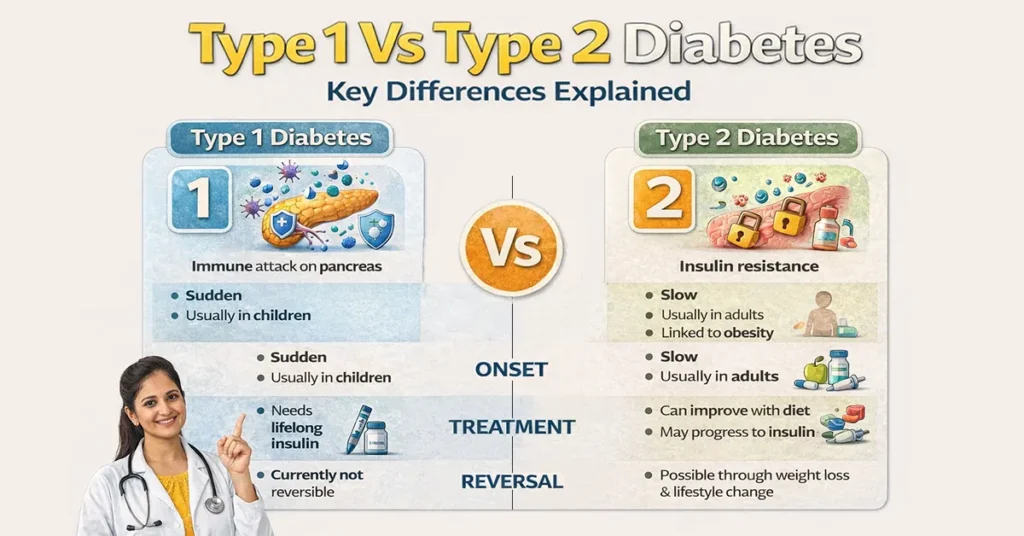
When patients come to me and say, “Doctor, I have sugar… but which type is it?” It tells me one thing clearly — diabetes is still widely misunderstood. Many people think diabetes is just “high sugar”. But when we discuss type 1 vs type 2 diabetes, we are actually talking about two very different conditions that only share one thing in common – elevated blood glucose levels. Let’s break this down in a simple, clear, and practical way. What Is Diabetes, Really? Diabetes is a chronic condition caused by hyperglycaemia — raised blood sugar. This happens when: The pancreas does not produce enough insulin OR the body cannot effectively use the insulin it produces Insulin is the hormone that allows glucose to enter cells and be used as energy. Without proper insulin function, sugar accumulates in the bloodstream, damaging nerves, blood vessels, kidneys, eyes, and the heart over time. Type 1 Vs Type 2 Diabetes: The Core Difference While both types lead to high sugar levels, the biological “why” behind each condition is completely different. Think of it this way: Type 1 is a supply problem Type 2 is a usage problem Let’s understand how. Pathophysiology: What Actually Goes Wrong? Type 1 Diabetes – An Immune System Mistake Type 1 is an autoimmune disease. The body’s immune system mistakenly attacks and destroys the insulin-producing beta cells in the pancreas. As a result: The pancreas stops producing insulin completely Glucose cannot enter cells Blood sugar rises rapidly Without insulin, the body literally goes into cellular starvation even though sugar levels are high. Type 1 is usually diagnosed in children or young adults and was formerly called “juvenile diabetes”. It accounts for roughly 8–10% of all cases of diabetes. Type 2 Diabetes – Insulin Resistance In type 2 diabetes: The pancreas still produces insulin But the body’s cells stop responding properly This is called insulin resistance. Initially, the pancreas tries to compensate by producing more insulin. Over time, it becomes exhausted. Then two problems occur: Cells resist insulin Insulin production decreases Type 2 accounts for nearly 90% of all diabetes cases in India and globally. Onset and Who Is Affected Type 1 – Sudden and Dramatic Often diagnosed in children or young adults Symptoms develop rapidly Weight loss, extreme thirst, frequent urination It is not caused by lifestyle or diet. Type 2 – Slow and Silent Common after age 40 (but now rising in younger Indians) Linked to obesity, stress, poor sleep, and a sedentary lifestyle Symptoms may go unnoticed for years Many patients are diagnosed during routine blood tests. In India, increasing abdominal obesity and insulin resistance make Type 2 diabetes extremely common. Management: Why Treatment Approaches Differ Because the causes differ, treatment strategies differ. Type 1 Diabetes – Lifelong Insulin People with Type 1 produce no insulin. Therefore: Insulin injections are mandatory from day one Delivered via insulin pens or pumps Continuous glucose monitoring is often needed Insulin is not a “last stage” treatment — it is essential for survival. Type 2 Diabetes – Stepwise Management Management begins with lifestyle correction: Lifestyle Intervention Weight loss Low-carb, balanced diet Regular exercise Stress reduction In early stages, some patients can control sugar levels with these measures alone. Oral Medications Drugs like Metformin and other oral agents improve insulin sensitivity and reduce glucose production. Advanced Options Injectables such as GLP-1 agonists may be added when required. If the pancreas becomes significantly exhausted, insulin may eventually be needed. This is where structured type 2 diabetes treatment becomes essential — not just controlling numbers, but correcting insulin resistance at its root. Can diabetes be prevented or reversed? This is one of the most common questions. Feature Type 1 Type 2 Cause Autoimmune Insulin resistance Prevention Currently not possible Highly preventable Reversal Not reversible Can go into remission Type 2 diabetes, especially in early stages, can often be reversed or put into remission with the following: Weight loss Metabolic correction Lifestyle modification Structured medical supervision In integrative care models, Ayurvedic treatment for diabetes focuses on improving digestion (Agni), correcting metabolism, reducing inflammation, and enhancing insulin sensitivity under medical guidance. Long-Term Complications (If Poorly Controlled) Both types can cause similar complications if unmanaged: Retinopathy (eye damage) Nephropathy (kidney damage) Neuropathy (nerve damage) Cardiovascular disease Delayed wound healing High sugar levels damage blood vessels like “slow internal injury”. Emergency Conditions: Know the Difference Type 1 – Risk of DKA Diabetic ketoacidosis (DKA) is life-threatening and requires emergency treatment. Type 2 – Risk of HHS Hyperosmolar Hyperglycaemic State (HHS) causes extremely high sugar and severe dehydration. Both are medical emergencies. Final Takeaway: Type 1 Vs Type 2 Diabetes in One Line Type 1 = The pancreas cannot produce insulin. Type 2 = The body cannot use insulin properly. One is a factory shutdown. The other is a distribution failure. Understanding this difference helps patients make informed decisions rather than living in confusion or fear. A Doctor’s Advice If you are: Overweight Have a family history Sedentary Under chronic stress Experiencing rising sugar levels Do not wait for complications. Early evaluation, proper diagnosis, and structured management can protect your heart, kidneys, nerves, and quality of life. Diabetes management is not about panic. It is about clarity, correction, and consistency.

