
Coronary Artery Disease in Women: Symptoms, Risk Factors and Prevention
Quick answer Chest discomfort remains the most common heart-attack symptom in women, but women are more likely to experience additional


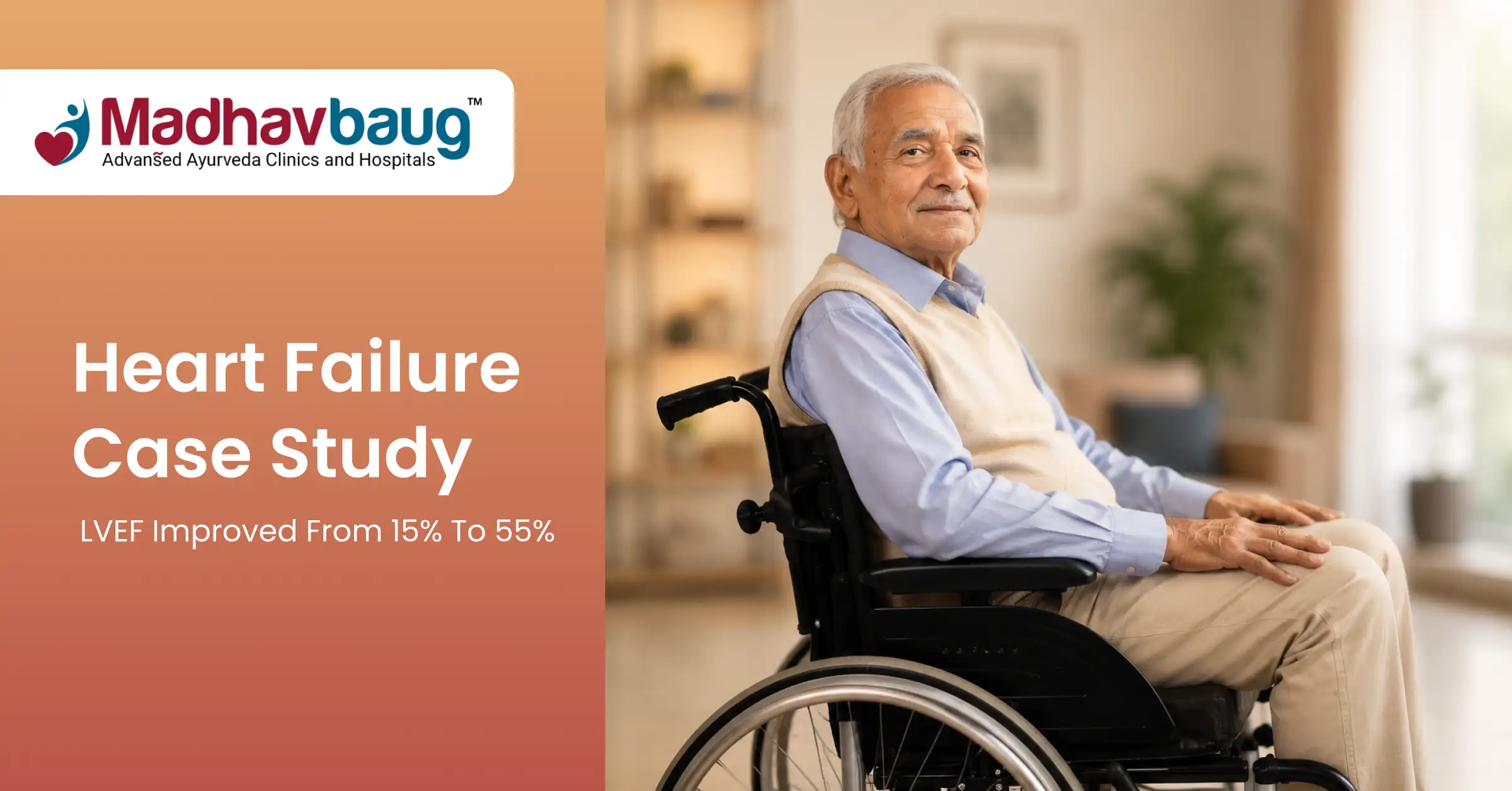
Mr. Vasudevan Nair, a 74-year-old retired resident of Pune, visited Madhavbaug Ambegaon Budruk with severe breathlessness, weakness, constipation, bloating and dependence on wheelchair support. He had Ischemic Heart Disease (IHD) and Congestive Heart Failure (CHF), with a severely reduced Left Ventricular Ejection Fraction (LVEF) of 15%. His symptoms significantly limited mobility and everyday activity. A personalised, physician-supervised care plan combining regular medical review, lifestyle guidance, dietary support, structured wellness therapies and gradual activity progression was initiated. Over approximately seven months, documented improvements were observed in cardiac function, metabolic parameters, exercise capacity and functional independence.
| 15% → 55%
LVEF |
7.1% → 5.3%
HbA1c |
12.90 → 14.78
VO₂ Max |
227.44 → 124 mg/dL
Total Cholesterol |
| Patient | Mr. Vasudevan Nair |
| Age and location | 74 years, Pune |
| Primary diagnosis | Ischemic Heart Disease (IHD) and Congestive Heart Failure (CHF) |
| Main concerns | Severe breathlessness, weakness, reduced exercise tolerance, constipation, bloating and wheelchair dependency |
| Care setting | Madhavbaug Ambegaon Budruk |
| Duration | Approximately 7 months |
| Key documented result | LVEF increased from 15% at presentation to 55% at the latest follow-up |
| Current status | Improved mobility, reduced breathlessness, better exercise tolerance and ongoing follow-up |
Before beginning treatment at Madhavbaug, Mr. Nair experienced progressive physical limitations related to his cardiac condition. Breathlessness while walking, severe weakness, constipation, bloating and poor exercise tolerance disrupted his daily routine. His mobility gradually declined to the point that he required wheelchair support. Routine activities became difficult, reducing his independence and confidence. Concerned about his worsening symptoms and quality of life, he visited Madhavbaug Ambegaon Budruk for a structured and supervised cardiovascular care programme.
| Symptom or limitation | Severity or frequency | Effect on daily life |
| Breathlessness on exertion | Severe and present for several months | Difficulty walking even short distances |
| Severe weakness | Frequent and limiting | Reduced participation in routine activities |
| Wheelchair dependency | Required at presentation | Needed assistance for mobility |
| Constipation and bloating | Persistent at presentation | Reduced comfort and affected general well-being |
The patient had a confirmed diagnosis of Ischemic Heart Disease and Congestive Heart Failure and had undergone cardiac evaluation and conventional medical management. Despite prior treatment, severe breathlessness, weakness and functional limitations continued. Investigations showed severe left ventricular dysfunction and substantially reduced cardiac pumping efficiency. Elevated HbA1c and an unfavourable lipid profile added to his overall cardiovascular risk. Ongoing medication was reviewed and coordinated according to the treating physician’s advice.
Mr. Nair sought a physician-supervised programme focused on improving cardiovascular health, exercise tolerance, mobility and quality of life. At Madhavbaug Ambegaon Budruk, he received a personalised assessment, regular follow-up and an integrated care plan based on his age, clinical condition and functional capacity.
Mr. Nair presented with advanced Ischemic Heart Disease and Congestive Heart Failure associated with severe left ventricular dysfunction. The major clinical concerns were severe breathlessness, reduced exercise tolerance, mobility limitations, elevated HbA1c and dyslipidaemia. The treatment priorities were to support cardiovascular function, improve functional capacity, optimise metabolic parameters, enhance mobility and improve day-to-day quality of life. Regular monitoring was incorporated throughout the programme to assess symptoms, treatment adherence, cardiac function and exercise capacity.
| Care component | What the plan included | Frequency or duration | Purpose |
| Clinical assessment and follow-up | Regular physician evaluations and review of symptoms and investigations | Throughout the programme | Monitor progress and modify the plan when required |
| Structured wellness therapies | Individualised Panchakarma and supportive therapies prescribed by the treating doctor | As advised | Support overall wellness as part of the supervised programme |
| Dietary guidance | Heart-friendly dietary plan | Daily | Support cardiovascular and metabolic health |
| Activity and rehabilitation | Gradual walking and mobility progression based on tolerance | Daily, as advised | Improve strength, mobility and exercise tolerance |
| Medicine coordination | Review and coordination of ongoing medicines according to the treating physician’s advice | Throughout the programme | Support continuity of care and adherence |
The care plan was tailored to the patient’s age, cardiovascular status, symptom burden and limited exercise capacity. Physician supervision, lifestyle guidance, dietary recommendations, structured wellness therapies and gradual activity progression were integrated into one programme. Follow-up investigations, symptom monitoring and functional assessments were used to track progress. The approach emphasised safe, gradual improvement, consistent adherence and continued evaluation rather than a one-size-fits-all treatment pathway.
| Time point | Symptoms and function | Objective findings | Clinical approach |
| Start of care | Wheelchair dependent, severe breathlessness on exertion, severe weakness, constipation and bloating | LVEF 15%, HbA1c 7.1%, VO₂ Max 12.90 | Comprehensive assessment and personalised care plan initiated |
| Month 1 | Reduced bloating, improved digestion and slightly better energy | Clinical improvement noted | Treatment sessions, dietary guidance and monitoring continued |
| Month 2 | Reduced breathlessness during routine activity and improved comfort | Functional improvement observed | Current protocol continued with symptom reassessment |
| Month 3 | Improved walking tolerance and reduced dependence on support | Better functional capacity | Gradual increase in physical activity encouraged |
| Latest follow-up | Improved mobility, reduced breathlessness and better quality of life | LVEF 55%, HbA1c 5.3%, VO₂ Max 14.78, BP 123/74 mmHg | Maintenance plan and periodic cardiac monitoring continued |
| Parameter | At presentation | Latest follow-up | Clinical interpretation |
| Left Ventricular Ejection Fraction (LVEF) | 15% | 55% | Documented improvement in cardiac pumping function |
| HbA1c | 7.1% | 5.3% | Improved long-term blood glucose control |
| VO₂ Max | 12.90 | 14.78 | Improved exercise capacity and cardiovascular fitness |
| Total Cholesterol | 227.44 mg/dL | 124 mg/dL | Improved lipid profile |
| Blood Pressure | Monitored during care | 123/74 mmHg | Within an acceptable range at the latest follow-up |
One of the most notable documented findings was the increase in LVEF from 15% to 55%. Improvements were also recorded in HbA1c, VO₂ Max and total cholesterol. Alongside these objective changes, Mr. Nair reported less breathlessness, better mobility, greater stamina and increased confidence while completing daily activities. His body weight remained stable at approximately 51 kg. Continued follow-up and monitoring remain important because this is an individual case and the same outcome cannot be assumed for every patient.
Mr. Nair reported meaningful improvements in mobility and independence. Activities that had previously required assistance became easier to perform. Breathlessness while walking reduced, stamina improved and he became more comfortable participating in routine daily activities. He also reported feeling more active, confident and independent.
“When I first came to Madhavbaug, I needed wheelchair support and felt breathless even while walking short distances. Simple daily activities left me tired and dependent on others. With regular treatment, follow-ups and guidance from the doctors, my breathlessness reduced, my stamina improved and I gradually became more comfortable performing daily activities. Today, I feel much more active, confident and independent. The improvement in my mobility and overall well-being has made a meaningful difference in my day-to-day life.”
— Mr. Vasudevan Nair
The documented records indicate improvements in cardiac function, exercise capacity, metabolic parameters and overall functional status during the treatment period. This case highlights the importance of individualised care, regular monitoring, treatment adherence and lifestyle modification. Individual outcomes may vary according to the patient’s medical condition, clinical risk, adherence and other factors. Continued follow-up remains essential.
| Reviewing doctor | Dr. Dhanashree Mahajan, BAMS, Preventive Cardiologist and Diabetologist |
| Centre | Madhavbaug Ambegaon Budruk |
| Review date | 23 June 2026 |
Mr. Vasudevan Nair presented with severe breathlessness, wheelchair dependency and advanced cardiac dysfunction associated with Ischemic Heart Disease and Congestive Heart Failure. During approximately seven months of structured, personalised and physician-supervised care, measurable improvements were documented in LVEF, HbA1c, exercise capacity, total cholesterol and daily functioning. His progress demonstrates the value of timely assessment, ongoing monitoring and care tailored to the individual. Patients experiencing breathlessness, severe fatigue, reduced mobility or other possible heart-failure symptoms should seek prompt medical evaluation for personalised guidance.
| Every patient’s condition and response are different. Book an assessment with a Madhavbaug doctor to discuss your reports, symptoms and suitable next steps.
BOOK AN APPOINTMENT |
This case study describes the documented experience of one patient and is provided for educational purposes. It does not guarantee or predict the outcome of another patient. Treatment decisions should be made only after assessment by a qualified healthcare professional. Do not stop, start or change prescribed medicines without medical supervision.

Quick answer Chest discomfort remains the most common heart-attack symptom in women, but women are more likely to experience additional

Have you ever been through this situation wherein you had chest pain, you visited your doctor and they suggested an